
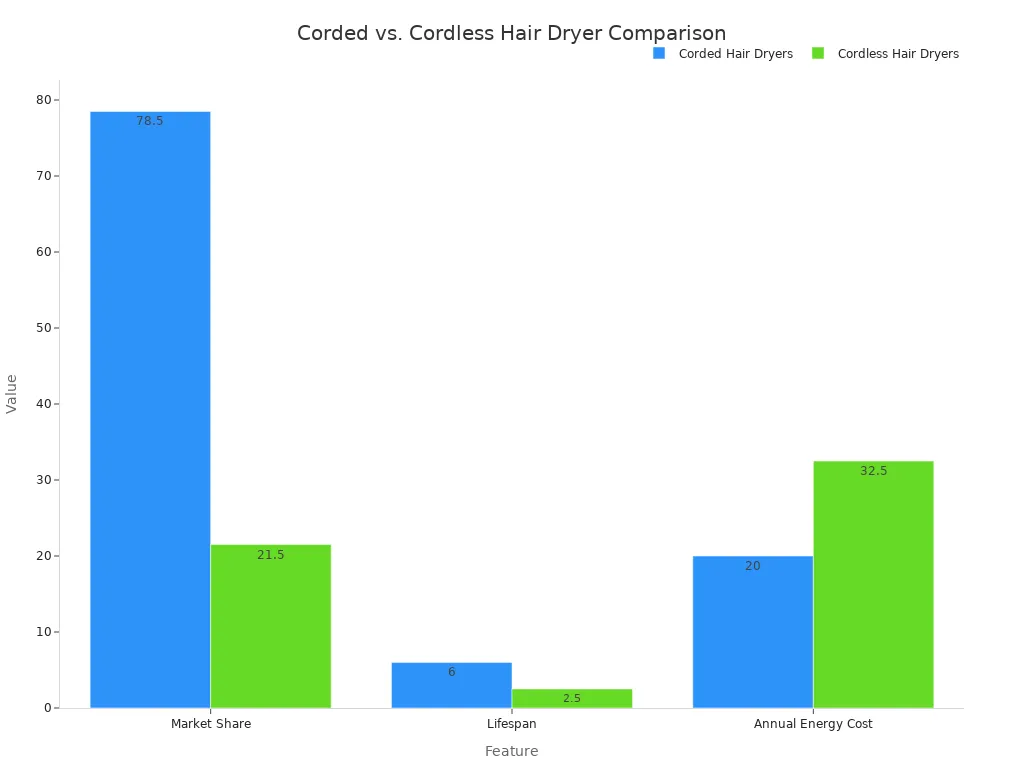
Corded hair dryers represent the industry standard, holding a dominant 82.56% market share. A powerful corded AC hair dryer delivers consistent heat, making corded models the top choice for daily styling. In contrast, cordless hair dryers offer superior portability and convenience. Any hair dryer manufacturer understands this trade-off. The cordless convenience means the battery-powered cordless hair dryer has performance limits. While a hair dryer factory may produce an efficient cordless BLDC hair dryer, the choice is between corded power and cordless portability. The decision prioritizes either the reliability of corded hair dryers or the freedom of a cordless device.
The Fundamental Divide: Power Source and Performance
The core difference between a corded and a cordless hair dryer lies in its power source. This single factor dictates everything from drying speed and heat intensity to overall reliability and user convenience. One provides raw, uninterrupted power, while the other offers freedom at the cost of performance.
Corded Hair Dryers: The Powerhouse Standard
Unlimited Power from the Wall
A corded hair dryer draws its power directly from a wall outlet. This direct connection provides limitless energy, allowing the device to run indefinitely without any drop in performance. Users never need to worry about a dying battery mid-style.
High Wattage Explained
Wattage measures a hair dryer’s power. Traditional corded hair dryers operate in a high-wattage range, typically from 1600 to 2200 watts. This substantial power translates to strong airflow and high, stable heat, which are essential for breaking down water molecules on the hair shaft for faster drying.
| Feature | Corded Hair Dryer | Cordless Hair Dryer |
|---|---|---|
| Power Output | 1600–2200W (consistent) | 800–1500W (varies with battery) |
Consistent Heat and Airflow
The steady electrical current from an outlet ensures that a corded model delivers consistent heat and airflow from the moment it is turned on until it is turned off. This predictability is crucial for achieving smooth, professional-looking results without unexpected temperature drops.
Reliability for Daily Use
For daily styling routines, reliability is paramount. The robust performance and infinite runtime of corded hair dryers make them the undisputed workhorses of hair care. A traditional hair dryer is built for consistent, powerful use day after day.
The Cordless Hair Dryer: The Convenience Contender
The Limits of Battery Power
A cordless battery-powered hair dryer relies entirely on a rechargeable battery. This technology, while liberating, imposes significant performance limitations. A battery-powered hair dryer simply cannot match the sustained high wattage of a corded counterpart, generally offering a maximum output between 800 and 1500 watts.
Understanding Watt-Hours (Wh)
The capacity of a battery hair dryer is measured in Watt-hours (Wh). Think of this as the size of its “fuel tank.” A higher Wh rating generally means a longer runtime, but it also often results in a heavier and more expensive battery.
Variable Performance as Battery Drains
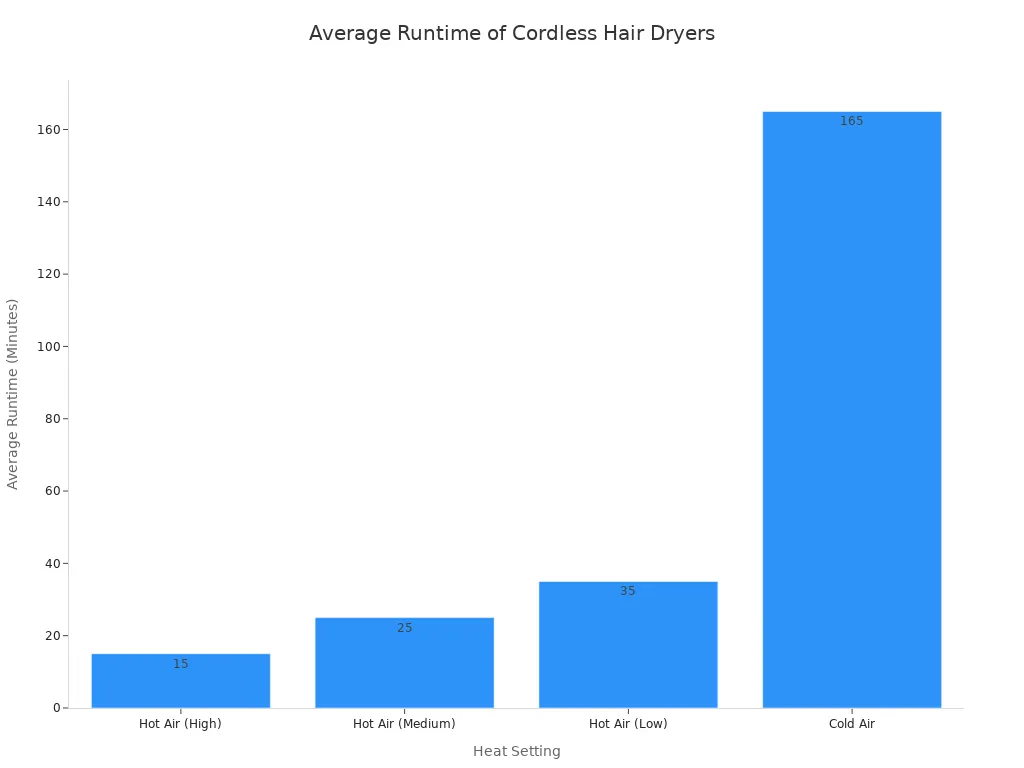
Unlike a corded model, a cordless dryer’s performance is not constant. As the battery depletes, both the heat and airflow diminish. A full battery provides the strongest output, but this power level will steadily decrease throughout the usage cycle. Most cordless models offer a runtime of 20 to 45 minutes, with performance varying based on the setting.
The Reality of “Quick Dry” Claims
Manufacturers often promote the convenience of a cordless device, but the limited runtime presents a practical challenge for many users.
Note: The Runtime Trade-Off 📝 A battery hair dryer’s performance is a constant balancing act.
- The typical runtime of 10-40 minutes on heated settings is often insufficient for fully drying and styling long or thick hair.
- Using the highest heat setting will drain the battery the fastest, providing the shortest window of use.
- The “cool shot” or cold air setting offers a much longer runtime but provides no drying power.
This makes the traditional corded experience superior for comprehensive styling sessions.
Head-to-Head Comparison: Cordless Hair Dryers vs. Corded Models
When choosing a hair dryer, a direct comparison reveals clear advantages and disadvantages for each type. The decision often comes down to a user’s primary need: raw drying performance or ultimate portability. This section breaks down how corded and cordless models stack up in key areas.
Drying Power and Speed
The most significant difference between these tools is their ability to dry hair quickly and effectively. This factor is directly tied to their power source and engineering.
Corded: Faster Drying Times
Corded hair dryers offer superior drying performance due to their high, consistent wattage. This power generates strong airflow and high heat, which work together to evaporate water from hair efficiently. Some high-speed corded models produce airflow rates exceeding 110 km/h, a benchmark for effective drying.
Corded: Ideal for Thick and Long Hair
Users with thick, long, or coarse hair will find that a corded model saves significant time. The sustained power can handle dense hair without a drop in performance, ensuring an even and complete dry. The following data illustrates the time difference on shoulder-length, thick hair.
| Dryer Type | Wattage | Drying Time (Full Head) |
|---|---|---|
| Traditional (Revlon One-Step Volumizer) | 1875W | 10 minutes |
| Cordless (T3 Aero Lite Cordless) | 1200W | 14 minutes |
Cordless: Slower, Lower-Temperature Drying
A cordless dryer’s battery limits its heat and power output. This results in a gentler, lower-temperature airflow and generally longer drying times. While some premium cordless models boast impressive airflow speeds comparable to corded versions, their heat output remains lower to conserve battery life.
Cordless: Best for Short or Fine Hair
The lower heat and airflow of a cordless device can be sufficient for users with short, fine, or thin hair. These hair types require less time and power to dry, making the trade-off for convenience more acceptable. A quick touch-up is where these models excel.
Heat and Speed Settings
Control over heat and airflow is crucial for styling and protecting hair health. Corded and cordless models offer vastly different levels of precision.
Corded: Multiple, Distinct Settings
Traditional corded hair dryers typically feature multiple, separate settings for heat (low, medium, high) and speed (low, high). This separation gives users precise control to tailor the drying experience to their hair type and styling goals, from rough drying to smooth finishing.
Corded: The Essential Cool Shot Button
A key feature on nearly all corded models is the cool shot button. This function provides a blast of cool air to set a finished style.
Why the Cool Shot Matters ❄️
- It locks a style in place for longer-lasting results.
- It seals the hair cuticle, which boosts shine and reduces frizz.
- It helps protect hair from damage by cooling it down after heat exposure.
Cordless: Limited, Often Combined Settings
To maximize battery life, cordless hair dryers usually offer limited settings. Many models combine heat and speed into single modes like “low” and “high,” removing the ability to have high speed with low heat, for example. This simplifies operation but reduces styling versatility.
Cordless: The “Cool” Setting Reality
Most cordless models feature a “cool” or “cold air” mode, but it functions differently from a traditional cool shot. Instead of providing a temporary blast of chilled air, it simply runs the fan without activating the heating element. While this setting offers a very long runtime, it lacks the intensity to rapidly cool hair and set a style effectively.
Portability and Convenience
Here, the roles are reversed. The very feature that limits a cordless dryer’s power is also its greatest strength.
Cordless: Ultimate Freedom of Movement
The primary advantage of a cordless hair dryer is its unmatched portability. Users can dry their hair anywhere, free from the restriction of a power outlet. This freedom is ideal for small bathrooms with poorly placed outlets, styling in front of a better mirror, or even drying hair on a balcony.
Cordless: The Travel and Gym Companion
For those on the move, the convenience of a cordless tool is undeniable. It is a perfect companion for travel, fitting easily into a suitcase for use in hotels, airports, or campsites. Gym-goers can quickly dry their hair in the locker room without searching for a free plug, making it an excellent post-workout tool. The portability advantages are clear.
Corded: The Restriction of the Cord
A corded dryer tethers the user to a wall outlet. The length of the cord dictates the range of motion. Standard at-home models have cords ranging from 1.5 meters (4.9 feet) to 2.5 meters (8.2 feet). While a longer cord offers more flexibility, it can never match the absolute freedom of a cordless device.
Corded: At-Home Convenience King
Despite the cord, traditional corded hair dryers offer a different kind of convenience: reliability. For daily home use, a user can simply plug it in and know it will work at full power for as long as needed. There are no charging times to manage or worries about a battery dying mid-style, making it the undisputed king of at-home dependability.
Runtime and Charging
A hair dryer’s usability is defined by how long it can operate. The power source creates a fundamental difference in runtime and the user’s relationship with the device, separating the endless power of corded models from the finite energy of cordless ones.
Corded: Infinite Runtime
A corded hair dryer offers the ultimate peace of mind with its unlimited runtime. A user simply plugs the device into a wall outlet for an uninterrupted power supply. This feature makes a corded model exceptionally reliable for any task, no matter how long it takes. The concept of a battery dying does not exist. This unlimited runtime is a non-negotiable feature for professional stylists and users with very long or thick hair. The corded dryer guarantees consistent performance from start to finish, every time.
Cordless: The 15-30 Minute Window
The cordless hair dryer operates within a strict time limit. Most models provide a runtime of 15 to 30 minutes when using a heated setting. This window shrinks even further on the highest heat, often lasting only 10-15 minutes. This limited battery life can be a major drawback. A user with long or thick hair may find this is not enough time to fully dry and style their hair in one session. The device is better suited for quick touch-ups or users with short hair.
Cordless: Charging Times vs. Usage Times
The convenience of a cordless tool comes with a significant trade-off: the relationship between charging time and usage time. The battery requires a substantial amount of time to replenish its power, which often far exceeds the brief period of use it provides.
The Imbalance of Power 🔋
- Usage Time: 15-30 minutes on a heated setting.
- Charging Time: 2-4 hours for a full charge.
This means a user must plan ahead, as the device will be unusable for hours after a short styling session.
This disparity makes spontaneous, extended use impossible. A user must manage the battery life carefully.
Cordless: Can You Use It While Charging?
A common question is whether a cordless dryer can function while plugged in. The answer for the vast majority of models is no. Most cordless hair dryers are designed with safety mechanisms that prevent operation during charging. This is because:
- The charging hardware is not designed to supply the high power needed to run the motor and heater simultaneously.
- It protects the battery from overheating and potential damage.
This lack of “pass-through” functionality means that once the battery is depleted, the tool is completely out of commission until the charging cycle is complete. A corded dryer, by contrast, is always ready for use.
Under the Hood: Technology and Design Differences
The external differences between corded and cordless hair dryers are obvious. The internal technology and design choices, however, reveal the engineering compromises required for each type. These choices directly impact performance, longevity, and the overall user experience.
Motor Technology in Corded vs. Cordless Hair Dryers
The motor is the heart of any hair dryer, creating the airflow needed for drying. The power source heavily influences the type of motor used.
Corded: AC, DC, and Brushless Motors
Traditional corded hair dryers utilize a range of powerful motors. AC (alternating current) motors are heavy and durable, favored by professionals for their strong, high-pressure airflow. DC (direct current) motors are lighter and more common in consumer models. Brushless motors represent a premium option, offering high efficiency, a longer lifespan, and quieter operation. A corded model’s direct power connection supports these high-performance components.
Cordless: Efficiency-Focused DC Motors
A battery hair dryer must prioritize energy conservation. For this reason, cordless models almost exclusively use highly efficient DC motors. These motors are engineered to provide adequate airflow while drawing minimal power from the battery. This design choice is essential for maximizing the limited battery life, but it cannot match the raw power of the motors found in traditional corded tools.
Heating Elements
The heating element converts electricity into the heat that dries hair. The materials used differ significantly, balancing heat output with energy consumption.
Corded: Ceramic, Tourmaline, and Titanium
Corded dryers leverage advanced materials to control heat and protect hair. Each material offers distinct benefits suitable for different hair types.
| Feature | Ceramic | Tourmaline | Titanium |
|---|---|---|---|
| Heat Distribution | Even and consistent | Produces more negative ions | Heats up quickly |
| Hair Type Suitability | Fine, thin, or damaged hair | Fine to medium, frizz-prone hair | Thick, coarse hair |
| Benefits | Minimizes heat damage | Reduces frizz, adds shine | Fast, efficient styling |
Cordless: Energy-Efficient Heating Coils
A cordless dryer uses simpler, energy-efficient heating coils. These components are designed to warm up quickly using less power. The primary goal is to conserve battery life rather than achieve the high, sustained temperatures of a corded model. This results in a gentler heat that is less damaging but also less effective for rapid drying.
The Battery Hair Dryer: A Closer Look at the Tech
The battery is the defining component of a cordless hair dryer. It dictates runtime, weight, and long-term value.
Lithium-Ion (Li-ion) Batteries
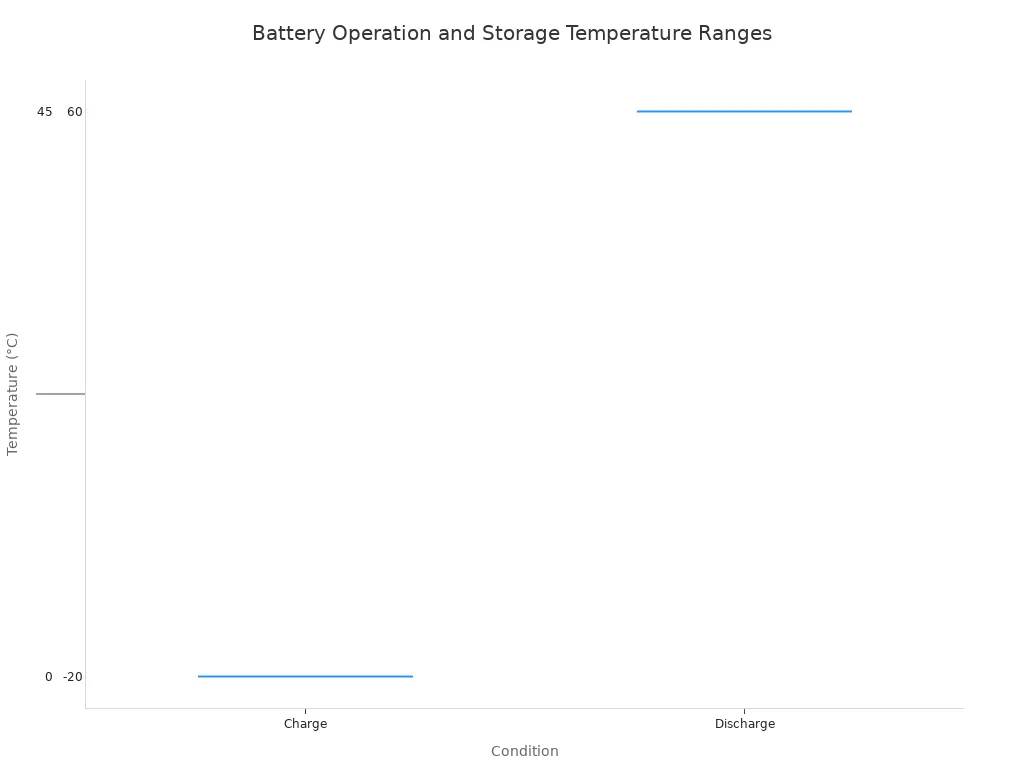
Modern cordless tools, including the rechargeable hair dryer, rely on Lithium-Ion (Li-ion) battery packs. This technology offers the best balance of energy density and weight. The specifications of the battery determine the tool’s capabilities, including its charging speed and operational temperature range.
Note: Operating Conditions Matter 🌡️ A battery’s performance is sensitive to temperature. Using or charging a battery-powered hair dryer outside its optimal temperature range can reduce efficiency and shorten its lifespan.
Battery Lifespan and Degradation
Every rechargeable battery has a limited lifespan, measured in charge cycles. A typical battery hair dryer battery is rated for around 500 cycles. With each cycle of charging and discharging, the battery’s maximum capacity degrades. Over time, a user will notice a shorter battery life, meaning the tool runs for less time on a full charge.
The Cost of Battery Replacement
When the battery no longer holds a useful charge, it must be replaced. For many cordless models, the battery is a significant portion of the total cost. Replacement can be expensive and sometimes difficult, depending on the manufacturer. This long-term expense is a factor that traditional corded dryer users never have to consider.
Weight, Ergonomics, and Design
The physical design of a hair dryer directly influences user comfort and handling. Engineers approach the ergonomics of corded and cordless models from different perspectives, leading to distinct differences in weight distribution, balance, and form factor. These design choices impact everything from wrist strain to storage convenience.
Corded: Balancing Motor and Handle
The design of a corded hair dryer focuses on creating a comfortable balance between the motor in the barrel and the handle. Manufacturers carefully distribute the weight to prevent the tool from feeling top-heavy. This ergonomic balance reduces arm and wrist fatigue during the extended styling sessions that a corded model allows. Professional-grade corded dryers, in particular, are engineered for optimal balance, enabling stylists to work for hours with minimal strain. The design prioritizes in-use comfort over portability.
Cordless: The Weight of the Battery
A cordless hair dryer’s ergonomics are defined by the placement of its heaviest component: the battery. Modern cordless hair dryers typically weigh between 0.6 and 1.4 lbs. While this is an improvement over older models, they are still generally heavier than most corded hair dryers. The battery is almost always housed in the handle, concentrating the weight in the user’s hand. This can lead to a bottom-heavy feel and may cause wrist fatigue more quickly than a well-balanced corded tool. The entire design must accommodate the size and weight of this essential power source.
Ergonomic Trade-Off ⚖️
- Corded: Balanced weight distribution for comfortable, long-term use.
- Cordless: Weight concentrated in the handle due to the battery, potentially causing faster fatigue.
Foldable vs. Rigid Designs
Hair dryers come in two primary forms: foldable and rigid. Foldable designs are common for travel-focused models, including many compact corded dryers and nearly all cordless options. This feature makes the device smaller and easier to pack. Rigid designs are standard for high-performance corded hair dryers. This fixed construction provides greater durability and allows for larger, more powerful motors and components. The choice between these designs often reflects the tool’s intended purpose, with portability favoring foldable models and performance favoring rigid ones.
Which Dryer Fits Your Lifestyle?
Choosing the right hair dryer depends less on which technology is “better” and more on which tool aligns with a user’s specific daily routines and needs. A person’s lifestyle—whether they are a daily home stylist, a frequent traveler, or a gym enthusiast—is the ultimate deciding factor.
The Daily Home User
For individuals who primarily style their hair at home as part of a daily routine, performance and reliability are the most important factors.
Why Corded is the Clear Winner
A corded hair dryer is the undisputed champion for daily home use. Its design offers several practical advantages that make it the most effective and dependable choice.
- Consistent Power: Corded models provide a continuous, powerful stream of air. This is essential for efficient drying and achieving professional styling results.
- No Recharging Needed: The device is always ready for use. Users never face the inconvenience of a dead battery or a limited runtime.
- Lighter Weight: Without the added bulk of a battery, corded hair dryers are often lighter. This design reduces arm and wrist fatigue during longer styling sessions.
- More Affordable: Corded dryers are generally more budget-friendly, offering superior performance at a lower initial cost.
Managing Long or Thick Hair Daily
Users with long, thick, or coarse hair require significant power and time to achieve a complete dry. A corded model’s unlimited runtime is non-negotiable for this hair type. The consistent high heat and strong airflow can tackle dense hair effectively, ensuring an even dry from root to tip without any drop in performance. A battery hair dryer simply cannot offer the sustained power needed for these demanding daily styling tasks.
The Frequent Traveler
For those constantly on the move, portability and convenience become the top priorities. The challenges of packing light and dealing with unfamiliar spaces redefine what makes a hair dryer useful.
Cordless for True On-the-Go Use
A battery hair dryer offers the ultimate freedom for travel. Its key advantage is the ability to function anywhere, completely independent of power outlets. This portability is perfect for airports, campsites, or hotels with poorly placed plugs. The cordless design provides unmatched travel convenience.
Dual-Voltage Corded Dryers as an Alternative
A compact, dual-voltage corded dryer presents a powerful alternative for international travel. These models are engineered specifically for portability and global compatibility. Key features to look for include:
- Automatic Voltage Detection: Advanced models automatically switch between 110-125V and 220-250V, eliminating manual adjustments.
- Compact and Lightweight Design: A foldable handle and lightweight body save precious luggage space.
- Ionic Technology: This feature helps reduce frizz and add shine, which is especially useful when traveling to humid climates.
- Multiple Settings and Attachments: Versatile heat and speed settings, along with a concentrator nozzle, provide styling control away from home.
Hotel Dryers vs. Bringing Your Own
Relying on a hotel-provided hair dryer can be a gamble. These units are often underpowered, poorly maintained, and ergonomically challenging. A high-performance travel dryer offers a significantly better experience.
“Wattage became the proxy for power because it was easy to measure and market. But drying hair is fundamentally about moving air molecules across keratin surfaces—not dumping electricity into a coil… The real differentiator isn’t how much power it draws—it’s how intelligently it delivers energy where it’s needed, when it’s needed, and only as much as needed.” — Dr. Lena Cho, Electrical Engineering PhD, MIT
The technical differences are stark. A quality travel dryer provides superior airflow and stable temperatures, protecting hair from damage while reducing drying time.
| Feature | Typical Hotel Dryer | High-Performance Travel Dryer |
|---|---|---|
| Effective Airflow (CFM) | 32–41 CFM | 55–65 CFM |
| Thermal Consistency | ±25°F fluctuation | ±3°F variation |
| Weight & Ergonomics | 1.8–2.4 lbs; front-heavy | 11–14 oz; rear-weighted |
| Noise Level (dBA) | 92–98 dBA | 76–83 dBA |
Bringing a personal travel dryer ensures consistent, reliable performance, better hair health, and a more comfortable styling experience, no matter the destination.
The Gym-Goer and Athlete
For active individuals, convenience and speed are paramount. A hair dryer must fit seamlessly into a fast-paced, post-workout routine.
The Locker Room Advantage of Cordless
The gym locker room is an ideal environment for a battery-powered hair dryer. Outlets are often limited and in high demand. A cordless model eliminates the need to wait for a free plug or navigate a crowded space with a cord. This enhances both safety and convenience, allowing users to dry their hair at their locker or any open bench. The portability of a cordless device is a major asset in this setting.
Quick Touch-ups Post-Workout
After an intense workout or swim, a battery hair dryer is perfect for quick touch-ups. It allows athletes and professionals to dry their hair rapidly, saving time before heading to the office or a meeting. This helps reduce the discomfort of wet hair in air-conditioned spaces. The compact size of a cordless hair dryer makes it easy to store in a gym bag, ensuring it is always ready for use.
The Professional Stylist
In a professional salon environment, tools are not just accessories; they are essential instruments for business. For hair stylists, the choice of a hair dryer is critical, and their preference is overwhelmingly uniform.
Why Pros Exclusively Use Corded
Professional stylists exclusively use high-performance corded hair dryers. Their work demands a level of power that battery technology cannot currently provide. Experts recommend dryers with at least 1800 watts, as higher wattage produces a stronger motor and more powerful airflow. This capability allows stylists to dry hair faster, which is crucial for minimizing heat damage. A weaker motor requires longer drying times or higher heat, increasing the risk of harming the hair cuticle. The robust construction of a professional corded model is also designed for durability, allowing it to withstand hours of continuous use daily without overheating or failing.
The Need for Power, Precision, and Reliability
A stylist’s reputation depends on delivering consistent, high-quality results. This requires a tool that offers power, precision, and absolute reliability.
A corded hair dryer provides the trifecta of professional requirements. The immense power gives a stylist control to shape and sculpt hair. Multiple, distinct heat and speed settings offer the precision needed to tailor the airflow for different hair types and styling techniques. Finally, the reliability of a corded connection means there is never a risk of a battery dying mid-client, ensuring a smooth and efficient workflow from open to close.
For a professional, time is money. The infinite runtime of a corded tool is a non-negotiable business asset.
The Outdoor and Off-Grid User
For individuals who embrace lifestyles away from conventional power grids, personal grooming tools must adapt to unique circumstances. This is where the specific advantages of a cordless device find their true purpose.
Camping, Van Life and RVs
Living or traveling in a camper, van, or RV often means limited or no access to standard electrical outlets. A cordless hair dryer becomes an invaluable tool in these scenarios. It offers a touch of modern convenience in a rustic setting.
- Independence from Hookups: Users can dry their hair without needing to be at a campsite with electrical hookups.
- Quiet Operation: It avoids the need to run a loud and power-hungry generator just for a hair dryer.
- Total Location Freedom: A person can use the tool inside their van, outside by a lake, or anywhere their adventure takes them.
This freedom makes the cordless option a practical luxury for off-grid living.
Cordless as a Niche Utility Tool
For the outdoor enthusiast, the cordless hair dryer is best viewed as a specialized utility tool rather than a high-performance styling device. Its function is not to create a perfect salon blowout but to provide a basic level of comfort and convenience. It can quickly dry hair after a swim in a river or provide a bit of warmth on a cold morning. In this context, the trade-offs in power and runtime are acceptable because the alternative is no hair dryer at all. The cordless tool successfully fills a very specific niche where traditional corded dryers are simply not an option.
Cost, Value, and Longevity of Corded and Cordless Hair Dryers
A buyer’s financial commitment extends beyond the initial purchase. The long-term value and lifespan of a hair dryer are critical considerations that differ significantly between corded and cordless models.
Initial Purchase Price
The upfront cost is the most immediate difference between the two technologies.
Corded: Wide Range from Budget to Premium
Corded hair dryers occupy a broad market with options for every budget. A user can find a functional traditional model for a low price or invest in a high-end device with advanced features. This wide price spectrum makes corded technology accessible to all consumers.
| Category | Price Range |
|---|---|
| Budget | Around $50 |
| Mid-range | Around $100 |
| Premium | $200 or more (up to $450) |
Cordless: A Premium Price Tag
Cordless hair dryers are positioned as premium, niche products. The advanced battery technology and compact engineering command a high price. For instance, a model like the VOLO Go Cordless Dryer carries a regular price of $450. This cost reflects its specialized convenience, placing it firmly in the premium category. The cordless option represents a significant initial investment.
Long-Term Value
The value of a hair dryer over time depends on its durability and ongoing maintenance costs.
Corded: A Durable, Long-Lasting Investment
A quality corded hair dryer is a durable, long-lasting investment. These traditional tools have simple, robust mechanics and no battery to degrade. A well-maintained corded model can provide reliable performance for many years, offering excellent long-term value with no hidden replacement costs. The corded design is built for longevity.
Cordless: Factoring in Battery Replacement
The value of a cordless tool is tied to its battery. All rechargeable batteries have a finite lifespan and lose capacity over time.
The Hidden Cost of Convenience 💸 A user must account for the eventual cost of battery replacement. This future expense can be substantial, impacting the overall long-term value of a cordless device.
This factor makes the traditional corded dryer a more predictable long-term purchase.
Attachments and Accessories
Attachments transform a hair dryer from a simple drying tool into a versatile styling instrument.
Corded: A Universe of Diffusers and Concentrators
The market for corded dryer accessories is vast. Users can find a universe of attachments, including specialized diffusers for curly hair and precision concentrators for smooth blowouts. Many brands offer universal attachments, giving users endless options to customize their styling routine.
Cordless: Basic, Often Integrated Attachments
Attachments for cordless models are typically basic. To maintain portability and minimize weight, manufacturers often provide a single, simple nozzle. Some designs even integrate the attachment directly into the body of the dryer. This minimalist approach prioritizes convenience over the styling versatility offered by corded counterparts.
The Future of Hair Drying
The hair dryer industry is not static. Engineers are constantly pushing the boundaries of technology, seeking to bridge the performance gap between corded and cordless models. The future points toward smarter batteries, more efficient motors, and innovative hybrid designs that could redefine user expectations.
Innovations in Cordless Technology
The primary focus of innovation for the battery hair dryer is its power source. Advances in battery and motor technology are critical for making cordless tools a more viable alternative to their powerful corded counterparts.
Will Batteries Ever Catch Up?
The main limitation of any cordless tool is its battery. Current lithium-ion technology struggles to match the sustained output of a corded dryer. However, researchers are developing next-generation batteries that could change everything. These advancements promise higher energy density, faster charging, and improved safety.
Future Battery Technologies on the Horizon 🔬
- Solid-state batteries: Use a solid electrolyte for higher efficiency and safety.
- Graphene batteries: Promise significantly faster charging and longer lifespans.
- Sodium-ion batteries: Offer a more affordable and safer alternative, though with slightly lower energy density.
These new battery types could one day power a cordless hair dryer that rivals the performance of a corded model, making the trade-off between power and portability a thing of the past.
Advancements in Motor Efficiency
Beyond the battery, motor technology plays a crucial role. The drive for greater efficiency is leading to the development of smaller, more powerful motors that consume less energy. This means a future battery hair dryer could achieve stronger airflow while extending its limited runtime. The creation of more energy-efficient models is a key goal for manufacturers, as it directly improves the user experience by maximizing the power available from the battery.
The Rise of Hybrid Models
A new category of hair dryer is emerging to offer a compromise between corded power and cordless freedom. These hybrid models attempt to provide the best of both worlds.
Plug-in Hybrid Models
A plug-in hybrid rechargeable hair dryer operates in two distinct modes. A user can use it as a cordless device, powered by its internal battery for on-the-go convenience. When more power or unlimited runtime is needed, the user can plug it directly into a wall outlet. This allows it to function just like a traditional corded hair dryer, delivering maximum heat and airflow without draining the battery.
Is a Hybrid the Best of Both Worlds?
For many users, a hybrid model could be the ideal solution. It eliminates the primary weakness of a purely cordless device—limited power and runtime—while retaining its key advantages. A user gets the freedom of a cordless tool for travel or quick touch-ups, combined with the reliable performance of a corded dryer for daily styling at home. This flexibility makes hybrid technology a compelling direction for the future of hair care.
For most users, corded hair dryers remain the superior choice. They offer the power and reliability needed for effective daily drying performance. Cordless hair dryers excel in a specific niche, providing maximum portability and convenience for travel or quick touch-ups where outlets are unavailable. The limited runtime and battery life of a cordless hair dryer make it a supplementary tool, not a replacement for a high-performance corded model. The final decision rests on a user’s primary need: consistent at-home power from a corded device or the absolute freedom of a cordless one.
FAQ
Are cordless hair dryers bad for your hair?
Cordless hair dryers are not inherently bad for hair. They typically operate at lower temperatures, which can reduce the risk of heat damage. This gentler heat, however, results in longer drying times compared to the high power of corded models.
Can you take a cordless hair dryer on a plane?
A user can take a cordless hair dryer on a plane, but it must be in carry-on luggage. Most airlines prohibit devices with lithium-ion batteries in checked bags due to safety concerns.
Travel Tip ✈️ Always verify the airline’s specific rules on battery size (measured in Watt-hours) before packing to ensure compliance.
How long does a cordless hair dryer last?
The longevity of a cordless hair dryer has two aspects:
- Runtime: A full charge typically provides 15-30 minutes of use on a heated setting.
- Lifespan: The internal battery is generally rated for around 500 charge cycles before its capacity significantly degrades.
Why are cordless hair dryers so expensive?
Cordless hair dryers command a premium price due to their advanced internal components. The cost reflects the research, development, and manufacturing of high-density lithium-ion batteries and compact, energy-efficient motors necessary for portable operation.
Is a 1200W hair dryer powerful enough?
A 1200-watt hair dryer is sufficient for users with short or fine hair. It provides adequate power for basic drying and touch-ups. However, individuals with long or thick hair will likely find it underpowered, leading to much slower drying sessions.
Do professional stylists use cordless hair dryers?
Professional stylists exclusively use high-performance corded hair dryers. Their work demands the consistent power, precision settings, and absolute reliability that battery-operated tools cannot currently offer. A corded model ensures uninterrupted service for clients throughout the day.
Can a cordless hair dryer replace a corded one?
For most users, a cordless hair dryer serves as a supplementary tool, not a replacement. Its primary advantage is portability for travel or the gym. The superior power and unlimited runtime of a corded dryer make it the standard for effective, daily at-home styling.