
The global hair dryer market shows significant growth potential, creating opportunities for brands that partner with a reliable hair dryer manufacturer. This decision directly impacts brand reputation and success. A top-tier hair dryer manufacturer demonstrates a commitment to quality across its product lines, from a standard AC hair dryer to an advanced BLDC hair dryer. Choosing the right hair dryer factory ensures your hair dryer meets consumer expectations.
Hair Dryer Market Projection (2026-2035) The market is forecast to expand considerably, highlighting the importance of strategic partnerships.
Metric Value Market Size (2026) USD 12.21 billion Market Size (2035) USD 20.67 billion Growth Rate (CAGR) 6.04%
Defining the Hallmarks of the Best Hair Dryer
Before evaluating a manufacturer, a brand must first understand the qualities that define the best hair dryer. These benchmarks separate premium products from standard models. They cover core performance, material integrity, and user-centric design. A superior hair dryer delivers efficiency, safety, and a comfortable hair drying experience.
Core Performance Metrics
Performance is the primary measure of a hair dryer’s quality. The best hair dryers balance power, heat control, and ergonomics to achieve professional results without causing damage.
Powerful Airflow and Speed
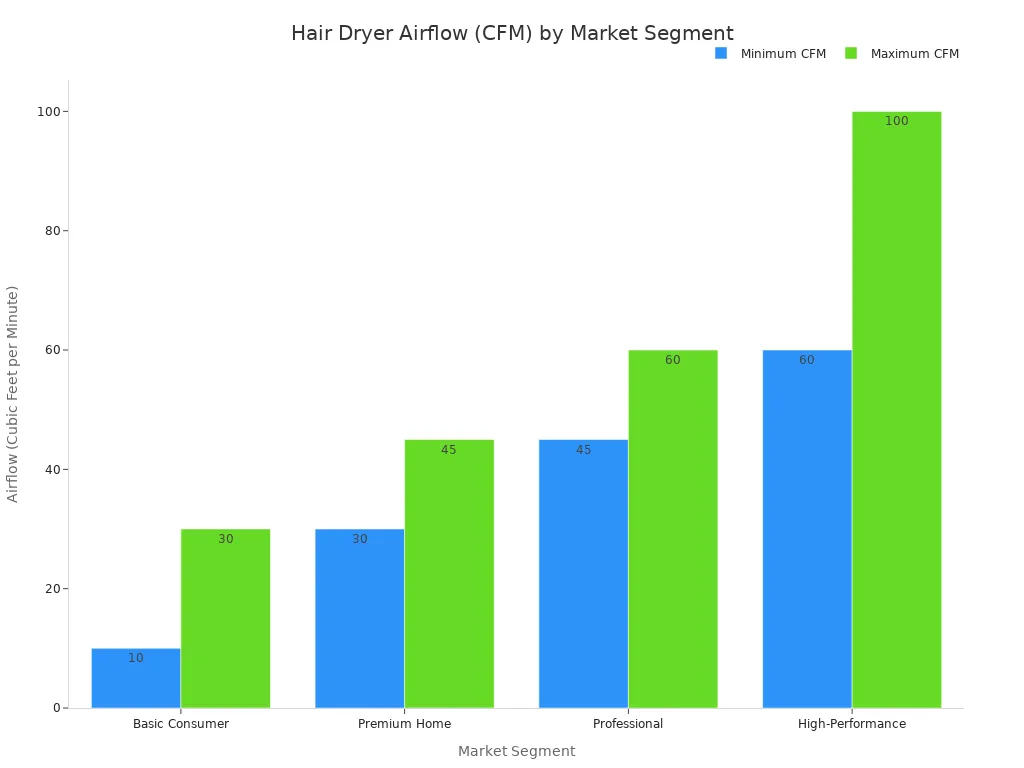
Airflow, measured in cubic feet per minute (CFM), is more critical than raw heat for fast drying. High airflow speeds up water evaporation, reducing the time hair is exposed to high temperatures. A manufacturer’s ability to engineer a powerful hair dryer is a key indicator of its expertise. Different market segments demand distinct airflow capabilities.
| CFM Range | Market Segment | Typical Drying Time |
|---|---|---|
| 10-30 | Basic Consumer | 10-15 minutes |
| 30-45 | Premium Home | 6-10 minutes |
| 45-60 | Professional | 4-7 minutes |
| 60-100+ | High-Performance | 2-5 minutes |
Smart Heat Control Technology
Excessive heat is the leading cause of hair damage. The best hair dryers offer precise temperature regulation and multiple heat settings to protect hair integrity. A reliable manufacturer designs a hair dryer with intelligent thermal sensors that prevent overheating. This allows users to select the appropriate temperature for their hair type.
Optimal Heat Settings by Hair Type
- Fine or Thin Hair: Requires low to medium heat. High temperatures can dehydrate this hair type, making it brittle.
- Thick or Coarse Hair: Can tolerate medium to high heat. Users should start with lower heat to prevent thermal shock.
- Curly or Wavy Hair: Benefits from a low heat setting with a diffuser to maintain texture and prevent frizz.
Ergonomics and User Comfort
A hair dryer’s physical design directly impacts its usability, especially for professionals. Key ergonomic features include weight, balance, and handle design. A lightweight dryer, often under one pound, minimizes arm fatigue during prolonged use. Proper balance ensures users can maintain optimal angles, directing airflow effectively without strain. These design features are crucial for a positive user experience.
Key Material and Component Standards
The longevity and safety of a hair dryer depend on the quality of its materials and internal components. Top-tier manufacturers prioritize durability in every part of the product.
Heat-Resistant Casing Materials
The outer shell of a hair dryer must withstand high temperatures without warping, melting, or releasing harmful fumes. High-quality polymers like Polybutylene Terephthalate (PBT) and specialized nylon blends offer excellent thermal resistance and impact durability. These materials ensure the hair dryer remains safe to handle even during extended operation.
Advanced Heating Elements
The heating element is the core of the hair dryer’s thermal system. Modern heating elements often use ceramic or tourmaline coatings. These materials generate even, consistent heat and produce negative ions, which help reduce frizz and static. These advanced features distinguish premium products.
Durable Internal Components
The internal wiring, switches, and motor mounts must be robust to ensure a long product lifespan. A manufacturer committed to quality uses high-grade wiring with secure connections and durable switches rated for thousands of cycles. Examining these smaller components reveals a manufacturer’s true dedication to building a reliable hair dryer.
Product Quality and Performance Indicators
An excellent hair dryer manufacturer consistently delivers products that meet high standards for performance, durability, and user experience. This commitment is evident in their choice of materials, motor technology, and airflow engineering. By examining these specific indicators, brands can accurately assess a manufacturer’s capabilities and dedication to quality.
Here’s a breakdown of the key product quality and performance indicators to evaluate.
Material and Component Quality
The materials used in a hair dryer directly influence its safety, longevity, and feel. A reliable manufacturer selects premium materials for both external and internal components.
Casing Materials: PBT and Nylon
The outer shell of a hair dryer must endure high heat and potential impacts. Manufacturers often use Polybutylene Terephthalate (PBT) and specialized nylon for their excellent thermal resistance and durability. These materials prevent the casing from warping or becoming too hot to touch, ensuring user safety and product integrity. A manufacturer’s choice of high-grade polymers reflects a commitment to building a resilient and safe hair dryer.
Nozzle and Diffuser Attachments
Attachments like nozzles and diffusers are essential features that enhance a hair dryer’s versatility. Nozzles concentrate airflow for precise styling, while diffusers disperse air to protect curls and add volume. A quality manufacturer produces these attachments from the same durable, heat-resistant materials as the main body. They also ensure a secure fit that prevents attachments from falling off during use.
Internal Component Durability
The internal components, including wiring, switches, and motor mounts, are critical to a hair dryer’s lifespan. Reputable manufacturers use high-grade, insulated wiring and secure connections to prevent electrical failures. Switches are tested for thousands of cycles to guarantee reliability. Examining these often-overlooked parts provides deep insight into a manufacturer’s attention to detail and overall product quality.
Motor Technology and Specifications
The motor is the heart of any hair dryer, defining its power and lifespan. The best hair dryers use motors suited for their intended market, from professional salons to home use.
AC Motors for Professional Use
AC (Alternating Current) motors are the standard for professional-grade hair dryers. These motors produce powerful, high-pressure airflow, which significantly reduces drying time. Though heavier than other types, their robust construction makes them ideal for the rigorous demands of a salon environment.
DC Motors for Retail Models
DC (Direct Current) motors are lightweight and more compact, making them a popular choice for consumer and travel hair dryers. While they typically offer less power than AC motors, advancements in DC motor technology have narrowed the performance gap, providing a good balance of performance and portability for everyday users.
Brushless DC (BLDC) Motors
BLDC motors represent the pinnacle of hair dryer technology. These digitally controlled motors are lighter, quieter, and more energy-efficient than traditional AC or DC motors. They offer an exceptionally long lifespan and precise speed control, making them signature features of premium and high-performance hair dryers.
Verifying Motor Lifespan Ratings
A manufacturer should provide clear lifespan ratings for their motors, typically measured in hours of operation. These ratings offer a tangible measure of a hair dryer’s expected durability.
Typical Motor Lifespan Comparison
- AC Motors: Generally rated for 500 to 1,000 hours of use.
- DC Motors: Can often exceed 2,000 hours of operation.
- BLDC Motors: Offer the longest lifespan, often rated for up to 10,000 hours.
Heating Element and Airflow Systems
The heating element and airflow design work together to dry hair efficiently without causing damage. Advanced features in these systems separate standard models from superior ones.
Ceramic Heating Elements
Ceramic heating elements are a key feature in modern hair dryers. They generate far-infrared heat, which penetrates the hair shaft gently and evenly. This method dries hair from the inside out, preserving its natural moisture and preventing damage from hot spots.
- Heat Distribution: Ensures even temperature across the heating surface.
- Hair Protection: Reduces the risk of cuticle damage and preserves hair’s natural texture.
Tourmaline-Infused Components
Tourmaline is a semi-precious mineral that, when heated, naturally produces negative ions. Manufacturers infuse tourmaline into heating elements or internal components to enhance a hair dryer’s performance. These ions help break down water molecules for faster drying and neutralize static, resulting in smoother, frizz-free hair.
| Technology | Primary Mechanism | Key Benefits |
|---|---|---|
| Ceramic | Even, far-infrared heat distribution | Gentle drying, moisture retention |
| Tourmaline | Natural negative ion generation | Frizz reduction, enhanced shine |
Airflow Design and Engineering
Beyond the motor, the internal design of the hair dryer is crucial for optimizing airflow. A well-engineered hair dryer uses aerodynamic principles to create a smooth, powerful, and consistent stream of air. This involves the shape of the barrel, the design of the fan blades, and the intake grill. Superior airflow engineering is one of the defining features of the best hair dryers, enabling faster drying at lower, safer temperatures.
How a Reliable Hair Dryer Manufacturer Ensures Safety and Compliance
Product safety is not a feature; it is a fundamental requirement. A reliable hair dryer manufacturer proves its commitment to safety through verifiable certifications and adherence to international standards. These credentials protect consumers and ensure market access for your brand. They show the manufacturer operates with accountability and transparency.
Mandatory International Safety Certifications
Every major global market has its own set of safety standards for electronic devices. A manufacturer’s ability to meet these diverse requirements demonstrates its technical expertise and global readiness. Verifying these certifications is a critical step in your due diligence process.
UL/ETL for North America
For the U.S. and Canadian markets, a hair dryer must have certification from a Nationally Recognized Testing Laboratory (NRTL) like UL (Underwriters Laboratories) or ETL (Intertek). Both labs test products against the same safety standards, including UL 859 for Household Electric Personal Grooming Appliances. This standard includes specific rules for any hair dryer incorporating lithium coin cell batteries, requiring compliance with UL 4200 to prevent ingestion risks for children.
CE Marking for Europe
The CE mark signifies that a hair dryer complies with European Union health, safety, and environmental protection standards. To earn this mark, a hair dryer must meet several key directives.
| Directive | Relevant Standards | Core Requirement |
|---|---|---|
| Low Voltage (LVD) | EN 60335-1 | Protects against electrical shock and hazards. |
| EMC | EN 55014-1, EN 55014-2 | Ensures the hair dryer does not cause electromagnetic interference. |
| RoHS | EN 62321 | Restricts the use of specific hazardous materials. |
Compliance with the Electromagnetic Compatibility (EMC) directive is crucial. It ensures the hair dryer will not disrupt other electronic devices like Wi-Fi routers or televisions.
PSE for Japan
The PSE (Product Safety Electrical Appliance & Material) mark is mandatory for electrical products sold in Japan. This certification confirms that a hair dryer meets the country’s strict technical requirements for electrical safety, enforced by the Ministry of Economy, Trade and Industry (METI).
KC for South Korea
The KC (Korea Certification) mark is required for many products sold in South Korea, including electronics. It consolidates several previous certifications into one mark, signifying that a hair dryer complies with Korean safety, health, and environmental standards.
Substance and Environmental Compliance
Beyond electrical safety, top manufacturers ensure their products are free from harmful chemicals. This protects both consumers and the environment.
RoHS for Hazardous Substances
The RoHS (Restriction of Hazardous Substances) directive limits the use of specific toxic materials in electronic equipment. A compliant hair dryer will not contain unsafe levels of these substances.
RoHS Restricted Substances Include:
- Lead (Pb)
- Mercury (Hg)
- Cadmium (Cd)
- Hexavalent Chromium (Cr6+)
- Polybrominated Biphenyls (PBBs)
- Polybrominated Diphenyl Ethers (PBDEs)
REACH for Chemical Safety
REACH (Registration, Evaluation, Authorisation and Restriction of Chemicals) is a comprehensive European regulation. It governs a wider range of chemicals than RoHS. A manufacturer compliant with REACH demonstrates a deep commitment to managing chemical risks throughout its supply chain.
Quality Management and Factory Standards
Factory-level certifications provide insight into a manufacturer’s operational excellence and ethical practices.
ISO 9001: Quality Management
ISO 9001 is the international standard for a quality management system (QMS). A manufacturer with this certification has established processes for consistently producing a high-quality hair dryer, managing risks, and pursuing continuous improvement.
BSCI for Social Compliance
The Business Social Compliance Initiative (BSCI) is a leading system for improving working conditions in global supply chains. A BSCI-audited factory shows a commitment to fair labor practices, worker health and safety, and ethical business conduct.
Evaluating Research, Development, and Innovation
A manufacturer’s commitment to research and development (R&D) separates a simple supplier from a true innovation partner. Their ability to integrate advanced technologies and offer robust customization services is a direct reflection of their engineering prowess. Evaluating these capabilities ensures your brand can offer a competitive and modern hair dryer.
Advanced Hair Care Technologies
The best hair dryers incorporate technologies that improve the hair drying experience while protecting hair health. A forward-thinking manufacturer actively invests in these value-added features.
Ionic Technology for Frizz Reduction
Ionic technology is a hallmark of a high-quality hair dryer. Wet hair often carries a positive electrical charge, which causes frizz and static. An ionic hair dryer emits a stream of negative ions that neutralize this charge. This process breaks down water molecules into smaller clusters for faster evaporation and seals the hair’s cuticles. The result is smoother, shinier hair with significantly less frizz.
Far-Infrared Heat for Gentle Drying
Unlike conventional dryers that heat the air around the hair, far-infrared technology uses longer wavelengths to gently heat the hair from the inside out. This method preserves natural moisture, reduces heat damage, and shortens drying time. The best hair dryers often use this technology for a healthier drying process.
| Feature | Conventional Convection Heat | Far-Infrared Heat |
|---|---|---|
| Heat Damage Risk | Higher | Significantly lower |
| Moisture Retention | Poor | Excellent |
| Drying Time | Standard | Up to 50% faster |
| Operating Temperature | Higher heat required | Lower temperatures effective |
Low-EMF (Electromagnetic Field) Designs
As consumer awareness of health and wellness grows, some seek products with low electromagnetic field (EMF) emissions. A manufacturer that offers a low-EMF hair dryer demonstrates attention to niche market demands and a commitment to consumer safety. These specialized features can be a powerful selling point.
Customization and Engineering Services
A top-tier manufacturer provides comprehensive engineering services that allow brands to create a unique hair dryer tailored to their target audience.
OEM (Original Equipment Manufacturer) Process
The OEM process allows a brand to bring a completely original product design to life. A reliable manufacturer guides the brand through every stage, from concept to production. This collaborative journey typically takes three to six months and involves detailed design, prototyping, tooling, and testing before mass production of the custom hair dryer begins.
ODM (Original Design Manufacturer) Capabilities
For brands seeking a faster market entry, ODM services are ideal. A manufacturer with strong ODM capabilities offers a portfolio of pre-designed, market-tested hair dryer models that a brand can label as its own. This approach leverages the manufacturer’s existing R&D and tooling, reducing development time and costs.
Prototyping and Tooling Expertise
A manufacturer’s expertise in creating functional prototypes and precision injection molds is critical. This capability ensures the final product accurately reflects the intended design, from its ergonomic feel to its performance features. High-quality tooling is essential for producing a durable and reliable hair dryer.
Assessing Manufacturing Capabilities and Production
An operational assessment reveals a manufacturer’s true capacity to deliver quality products on schedule. A reliable hair dryer manufacturer possesses robust infrastructure, efficient supply chain management, and a culture of transparency. These elements are crucial for a successful, long-term partnership. Evaluating these capabilities helps a brand gauge a factory’s ability to meet production demands and navigate potential disruptions.
Factory Infrastructure and Capacity
A factory’s physical setup and production volume are direct indicators of its ability to fulfill orders. Modern infrastructure and high output signal a capable partner.
Production Line Count and Automation
The number and sophistication of production lines determine manufacturing speed and consistency. Factories incorporating Industry 4.0 principles, such as robotics and intelligent assembly, demonstrate a commitment to efficiency. Automation offers several key advantages:
- Enhanced Precision: AI-driven systems improve assembly accuracy and reduce manual errors.
- Improved Consistency: Automated quality control identifies microscopic flaws, ensuring every hair dryer meets the same high standard.
- Faster Turnaround: Robotics and automated material handling streamline the entire production process, from assembly to packaging.
Monthly Output Volume
A manufacturer’s monthly output provides a clear metric of its production power. For instance, a mid-sized factory may have three automatic production lines and a capacity of 100,000 units per month. This figure helps a brand determine if a manufacturer can meet its current and future volume requirements.
Scalability for Large Orders
A factory must demonstrate the ability to scale production to accommodate growth. Large-scale manufacturers can often handle orders exceeding 50,000 units per month. This scalability ensures that as a brand grows, its manufacturing partner can keep pace without sacrificing quality or extending lead times.
Lead Times and Supply Chain Management
An efficient supply chain is essential for getting products to market on time. Top manufacturers proactively manage their supply chains to minimize delays and mitigate risks.
Standard Production Lead Times
Lead time is the period from order placement to shipment. Digital supply chain solutions provide real-time visibility and can reduce lead times by up to 15%. A manufacturer should provide clear, realistic timelines for standard production runs, allowing a brand to plan its inventory and marketing efforts effectively.
Raw Material Sourcing Strategy
A resilient supply chain depends on a smart sourcing strategy. Geopolitical issues and trade tariffs can disrupt the flow of critical components. To counter this, leading manufacturers diversify their supply sources and invest in regional partnerships. This strategy minimizes dependence on a single region and protects production from unforeseen disruptions.
Logistics and Shipping Support
A full-service manufacturer assists with the complexities of global logistics. This support includes managing documentation, coordinating with freight forwarders, and ensuring the finished hair dryer shipments comply with international regulations. This logistical expertise is invaluable for ensuring a smooth journey from the factory to the warehouse.
Factory Transparency and Audits
Transparency is a cornerstone of a trustworthy manufacturing partnership. A willingness to open its doors for inspection shows a factory is confident in its processes and ethical standards.
Openness to In-Person Factory Visits
The best way to assess a manufacturer is to see its operations firsthand. A factory that welcomes in-person visits allows a brand to verify its infrastructure, observe quality control measures, and meet the team. This direct engagement builds trust and provides unparalleled insight.
Availability of Virtual Factory Tours
When an in-person visit is not feasible, a virtual tour is an excellent alternative. Many manufacturers now offer high-quality video tours that showcase their production lines, testing labs, and warehouse facilities. This provides a convenient way to evaluate a factory’s capabilities from anywhere in the world.
Access to Third-Party Audit Reports
Independent audits provide objective validation of a factory’s claims. A transparent manufacturer will readily share reports from organizations like BSCI (for social compliance) or ISO (for quality management). These documents offer unbiased proof of a factory’s commitment to ethical practices and operational excellence for every hair dryer they produce.
Vetting Quality Control and Assurance Processes
A manufacturer‘s quality control (QC) and assurance system is the backbone of its operations. It provides tangible proof of a commitment to producing a reliable hair dryer. A robust QC process identifies defects at every stage, from raw materials to finished goods. This systematic approach minimizes errors, ensures consistency, and guarantees that every unit meets brand standards.
Multi-Stage Inspection Protocols
Top-tier manufacturers implement a multi-stage inspection process to maintain quality throughout the production cycle. This protocol prevents defects from moving down the assembly line, saving time and resources.
IQC (Incoming Quality Control)
The quality journey begins before production starts. IQC teams inspect all incoming raw materials and components. They verify that motors, heating elements, plastic pellets, and wiring meet exact specifications. This crucial first step ensures that only high-grade materials enter the factory floor, preventing foundational flaws in the final hair dryer.
IPQC (In-Process Quality Control)
Inspectors monitor the assembly line continuously during production. This In-Process Quality Control (IPQC) catches any issues that arise during manufacturing. Technicians check for correct component placement, secure wire connections, and proper assembly. IPQC allows for immediate correction, maintaining the integrity of the entire production batch.
FQC (Final Quality Control)
Once a hair dryer is fully assembled, it undergoes a comprehensive Final Quality Control (FQC) inspection. This is the last line of defense before packaging.
Key FQC Checks Include:
- Functional Test: Verifying all heat and speed settings work correctly.
- Aesthetic Review: Inspecting for scratches, blemishes, or printing errors.
- Accessory Fit: Ensuring nozzles and diffusers attach securely.
- Safety Check: Confirming all electrical safety features are operational.
Rigorous Product Testing and Validation
Beyond visual inspection, a reliable manufacturer subjects its products to a battery of demanding tests. These validation processes simulate real-world use and abuse, confirming the hair dryer’s durability and performance.
Durability and Drop Tests
Manufacturers conduct drop tests to assess a hair dryer’s structural integrity. They drop units from standardized heights onto hard surfaces to simulate accidental falls. This test validates the resilience of the casing material and the security of internal component mounts, ensuring the product can withstand everyday mishaps.
Performance and Wattage Tests
Performance testing verifies that a hair dryer meets its advertised claims. Specialized equipment measures the actual wattage, airflow volume (CFM), and temperature output at each setting. This data-driven validation confirms the product delivers the power and efficiency promised to the consumer.
Aging and Lifespan Simulation Tests
To validate long-term reliability, factories perform aging tests. They run a sample of hair dryers continuously for hundreds or even thousands of hours. This accelerated lifespan simulation helps confirm the motor’s durability rating and identifies any components that may fail over time, providing confidence in the product’s longevity.
Analyzing Partnership Terms and Customer Support
A strong partnership extends beyond the factory floor. The best hair dryer manufacturers offer clear business terms, robust after-sales support, and excellent communication. These elements form the foundation of a successful and sustainable business relationship, ensuring your brand receives support at every stage.
Business and Financial Terms
Clear and fair financial terms are essential for a predictable partnership. A reliable manufacturer provides transparent policies that help brands manage budgets and plan for growth.
Minimum Order Quantity (MOQ)
The Minimum Order Quantity (MOQ) is the smallest number of units a brand can order. This figure varies based on the hair dryer model and customization level. For complex projects with new tooling, MOQs can range from 500 to 2,000 units. Many manufacturers offer more flexibility for standard models or trial orders, with some providing MOQs between 100 and 500 units to help new brands test the market.
Transparent Pricing Structure
A trustworthy partner provides a detailed cost breakdown. This pricing structure should clearly outline unit costs, tooling fees, and any charges for customization or special packaging. Transparency here prevents unexpected expenses and allows for accurate financial planning.
Flexible Payment Terms
Flexible payment terms demonstrate a manufacturer’s willingness to support its partners. While an upfront deposit is standard, a manufacturer may offer phased payments tied to production milestones, such as order confirmation, pre-shipment inspection, and final delivery.
After-Sales Service and Warranty
A manufacturer’s commitment does not end when the product ships. Strong after-sales service and a comprehensive warranty protect your investment and brand reputation.
Comprehensive Warranty Policy
A clear warranty policy shows a manufacturer’s confidence in its product quality. Warranty periods often differ between consumer and professional models, reflecting their intended use and durability.
| Hair Dryer Category | Standard Warranty Period |
|---|---|
| Entry-Level Consumer | 12 months |
| Mid-Range Professional | 24 months |
| Premium Professional | 24-36 months (extendable) |
| Commercial/Salon Grade | 4-10 years (on select components) |
Clear Defect and Return Process
A reliable partner has a well-defined process for handling defective units. This policy should outline how to report issues, the steps for returning products, and the terms for replacement or credit. A clear process minimizes disruption and resolves problems efficiently.
Long-Term Spare Parts Availability
For professional-grade hair dryers, the availability of spare parts like nozzles, filters, and switches is crucial. A manufacturer committed to long-term support ensures that these components are available for years, extending the product’s usable life.
Communication and Project Management
Effective communication is vital, especially when working with an overseas manufacturer. A dedicated and culturally aware team prevents misunderstandings and keeps projects on track.
English Proficiency and Clarity
Clear and consistent communication is fundamental to a successful project. A manufacturer must have a team with strong English proficiency to eliminate language barriers. This ensures that technical specifications, timelines, and feedback are understood perfectly by all parties.
Guaranteed Response Times
A professional manufacturer commits to specific response times, often within 24 hours. This guarantee ensures that questions are answered promptly and that potential issues are addressed before they can cause delays.
Dedicated Account Management
A dedicated account manager serves as your primary point of contact. This person should not only understand your project but also be aware of cultural differences that can impact business.
A lack of cultural awareness can lead to significant business challenges. For example, in Mediterranean countries, the “midday break” tradition means business is difficult between 1 PM and 4 PM. In another case, a company failed to sell wallpapers in Spain because it did not know many local walls have a texture that prevents wallpaper from sticking.
An effective account manager navigates these nuances, fostering a smoother and more respectful partnership.
Choosing a reliable hair dryer manufacturer is a foundational step for building a successful brand. A brand must focus its evaluation on tangible proof of quality, comprehensive safety certifications, and strong R&D capabilities. A partner offering transparent manufacturing and robust quality control is essential for long-term growth. This thorough due diligence secures more than a supplier; it finds a strategic and reliable hair dryer manufacturer committed to a brand’s success.
FAQ
What is the most important factor when choosing a manufacturer?
A brand should prioritize a manufacturer’s commitment to quality and safety. This includes verifying material standards, QC processes, and international safety certifications. These factors directly impact product reliability and brand reputation, forming the foundation of a successful partnership.
What is the difference between OEM and ODM?
OEM (Original Equipment Manufacturer) involves creating a unique product from a brand’s custom design. ODM (Original Design Manufacturer) allows a brand to select and rebrand a pre-designed model from the factory’s catalog for a faster market entry.
Why are safety certifications like UL and CE important?
Certifications like UL, CE, and PSE confirm a hair dryer meets mandatory safety standards for specific markets. They protect consumers from electrical hazards and ensure legal market access for the brand. A reliable manufacturer provides these credentials.
What motor type is best for a professional hair dryer?
AC motors are the standard for professional hair dryers. They provide powerful, high-pressure airflow and are built for durability in salon environments. BLDC motors offer a premium, longer-lasting, and more efficient alternative for high-end models.
How can a brand verify a factory’s quality control?
A brand can verify quality control through several methods:
- Requesting third-party audit reports (e.g., ISO 9001).
- Conducting in-person or virtual factory tours.
- Reviewing the manufacturer’s multi-stage inspection protocols (IQC, IPQC, FQC).
What is a typical MOQ for a custom hair dryer?
Minimum Order Quantities (MOQs) for custom hair dryers typically range from 500 to 2,000 units. This number depends on the project’s complexity and tooling requirements. Some manufacturers offer lower MOQs for standard models or trial orders.