

A dual voltage hair dryer operates safely on both 110-120V and 220-240V power systems, making it essential for travel. International travelers often face incompatible outlets and voltages, which can damage devices or cause safety hazards. Using a single voltage BLDC hair dryer or AC hair dryer from a hair dryer manufacturer or hair dryer factory without proper voltage compatibility may result in overheating or device failure. A dual voltage option ensures reliable performance and peace of mind abroad.
Dual Voltage Hair Dryer Basics
What Dual Voltage Means for Travel
Global Voltage Standards
Electrical systems differ widely across the globe. Each country or region sets its own voltage and frequency standards, which can create challenges for travelers who want to use personal appliances abroad. The following table highlights the voltage, frequency, and plug types in several popular destinations:
| Country/Region | Voltage | Frequency (Hz) | Plug Types |
|---|---|---|---|
| United States | 120V | 60 | A, B |
| Canada | 120V | 60 | A, B |
| Mexico | 127V | 60 | A, B |
| France | 230V | 50 | C, E |
| Germany | 230V | 50 | C, F |
| Italy | 230V | 50 | C, F, L |
| Spain | 230V | 50 | C, F |
| United Kingdom | 230V | 50 | G |
| Japan | 100V | 50/60 | A, B |
| China | 220V | 50 | A, C, I |
| India | 230V | 50 | C, D, M |
| Australia | 230V | 50 | I |
| New Zealand | 230V | 50 | I |
| Brazil | 127/220V | 60 | C, N |
| Argentina | 220V | 50 | C, I |
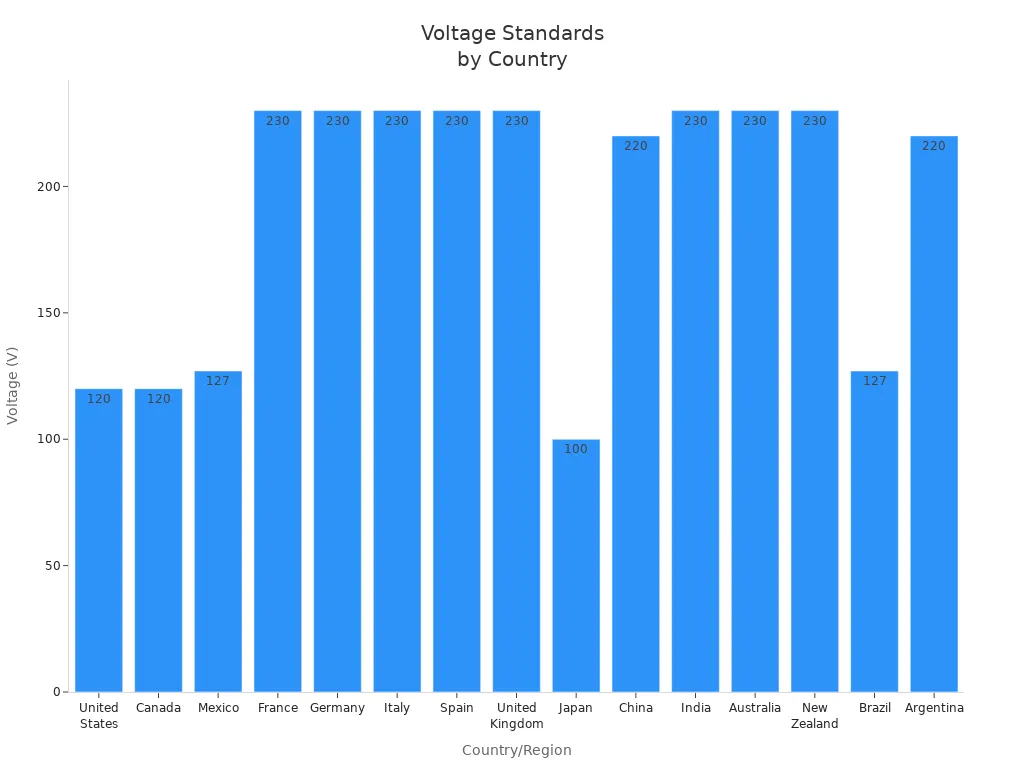
Travelers often encounter voltages ranging from 100V in Japan to 230V in most of Europe and Asia. Plug types also vary, which adds another layer of complexity.
How Dual Voltage Hair Dryers Solve Compatibility Issues
A dual voltage hair dryer addresses these challenges by supporting a wide voltage range, typically from 100V to 240V. This flexibility allows the device to operate safely and efficiently in almost any country. Unlike single voltage models, dual voltage hair dryers do not require a bulky and expensive voltage converter. Travelers only need a simple plug adapter to match the local outlet.
| Feature | Dual Voltage Hair Dryers | Single Voltage Hair Dryers |
|---|---|---|
| Voltage Range | 100-240V | 120V only |
| Converter Requirement | No | Yes, requires a high-wattage converter |
| Plug Adapter Needed | Yes | Yes |
Tip: Dual voltage hair dryers automatically adjust to the local voltage, which reduces the risk of electrical mishaps and device damage.
Why Travelers Need Dual Voltage Hair Dryers
Risks of Using Single Voltage Devices Abroad
Using a single voltage hair dryer in a country with a different electrical standard can cause serious problems. The device may overheat, short-circuit, or fail completely. In some cases, it can even pose a fire hazard. Single voltage models require a high-wattage converter to function safely in regions with different voltage standards, but these converters are often unreliable and cumbersome to carry.
Real-World Travel Scenarios
Frequent travelers benefit from dual voltage hair dryers in several ways:
- They can operate at any voltage from 110 to 240 volts, making them versatile for international trips.
- They eliminate the need for a voltage converter, which reduces the risk of electrical hazards.
- Most modern dual voltage hair dryers can auto-sense frequency, ensuring safe operation across different power systems.
- This feature helps prevent issues like motor overheating and premature wear.
For example, a traveler flying from the United States to France can use a dual voltage hair dryer with only a plug adapter. The device will function safely and efficiently, providing the same performance as at home. This convenience and reliability make dual voltage hair dryers a smart investment for anyone who travels internationally.
How Dual Voltage Hair Dryers Work
Manual vs. Automatic Voltage Switching
Dual voltage hair dryers offer two main types of voltage adjustment: manual and automatic switching. Understanding the differences between these methods helps travelers choose the right model for their needs.
How to Switch Voltage Manually
Manual voltage switching requires the user to adjust a small switch or dial on the hair dryer before plugging it in. This switch typically sits on the handle or base of the device. Travelers must set the correct voltage (usually 110-120V or 220-240V) to match the local power supply. Failing to do so can result in device malfunction or safety hazards.
Tip: Always double-check the voltage setting before use in a new country. Incorrect settings can damage the hair dryer or create a fire risk.
Manual switching offers a straightforward solution, but it demands user attention and awareness. Travelers should consult the user manual for specific instructions and look for clear markings near the switch.
How Automatic Switching Operates
Automatic voltage switching simplifies the process. The hair dryer detects the local voltage and adjusts itself without user intervention. This feature provides greater convenience and reduces the risk of user error. Automatic models appeal to frequent travelers who visit multiple countries with varying electrical standards.
The following table compares manual and automatic switching in terms of user convenience and operation:
| Feature | Automatic Switching | Manual Switching |
|---|---|---|
| User Action Required | No | Yes |
| Response Time | Instant (10-30 seconds) | Delayed (5-15 minutes) |
| Complexity of Operation | Low (automated) | High (manual intervention) |
| Maintenance Needs | Higher (regular service) | Lower (minimal maintenance) |
| Cost | Higher | Lower |
Automatic switching models cost more and may require more maintenance, but they offer unmatched ease of use and peace of mind.
Safety Features and Performance
Safety and performance remain top priorities for travelers using electrical devices abroad. Dual voltage hair dryers incorporate several features to ensure reliable operation and user protection.
Built-In Protections
Manufacturers equip these hair dryers with multiple safety mechanisms. Common features include:
- Automatic shut-off to prevent overheating
- Heat control settings for consistent temperature management
These protections help avoid accidents and extend the lifespan of the device. Automatic shut-off activates if the hair dryer gets too hot, while heat control settings allow users to select the optimal temperature for their hair type.
Performance Differences When Traveling
Performance can vary depending on the voltage and frequency of the local power supply. Dual voltage hair dryers maintain consistent operation across different regions, unlike single voltage models that may underperform or fail entirely when used abroad.
The table below highlights key differences:
| Feature | Dual Voltage Hair Dryers | Single Voltage Models |
|---|---|---|
| Voltage Compatibility | Operate on both 110-120V and 220-240V systems | Limited to one voltage |
| Safety | Prevent overheating and fire hazards | Risk of damage and safety issues |
| Convenience | Compact, no need for bulky converters | Requires additional equipment |
| Versatility | Suitable for international travel | Not suitable for use abroad |
Travelers benefit from the compact design and versatility of dual voltage hair dryers. These devices eliminate the need for heavy voltage converters and allow users to maintain their hair care routines anywhere in the world.
Note: Dual voltage hair dryers are designed for international use, preventing damage from voltage mismatches and saving valuable luggage space.
Identifying a Dual Voltage Hair Dryer
How to Read Labels and Specifications
What to Look for on the Product
Travelers should always inspect the label or specifications on a hair dryer before packing it for an international trip. Manufacturers typically place this information on the handle, plug, or near the power cord. The label should clearly state a voltage range, such as “100-240V” or “110/220V.” This range confirms that the device can operate safely in multiple regions.
Consumers should also check the packaging or user manual for voltage details. This step helps prevent travel mishaps and ensures the device will function as expected abroad. Many travelers overlook this simple verification, which can lead to weak performance or even device failure.
Common Markings and Numbers
Several markings and numbers help identify dual voltage products. The most important indicator is the voltage range. Look for these common markings:
- “100-240V” or “110-220V” printed on the label
- Frequency range, such as “50/60Hz”
- Certification marks that verify safety and compliance
The following table summarizes key certifications and what they mean for travelers, especially those visiting Europe:
| Certification | What It Verifies | Why It Matters for Europe |
|---|---|---|
| CE marking | Compliance with safety standards | Indicates the product meets EU safety requirements. |
| UKCA marking | Compliance for Great Britain | Required for products sold in Great Britain post-Brexit. |
| IEC 60335-2-23 | Specific safety for hair dryers | Ensures safety against overheating and electric shock. |
Tip: Always look for a voltage range and certification marks before purchasing or using a hair dryer overseas.
Signs Your Hair Dryer Is Not Dual Voltage
Red Flags and Examples
Travelers often bring non-dual voltage hair dryers abroad by mistake. This oversight can result in poor performance or even damage to the device. Several warning signs indicate a hair dryer is not suitable for international use:
- The label only lists a single voltage, such as “120V” or “220V”
- No mention of a voltage range anywhere on the product or packaging
- The device feels underpowered or fails to heat up when used in another country
These issues are common with hair dryers, curling irons, and straighteners. Voltage mismatch remains a frequent problem for travelers, especially in Europe. Many cases of weak dryer performance in the EU result from travelers using non-dual voltage models. In fact, over 68% of reported “weak dryer” incidents in European consumer complaint databases are resolved simply by adjusting the voltage switch—when one exists.
Note: If a hair dryer lacks a voltage range label, it likely cannot handle international power standards. Always verify before travel to avoid inconvenience or damage.
Using a Dual Voltage Hair Dryer Abroad

Do You Need a Converter or Adapter for Travel?
Converter vs. Adapter Explained
Travelers often confuse plug adapters and voltage converters, but these devices serve different purposes. A plug adapter changes the shape of a plug so it fits into a foreign outlet. It does not alter the electrical voltage. In contrast, a voltage converter adjusts the power level to match the requirements of the device. This distinction becomes critical when using high-power appliances like hair dryers.
| Feature | Plug Adapter | Voltage Converter |
|---|---|---|
| Function | Changes the shape of the plug to fit foreign outlets | Adjusts the power level to match device requirements |
| Use Case | Suitable for low-wattage devices like phones | Necessary for high-power items like hair dryers |
| Voltage Handling | Does not convert voltage | Converts voltage (step-up or step-down) |
Travelers should always check the device’s voltage rating before deciding which accessory to pack.
When an Adapter Is Sufficient
A dual voltage hair dryer eliminates the need for a voltage converter. These devices operate safely on both 110-120V and 220-240V systems. Travelers only need a plug adapter to match the outlet shape in the destination country. This solution keeps luggage light and reduces the risk of electrical mishaps. Using a converter with a dual voltage hair dryer is unnecessary and may even damage the device.
Tip: Always verify the voltage compatibility of your hair dryer before travel. Mixing up adapters and converters remains a common mistake among travelers.
Step-by-Step Guide to Safe Use
Checking Voltage Before Plugging In
Travelers should start by checking the voltage rating on their hair dryer. The label usually appears on the handle or near the power cord. Confirm that the device supports the voltage range of the destination country. Research the local voltage and frequency to avoid damage.
Setting the Correct Voltage
If the dual voltage hair dryer features manual switching, set the voltage selector to match the local power supply before plugging in. Automatic models adjust themselves, but users should still confirm compatibility. Failing to set the correct voltage can result in device malfunction or safety hazards.
Using the Right Plug Adapter
Select a plug adapter that matches the outlet type in the destination country. Purchase a high-quality adapter to ensure a secure connection. Connect the adapter to the hair dryer plug, then insert it into the wall outlet. Monitor the device during use to prevent overheating.
Note: Not checking device voltage compatibility and mixing up adapters and converters are among the most common mistakes travelers make. Always double-check before use.
Choosing the Best Dual Voltage Hair Dryer for Travel
Key Features for Travelers
Size, Weight, and Portability
Travelers often prioritize compact and lightweight designs when selecting a hair dryer. A smaller device fits easily into carry-on luggage and reduces the overall weight of a suitcase. Many models feature foldable handles, which further enhance portability and make packing more efficient. A comfortable grip also matters, especially for those who style their hair frequently during trips.
Wattage and Performance
Performance remains a critical factor. High wattage ensures faster drying times, which can be essential for busy mornings or humid climates. Features such as a high compression turbine fan and powerful airflow contribute to efficient drying. Ceramic materials and tourmaline grills help distribute heat evenly, protecting hair from damage and maintaining a healthy shine. Some models include a concentrator attachment for precise styling.
Foldable Handles and Accessories
Foldable handles save space and prevent damage during transit. Accessories like concentrators or diffusers add versatility, allowing users to achieve different styles while on the go. Modern, stylish designs appeal to travelers who value aesthetics as well as function.
Tip: Look for a hair dryer that combines compact size, lightweight construction, and essential accessories for the best travel experience.
Safety Checks and Certifications
UL, CE, and Other Marks
Safety certifications indicate that a hair dryer meets international standards. Labels should display a voltage range such as 100–240V 50/60Hz. Common certifications include CE for Europe, ETL for North America, and UKCA for Great Britain. Dual voltage certification ensures the device operates safely and efficiently in different countries. Reputable brands often highlight these marks on their packaging.
Overheat and Surge Protection
Built-in safety features protect both the user and the device. Overheat protection prevents excessive heat buildup, while surge protection guards against electrical spikes. The table below summarizes the impact of these features:
| Issue | Description | Impact on Safety |
|---|---|---|
| Overheating | Excessive heat can damage hair or the device | May lead to burns or device malfunction |
| Lack of Safety Features | Missing shut-off or surge protection | Increased risk of fires or electrical accidents |
“The most common cause of travel dryer failure isn’t voltage mismatch—it’s poor thermal management under sustained 240V/50Hz load. We see 80% of warranty claims from units that passed voltage tests but lacked adequate airflow design for humid, high-ambient-temp environments.” — Dr. Lena Petrova, Senior Electrical Safety Engineer, Intertek Global Testing Labs
Buying Tips for Travelers
Where to Shop
Travelers can find reliable dual voltage hair dryers at major electronics retailers, department stores, and online marketplaces. Shopping from reputable sources ensures access to authentic products and valid warranties.
Trusted Brands and Models
Several brands consistently receive high marks for quality and reliability. Top recommendations include:
- BaByBlissPRO Nano Hair Dryer – Nano titanium folding travel hair dryer with dual voltage.
- Hot Tools Lightweight Ionic Travel Dryer – Folding design, dual voltage, cool shot button, and two speed/heat settings.
- Conair Travel Hair Dryer – Ultra lightweight at just one pound, featuring dual voltage.
- Conair Travel Hair Dryer with Smart Voltage Technology – Automatically detects voltage and features dual voltage.
- Drybar Baby Buttercup Blow Dryer – Uses ionic technology, features dual voltage, and is ultra-lightweight.
Travelers should compare features, certifications, and user reviews before making a purchase. Choosing a model with proven safety and performance ensures peace of mind during international trips.
Practical Travel Tips for Dual Voltage Hair Dryers
Packing and Storage Advice
Protecting Your Hair Dryer in Transit
Travelers can extend the lifespan of their dual voltage hair dryer by following best practices for packing. Proper preparation reduces the risk of damage during air travel. The following steps help ensure the device arrives safely:
- Wrap the cord neatly using velcro straps or built-in cord wraps to prevent tangling.
- Place the hair dryer in a protective case, preferably one with padding, to shield it from impacts.
- Cushion the device with soft items such as clothing for extra protection inside the suitcase.
- Keep the hair dryer easily accessible in carry-on luggage for quick removal during security checks.
- For cordless models, switch off the device and secure any safety covers before packing.
Tip: A padded case not only prevents scratches but also absorbs shocks from rough handling during transit.
Avoiding Damage While Traveling
Travelers often encounter bumps and jostles that can harm delicate electronics. To minimize the risk of damage:
- Use a protective case at all times, especially when moving between hotels or airports.
- Wrap cords properly with velcro straps or twist ties to keep them organized and prevent internal wire breakage.
- Store the hair dryer in carry-on luggage when possible. This placement reduces the chance of loss or damage compared to checked bags.
Soft clothing around the device adds an extra layer of cushioning, especially in crowded suitcases. Travelers who follow these steps typically experience fewer issues with broken or malfunctioning hair dryers.
Troubleshooting Common Travel Issues
What to Do if Your Hair Dryer Doesn’t Work Abroad
Even with careful planning, travelers may find their hair dryer fails to operate in a foreign country. When this happens, several troubleshooting steps can help:
- Check the voltage label on the hair dryer. If it reads “Input: 100-240V,” only a plug adapter is necessary.
- If the device is single-voltage (such as 120V or 220V), a voltage converter is required in countries with different electrical standards.
- If the hair dryer still does not work, ask the hotel for a loaner or consider purchasing a local model that matches the country’s voltage.
Note: Many hotels provide hair dryers upon request, which can serve as a convenient backup.
Preventing Electrical Mishaps
Electrical mishaps remain a common concern for international travelers. The most frequent issues include voltage incompatibility, improper converter selection, and environmental stressors like humidity or temperature extremes. To prevent these problems:
- Always use a dual voltage hair dryer or a travel converter that matches the device’s specifications.
- Read the label and manual to confirm voltage and wattage requirements before plugging in.
- Protect the hair dryer during transport to avoid damage from environmental factors.
Most American hair dryers fail in Europe due to voltage differences. Travelers can avoid costly mistakes by choosing dual voltage models and understanding the requirements of their devices. Careful preparation and attention to detail ensure safe and reliable hair styling anywhere in the world.
Dual voltage hair dryers provide essential convenience and safety for those who travel internationally. These devices protect against voltage mismatches and reduce the risk of equipment failure. Travelers gain peace of mind knowing their hair care routine remains uninterrupted. For best results, they should always check voltage settings, use the correct plug adapter, and pack the device securely.
- Always verify voltage compatibility before use.
- Choose models with safety certifications.
- Store the hair dryer in a padded case during trips.
FAQ
What does “dual voltage” mean on a hair dryer?
A dual voltage hair dryer operates on both 110-120V and 220-240V power systems. This feature allows the device to function safely in most countries without a voltage converter.
Can a dual voltage hair dryer be used anywhere in the world?
Yes. A dual voltage hair dryer works in almost any country. Travelers only need the correct plug adapter for the local outlet type.
How can someone tell if a hair dryer is dual voltage?
They should check the label or specifications. If the device lists a range like “100-240V” or “110/220V,” it supports dual voltage. The user manual also provides this information.
Does a dual voltage hair dryer need a voltage converter?
No. A dual voltage hair dryer does not require a voltage converter. It only needs a plug adapter to fit the outlet shape in the destination country.
What happens if someone uses a single voltage hair dryer abroad?
Using a single voltage hair dryer with the wrong voltage can cause overheating, device failure, or even fire hazards. Always verify voltage compatibility before travel.
Are dual voltage hair dryers less powerful than regular models?
Most dual voltage hair dryers deliver similar performance to single voltage models. Some may have slight differences in heat or airflow, depending on the local power supply.
What accessories should travelers pack with a dual voltage hair dryer?
- Plug adapters for each destination
- A padded travel case
- Cord wraps or ties
These items protect the device and ensure safe operation abroad.