
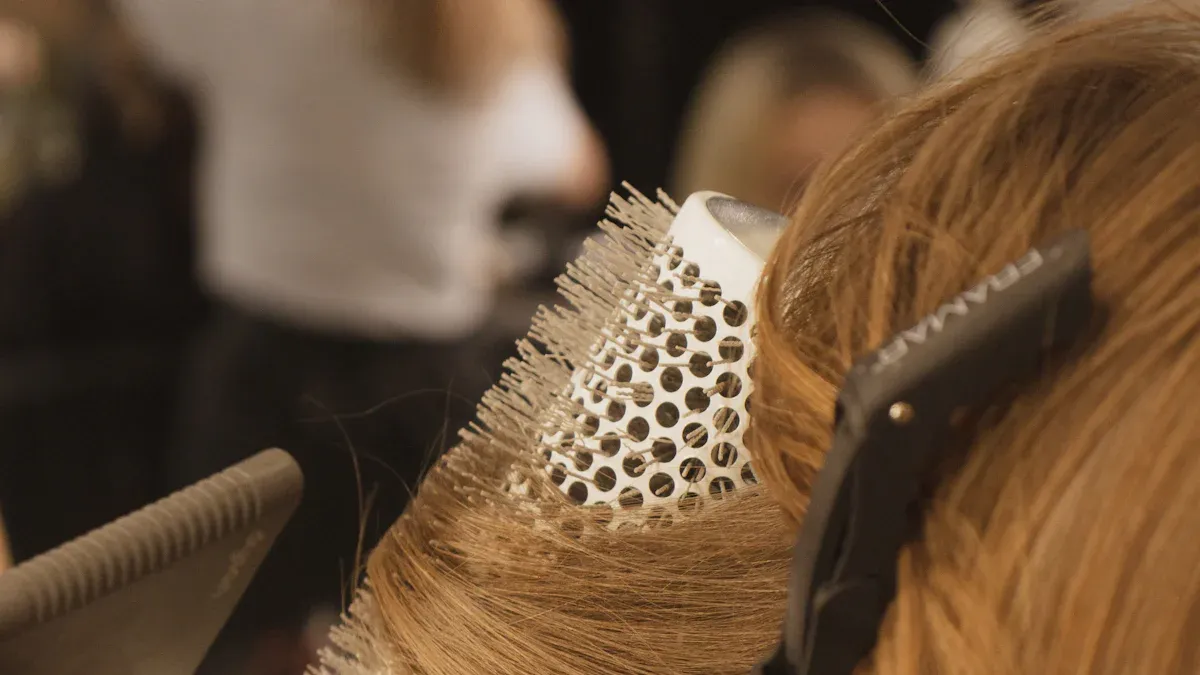
A hair brush dryer is a versatile styling tool that combines the features of a traditional hair dryer and a blow dry brush, making it an essential device for efficient hair care. This innovative hair brush dryer enables users to dry and style their hair simultaneously, simplifying the routine for those who desire salon-quality results at home. By directing airflow through the brush head, the hair brush dryer can easily detangle, smooth, and shape hair. Many people choose this tool for its convenience and professional finish. Both BLDC hair dryer and AC hair dryer technologies are commonly integrated into these devices, with leading hair dryer manufacturers and hair dryer factories producing a wide range of models to meet diverse styling preferences.
Main Components of a Hair Brush Dryer
Brush Head Design
A well-designed brush head forms the foundation of every hair brush dryer. The brush head determines how efficiently the tool dries and styles hair, impacting both the final look and the health of the strands.
Bristle Types
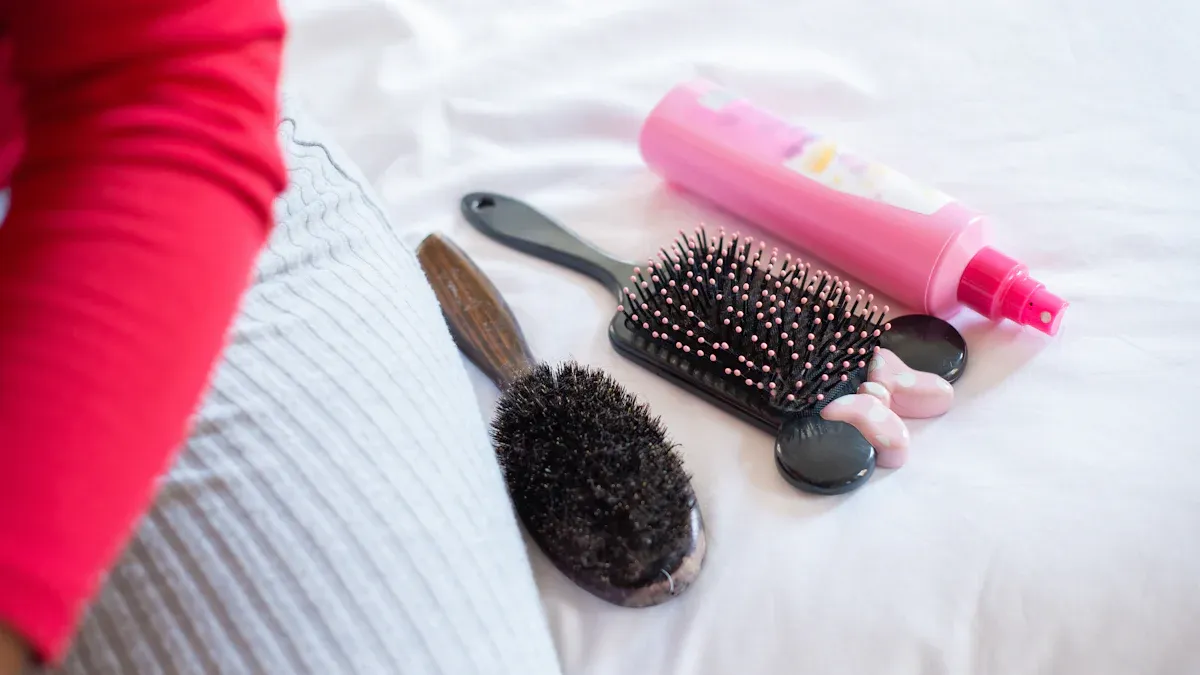
Manufacturers use a variety of bristle types to enhance the performance of a blow dry brush. Nylon bristles offer flexibility and help detangle hair without causing breakage. Tufted bristles provide tension, which is essential for smoothing and straightening. Some models combine both types to deliver better control during styling. Boar bristles, often found in premium options, distribute natural oils from the scalp, resulting in a shinier finish. The combination of these bristles allows users to achieve soft, voluminous hair while maintaining natural thickness.
Shape and Size Options
The shape and size of the brush head play a significant role in styling outcomes. Popular shapes include paddle, round, vent, and teasing brushes. Paddle brushes work best for long, straight, or wavy hair, making detangling and smoothing easier. Round brushes, available in multiple diameters, add volume and create curls. Vent brushes suit short to medium hair, allowing airflow to speed up drying. Teasing brushes help create lift at the roots for added height.
Tip: For short hair, a smaller diameter brush offers better control. Medium hair benefits from a 28mm diameter, while long hair achieves volume and smoothness with a 43mm brush.
The Drybar Double Shot Hot Dryer brush demonstrates how different brush designs cater to various hair lengths, from bangs to long layers. The Amika hair blow dryer brush, known for its round brush effect, works well across all hair types and minimizes heat damage.
Heating Element
The heating element in a hair brush dryer determines how quickly and evenly the tool dries and styles hair. The choice of material directly affects performance and hair health.
Temperature Settings
Multiple heat settings allow users to customize the drying process for their specific hair type. Lower temperatures suit fine or damaged hair, while higher settings work for thick or coarse hair. This flexibility enhances drying efficiency and reduces the risk of heat damage.
Safety Features
Modern hair brush dryers include safety features such as automatic shut-off, cool-touch tips, and overheat protection. These features protect both the user and the hair from excessive heat exposure.
| Material | Effect on Performance |
|---|---|
| Ceramic | Provides even heat distribution, eliminates hot spots, preserves moisture and shine. |
| Ionic Technology | Releases negative ions to reduce frizz and static, seals hair cuticle for smoother finish. |
| Tourmaline | Produces negative ions and far-infrared heat, enhancing drying speed and gentleness. |
Ceramic and tourmaline elements ensure even heat distribution, which eliminates hot spots and preserves moisture. Ionic technology reduces frizz and static, sealing the cuticle for a smoother finish.
Airflow System
The airflow system in a hair brush dryer impacts both drying efficiency and user comfort. Proper airflow ensures that hair dries quickly and styles hold longer.
Air Vents Placement
Specialized vents in the brush head maintain consistent airflow. This design feature shortens drying time and helps achieve soft, voluminous results without sacrificing natural hair thickness. Aerodynamic designs and acoustic dampening materials further enhance comfort by reducing noise and turbulence.
| Factor | Description |
|---|---|
| Acoustic Dampening Materials | Utilizes materials like Polyurethane Foam and Butyl Rubber to reduce sound transmission. |
| Aerodynamic Designs | Creates smoother airflow to minimize turbulence and noise. |
| Anti-Vibration Mounts | Isolates the motor from the casing to prevent vibration transfer. |
| Motor Type | DC motors are generally quieter than AC motors, with brushless motors like BL being even quieter. |
| Fan Construction | Plastic or ceramic blades reduce friction and noise compared to metal blades. |
| Bladeless Technology | Uses air-multiplier technology to minimize moving parts and noise. |
| Material Quality | Higher quality materials can absorb vibrations and reduce noise, while cheaper plastics may resonate. |
| Noise Control Technologies | Includes multi-layered casings and built-in mufflers to block sound waves. |
Adjustable Speed Controls
Adjustable speed controls allow users to tailor the airflow to their hair type and desired style. Multiple speed settings provide versatility, making it easier to achieve straight, voluminous, or curled looks. Cool-shot options help lock in styles, ensuring long-lasting results.
A high-quality airflow system, combined with the right brush head and heating element, transforms a hair dryer brush into a powerful tool for efficient drying and professional styling at home.
Technology Behind Hair Brush Dryers
How Heat and Air Combine
Drying Mechanism
A hair brush dryer uses a combination of heat and airflow to remove moisture from hair efficiently. The device draws air in with an electric motor and pushes it out through the brush head. The heating element warms the air, increasing its ability to hold and evaporate water from the hair shaft. This process speeds up drying and prepares the hair for further styling.
| Principle | Explanation |
|---|---|
| Airflow Mechanics | Hair dryers use an electric motor to create airflow, drawing air in and blowing it out through a nozzle. |
| Temperature Control | The air is heated by an electric heating element, increasing its capacity to hold moisture. |
| Moisture Interaction | Hot air facilitates faster drying by interacting with moisture in the hair, aiding in styling. |
The table above shows how airflow mechanics, temperature control, and moisture interaction work together to deliver fast and effective drying.
Styling Mechanism
Styling occurs as the heated air and brush bristles work together. The user guides the brush through sections of hair, shaping and smoothing each strand. The combination of tension from the bristles and controlled heat allows for straightening, curling, or volumizing. This dual action makes drying and styling possible in one step, reducing the need for multiple tools.
Tip: For best results, users should move the brush slowly from roots to ends, allowing the heat and airflow to shape the hair as desired.
Ionic and Ceramic Features
Benefits of Ionic Technology
Ionic technology has transformed the performance of modern hair brush dryers. These devices emit negative ions that break down water molecules on the hair surface. This process accelerates drying and reduces frizz by neutralizing static electricity. The result is smoother, shinier hair with less heat exposure.
| Benefit | Negative Ion Technology | Water Ion Technology |
|---|---|---|
| Static Neutralization | Helps neutralize static in wet hair, reducing frizz. | N/A |
| Drying Speed | Cuts drying time by 30% to 40% by breaking down water. | N/A |
| Hydration | N/A | Delivers deep hydration, boosting moisture by up to 15%. |
| Protective Coating | N/A | Forms a protective shield around hair strands for shine. |
| Heat Damage | Dries effectively at lower temperatures, minimizing damage. | N/A |
| Ideal for Hair Types | Effective for frizzy or heavy hair needing quick results. | Great for dry, damaged, or oily scalps needing nourishment. |
| Antibacterial Properties | N/A | Contains hydroxyl radicals that combat scalp bacteria. |
Negative ion technology works especially well for individuals with thick, coarse, or frizzy hair. It shortens drying time and helps maintain hair health by reducing the need for high heat.
Benefits of Ceramic Technology
Ceramic technology provides even heat distribution across the brush surface. This feature minimizes the risk of hot spots, which can cause hair damage. Ceramic elements maintain a consistent temperature, ensuring gentle drying and styling for all hair types. When manufacturers add tourmaline, the device emits additional negative ions and far-infrared heat. This combination helps retain moisture, resulting in smoother and shinier hair.
| Feature | Ionic Hair Dryers | Ceramic Hair Dryers |
|---|---|---|
| Technology | Emit negative ions to break down water molecules | Use ceramic heating elements for even heat distribution |
| Drying Time | Faster drying due to smaller water particles | Slower drying but more gentle on hair |
| Frizz Control | Reduces frizz by neutralizing static | Maintains moisture, reducing damage |
| Heat Exposure | Less heat exposure, healthier hair over time | Even heat distribution, minimizes hot spots |
| Best For | Thick, coarse, or frizzy hair types | All hair types, especially fine or damaged hair |
Ceramic hair brush dryers suit users with fine or damaged hair, as the gentle heat helps preserve hair integrity.
Advanced Features
Cool Shot Function
Many hair brush dryers include a cool shot function. This feature releases a burst of cool air to set the style after drying and styling. The cool air helps close the hair cuticle, locking in shine and reducing frizz. Users often activate this function at the end of their routine to ensure long-lasting results.
Smart Sensor Technology
Some advanced models feature smart sensor technology. These sensors monitor the temperature of the airflow and adjust it automatically to prevent overheating. This innovation protects hair from excessive heat and ensures consistent results. Smart sensors also enhance safety by reducing the risk of accidental burns or damage.
Note: Devices with smart sensor technology offer peace of mind for users who want to maintain healthy hair while enjoying efficient styling.
Step-by-Step Guide to Using a Hair Dryer Brush
Preparing Your Hair
Towel Drying
Professional stylists recommend starting with towel drying after shampooing and conditioning. They suggest using a microfiber towel to absorb excess moisture efficiently. Pressing the towel gently against the hair, rather than rubbing, helps prevent breakage and frizz. Removing about 60% to 70% of water before using a hair dryer brush ensures optimal results and reduces the risk of heat damage. For individuals with very curly hair, applying a smoothing product at this stage can help control frizz and prepare the strands for styling.
Detangling
Detangling plays a crucial role in the preparation process. A wide-tooth comb or detangling brush works best for this step. Starting from the ends and working up to the roots minimizes breakage. Even distribution of styling products, such as heat protectants or leave-in conditioners, protects the hair from heat exposure and enhances manageability during blow-drying.
Using the Hair Dryer Brush
Sectioning Hair
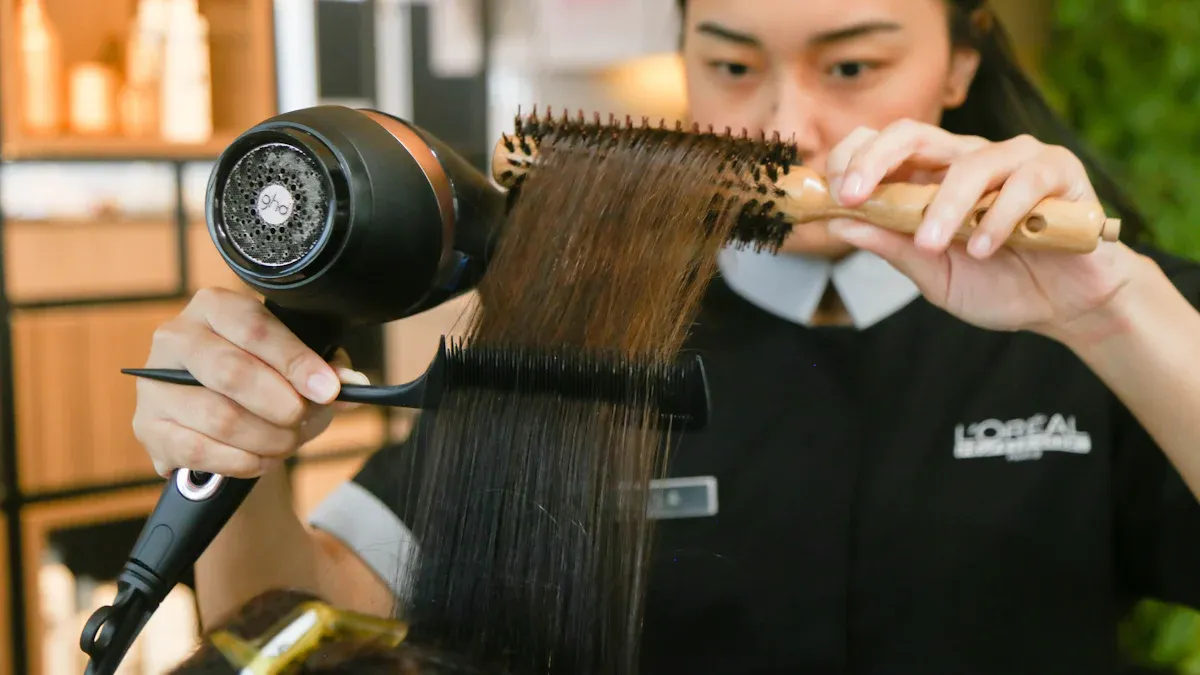
Sectioning the hair allows for even drying and styling. Stylists advise dividing the hair into manageable parts that match the width and length of the brush barrel. Working from the bottom layers upward ensures each section receives adequate attention. This method prevents over-drying and helps achieve a polished finish. Small sections also allow for better control and more precise results.
Proper Technique
When using the hair dryer brush, directing airflow from roots to ends smooths the cuticle and reduces frizz. Holding the brush at a safe distance from the scalp prevents heat damage. Moving the brush slowly through each section, without lingering too long, avoids overexposure to heat. Utilizing the cool shot function at the end of each section helps set the style and lock in shine. Adjusting the angle of the brush can create volume or direction as desired. Stylists recommend taking breaks during the process to prevent overheating and maintain hair health.
Tip: Always use the lowest effective heat setting to protect the hair and extend the lifespan of the dryer.
Finishing Touches
Setting the Style
After completing the blowout, allowing each section to cool on the brush helps set the style. Applying a lightweight serum or natural oil adds shine and smoothness. A light mist of hairspray can keep the hairstyle in place throughout the day. These finishing steps enhance the overall look and provide lasting hold.
Maintenance Tips
Proper maintenance of the hair dryer brush extends its lifespan and ensures consistent performance. Regular cleaning removes product buildup from the bristles and vents. Allowing the tool to cool before storage prevents mechanical damage. Users should handle cords with care and follow manufacturer instructions for upkeep. Inspecting the brush for worn parts and replacing them as needed maintains safety and effectiveness.
Benefits of Using a Blow Dry Brush
Time Efficiency
Faster Drying and Styling
A blow dry brush streamlines the process of drying and styling hair. The tool combines the functions of a brush and a dryer, which significantly speeds up the drying process compared to traditional methods. Many individuals spend over 30 minutes using separate tools for drying and styling. With a blow dry brush, the time reduces to just 10-15 minutes. This results in an average time saving of 15-20 minutes. The efficient design allows users to achieve salon quality hair without spending excessive time in front of the mirror.
One-Step Process
The blow dry brush offers a one-step process for quick styling. Users can dry, detangle, and style hair simultaneously. This eliminates the need for switching between multiple tools. The integrated approach not only saves time but also simplifies the routine. Individuals can enjoy smooth, voluminous styles with minimal effort. The tool proves ideal for busy mornings or last-minute events.
Styling Versatility
Straightening
The blow dry brush provides greater styling versatility than other tools. Its open vent design allows air to flow through, enhancing drying efficiency. The brush helps detangle hair while styling, making it easier to achieve straight, sleek looks. The airflow smooths the hair, reducing frizz and taming frizz for a polished finish.
Volumizing
The blow dry brush excels at creating volume and voluminous styles. The combination of airflow and bristle tension lifts the roots, resulting in fuller hair. Users can switch between straightening and creating volume with ease. The tool adapts to different hair types and lengths, supporting a wide range of styling options.
For those seeking quick styling and versatility, the blow dry brush stands out as a reliable choice.
Hair Health
Reduced Heat Damage
Research shows that a blow dry brush impacts hair health positively compared to conventional heat styling tools.
| Factor | Blow Dry Brush Impact | Conventional Heat Styling Impact |
|---|---|---|
| Temperature Control | Stays below 150°C, reducing keratin breakdown | High temperatures (>150°C) can damage hair |
| Bristle Material | Softer bristles reduce cuticle damage | Rough bristles can increase split ends and frizz |
| Heat Distribution | Evenly distributed heat minimizes hotspots | Inconsistent heat can lead to localized damage |
| Drying Method | Gradual drying is gentler on hair fibers | Direct heat can weaken hair structure over time |
The blow dry brush operates by combining a stream of hot air with mechanical action. This method allows it to dry, style, and tame hair simultaneously. The tool provides diffuse heat, which reduces the risk of localized overheating. Gradual drying proves gentler on hair fibers, resulting in less breakage and healthier hair over time.
Less Breakage
The blow dry brush uses softer bristles and even heat distribution. This minimizes cuticle damage and reduces the likelihood of split ends. The gradual drying process preserves hair structure, supporting long-term hair health. Individuals notice less breakage and improved manageability when using this tool regularly.
Hair Brush Dryer vs. Traditional Styling Tools
Comparison with Standard Hair Dryers
Drying Speed
A blow dry brush and a standard hair dryer both serve to remove moisture from hair, but their drying speeds differ. Standard hair dryers typically offer higher speed and temperature settings, which allow for faster drying, especially when working with completely wet hair. Many users find that a traditional dryer can handle thick or long hair more efficiently in terms of pure drying time.
A blow dry brush, while effective, may take longer to dry hair that is very wet. However, it excels at combining drying and styling in one step, which can save time overall for those who want a finished look without switching tools.
- Hair brush dryers combine drying and styling, making them easier for beginners.
- Standard hair dryers provide more power and customizable settings for quick drying.
- Blow dry brushes are lightweight and comfortable to hold, but may require towel drying before use.
Styling Capability
When it comes to styling, the blow dry brush stands out as a versatile styling tool. It allows users to smooth hair, reduce frizz, and create volume in a single pass. Standard hair dryers often require additional brushes or attachments to achieve similar results. For those interested in creating volume or a salon-like blowout, the blow dry brush offers a more streamlined experience.
Comparison with Flat Irons and Curling Irons
Ease of Use
Flat irons and curling irons demand a certain level of skill to achieve professional results. Users must section hair, apply the tool at the right angle, and control the heat carefully. In contrast, a blow dry brush simplifies the process. Its ergonomic design and combined airflow make it easier to handle, especially for those new to at-home styling.
Hair Protection
Protecting hair from heat damage remains a top concern. Flat irons and curling irons apply direct heat, which can lead to dryness and breakage. The blow dry brush distributes heat more evenly and uses lower temperatures, helping to maintain hair health. Many users report less breakage and a smoother finish after regular use.
Pros and Cons Overview
Advantages
| Pros | Cons |
|---|---|
| Dries hair fast | Temperature gets very hot |
| Gives salon-like blowout | Difficult to maneuver |
| Sturdy and balanced build | Dryer brush doesn’t straighten hair well |
| Great airflow | Barrel is too large |
| Comfortable to hold | Slower at drying hair |
Limitations
Manufacturers address common user concerns by improving product design. The most frequent issues include overheating, heavy weight, and noise level. The chart below highlights these concerns and their frequency among users.
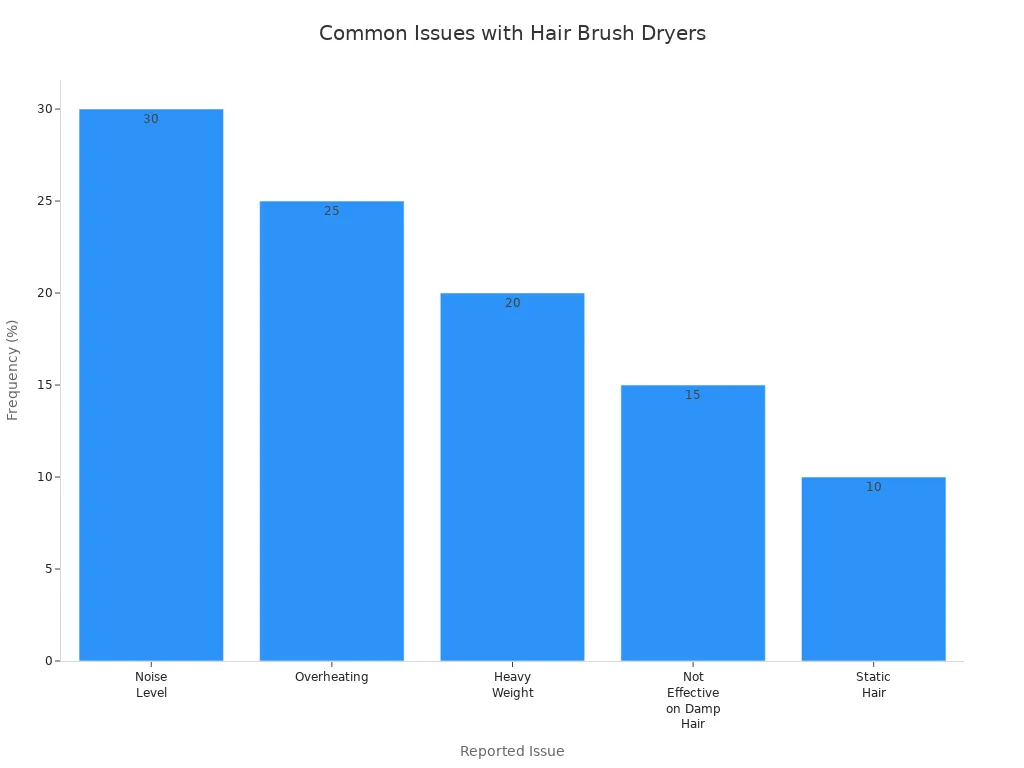
Tip: To avoid overheating, users should select cooler settings and take breaks during use. Lightweight models and quiet technology can also enhance comfort.
A blow dry brush offers a unique blend of convenience, styling versatility, and hair protection. While it may not match the raw power of a traditional hair dryer or the precision of a flat iron, it remains a popular choice for those seeking smooth, voluminous styles with less effort.
Choosing the Right Hair Brush Dryer for Your Needs
Hair Type Considerations
Fine Hair
Individuals with fine hair require a blow dry brush that offers gentle heat and soft bristles. The right tool prevents breakage and maintains a smooth finish. Many models feature non-slip bristles that grip fine strands, making styling easier and faster. Adjustable heat settings allow users to select lower temperatures, which protect delicate hair from excessive heat. A smaller brush size, such as 37mm, works best for short or fine hair, providing better control and precision.
Thick or Curly Hair
Thick or curly hair benefits from a blow dry brush with higher heat settings and larger barrel sizes. Brushes with a diameter of 70mm handle long or voluminous hair efficiently. Flexible nylon bristles detangle curls without causing irritation. Patented thermal conductive technology reduces heat damage and breakage, making the styling process safer. The 3D bristle pattern ensures hair sits on the bristles, preventing direct contact with the hot barrel and minimizing frizz.
Tip: For curly hair, choose a brush with captive ends to prevent tangling and control airflow. This feature reduces drying time and enhances volume.
| Feature | Description |
|---|---|
| Hair Type | Suitable for all hair types including fine, fragile, thick, extensions, and chemically treated hair. |
| Brush Sizes | 37mm for short hair, 56mm for medium length, 70mm for long/thick hair. |
| Bristle Material | Natural boar bristles for shine and flexible nylon for detangling. |
| Technology | Thermal conductive technology reduces heat damage and breakage. |
| Design | Captive ends prevent tangling and control airflow, reducing drying time. |
| Bristle Pattern | 3D bristle pattern prevents contact with the hot barrel. |
Features to Look For
Adjustable Settings
A quality blow dry brush offers multiple heat and speed settings. These options allow users to tailor the styling process to their hair type. Cool, low, and high settings provide flexibility for creating smooth styles or adding volume. Professional stylists recommend choosing a model with intuitive controls for easy operation.
Ergonomic Design
Comfort and usability matter when selecting a hair brush dryer. An ergonomic handle reduces fatigue during styling. Swivel cord bases prevent tangling, enhancing maneuverability. Multifunctional designs combine the benefits of a hair dryer, roller brush, and flat iron, reducing the need for multiple tools.
| Feature | Description |
|---|---|
| Affordability | Cost-effective options like the Revlon One-Step are priced around $60. |
| Ease of Use | Intuitive design allows for quick and easy operation. |
| Multifunctionality | Acts as a hair dryer, roller brush, and flat iron. |
| Cord Design | Swivel base prevents tangling. |
| Heat Settings | Three settings (Cool, Low, High) for flexibility. |
| Bristle Design | Non-slip bristles grip fine hair, making blow-drying faster and easier. |
Budget and Brand Options
Affordable Choices
Many consumers seek reliable performance at a reasonable price. Highly rated affordable models include the Revlon Travel Hair Dryer, Conair 1875 Compact Folding Handheld Air Dryer, and Conair Double Ceramic Hair Dryer. These options deliver effective drying and styling without compromising quality.
Premium Models
Premium hair brush dryers offer advanced technology and superior build quality. Top-rated models include the Dyson Supersonic R Hair Dryer, Dyson Supersonic Nural Hair Dryer, and T3 Featherweight Stylemax. These devices provide enhanced airflow, precise heat control, and features that support smooth, voluminous styles.
- Dyson Supersonic R Hair Dryer
- Dyson Supersonic Nural Hair Dryer
- T3 Featherweight Stylemax
- Revlon Travel Hair Dryer
- Conair 1875 Compact Folding Handheld Air Dryer
- Conair Double Ceramic Hair Dryer
Note: Investing in a premium model can improve styling results and reduce heat damage, especially for those who style hair frequently.
Choosing the right blow dry brush depends on hair type, desired features, and budget. Users should evaluate brush size, bristle material, and ergonomic design to achieve optimal volume and smoothness while minimizing frizz.
A blow dry brush streamlines the styling process by combining drying and shaping in one tool. Users experience salon-quality results at home, with features that suit a range of hair types and preferences. The table below highlights how leading models compare in effectiveness:
| Product Name | Key Features | Effectiveness Compared to Other Tools |
|---|---|---|
| Revlon One-Step Hair Dryer and Volumizer | Customizable styling, quick drying | Salon blowout results, reduced styling time |
| BaBylissPro Nano Titanium Dryer | Fast drying, comfortable design | Sleek finish, versatile settings |
Individuals should match their choice to their unique styling needs for optimal results.
FAQ
What is the main benefit of a hair brush dryer?
A hair brush dryer allows users to dry and style at the same time. This tool saves time and creates a smooth, salon-quality finish at home.
Can a hair brush dryer replace a flat iron?
A hair brush dryer smooths and volumizes hair but does not create the same pin-straight look as a flat iron. For sleek, straight styles, a flat iron works best.
Is a hair brush dryer safe for daily use?
Manufacturers design most hair brush dryers with safety features like temperature control and automatic shut-off. Users should select the lowest effective heat setting to protect their hair.
Does a hair brush dryer work on all hair types?
Most models suit a wide range of hair types, including fine, thick, and curly. Users should choose the right barrel size and bristle type for their specific needs.
How should users clean a hair brush dryer?
Users should unplug the device and remove hair from the bristles after each use. A damp cloth cleans the barrel and vents. Regular cleaning maintains performance.
What features should buyers consider before purchasing?
Buyers should look for adjustable heat settings, ergonomic design, and the right barrel size. These features improve comfort and styling results.
Can a hair brush dryer reduce frizz?
Many hair brush dryers use ionic or ceramic technology to reduce frizz. These features help seal the cuticle and create a smoother finish.
Tip: Always apply a heat protectant spray before using any hot styling tool.