
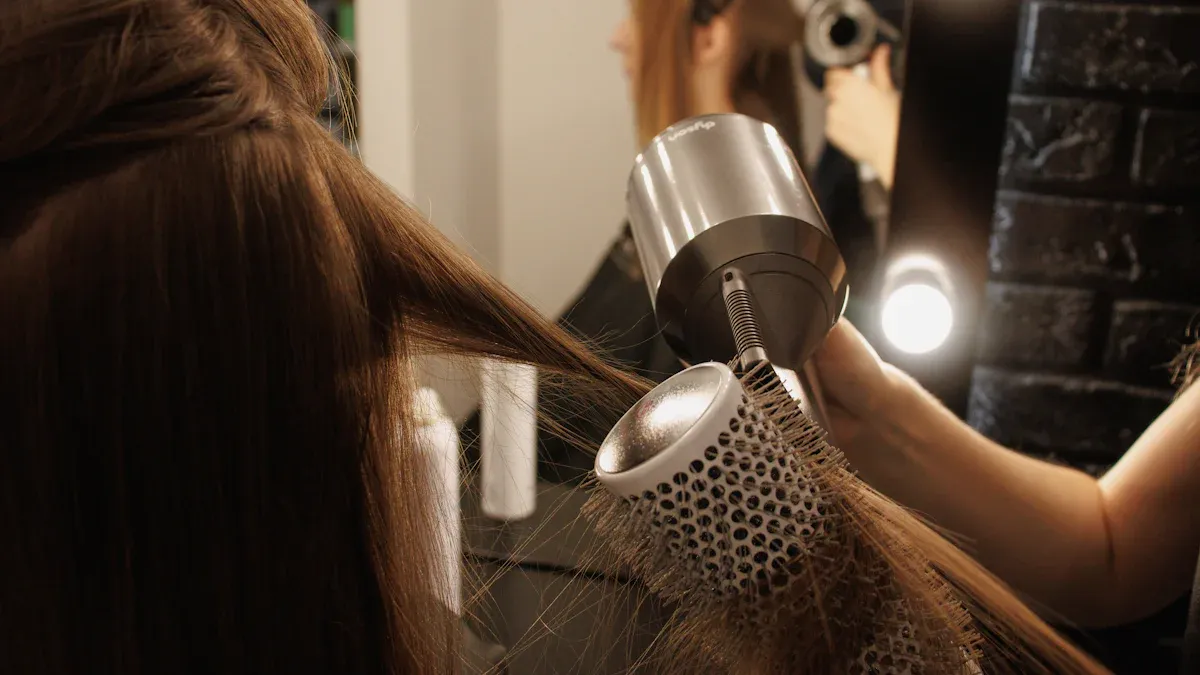
The Dyson hair dryer represents a significant evolution in hair care technology. A leading hair dryer manufacturer, Dyson, engineered this advanced hair dryer to be fundamentally different from a standard AC hair dryer. The Dyson Supersonic hairdryer utilizes a high-speed BLDC hair dryer motor and unique Air Multiplier™ technology. These core innovations, combined with intelligent heat control, redefine the hair drying experience. This approach allows the dryer to protect hair from extreme heat damage. The result is a powerful hairdryer that significantly reduces drying time, setting a new benchmark for performance that any hair dryer factory must now consider.
Difference 1: The Motor and Airflow Engine
The core difference between the Dyson Supersonic hairdryer and a conventional hairdryer lies in its engine. Dyson re-engineered the motor and airflow system from the ground up. This fundamental change is the source of its speed and efficiency.
The Dyson Digital V9 Motor
Unprecedented Speed and Power
The heart of the Dyson hair dryer is its patented Digital V9 motor. This small powerhouse spins at up to 110,000 revolutions per minute (RPM). This speed is significantly faster than traditional motors. It generates a powerful, high-pressure stream of air. The immense power allows for rapid drying without relying solely on high heat, which helps protect the hair.
Compact Design and Location
Dyson designed the V9 motor to be exceptionally small and lightweight. Its compact size allows for a revolutionary design choice: placing the motor in the handle of the dryer instead of the head. This shift in weight distribution dramatically improves the ergonomics of the device, a topic we will explore later.
Traditional AC/DC Motors
Slower, Bulkier Mechanics
Conventional hair dryers use much larger, heavier AC or DC motors. These motors are significantly slower, typically spinning at a fraction of the V9’s speed. Their bulkiness dictates their placement in the barrel of the hairdryer. This top-heavy design is a primary cause of arm fatigue during use.
Limitations in Air Pressure
The slower speed of traditional motors limits the volume and pressure of the air they can propel. To compensate for weaker airflow, many models increase the heat output. This approach can scorch the hair and lead to long-term damage. The mechanical limitations prevent them from achieving the same performance as the Dyson system.
Dyson’s Air Multiplier™ Technology
How It Amplifies Airflow
Dyson pairs its powerful motor with another signature innovation: Air Multiplier™ technology. The motor pulls air into the handle. It then accelerates this air up into the ring-like head. As the air exits the head, it creates an area of low pressure. This low pressure pulls in surrounding air, amplifying the initial airflow volume by three times.
Tech Tip: Think of it like a jet engine. A small amount of high-energy air is used to draw in and propel a much larger volume of air, creating a powerful and consistent stream.
Creating a High-Velocity Jet
The result of this amplification is a focused, high-velocity jet of controlled air. This precise airflow allows for faster, more efficient styling and drying. Unlike the turbulent buffeting from a traditional dryer, the Dyson produces a smooth column of air. This controlled stream helps smooth the hair cuticle for a shinier, less frizzy finish.
Traditional Fan Blade Systems
In stark contrast to Dyson’s Air Multiplier™ technology, conventional hair dryers rely on a much simpler and older mechanism: a basic fan blade system. This traditional approach uses spinning blades, similar to a household fan, to push air through the heating element and out of the nozzle. While functional, this design is the source of significant inefficiency and creates a less-than-ideal user experience. The mechanics behind this system are fundamentally limited, leading to problems with both the quality of the airflow and the final results on the hair.
Turbulent and Inefficient Air
The primary issue with a fan blade system is the nature of the air it produces. The blades physically chop through the air, creating a turbulent, chaotic stream. Instead of a smooth, focused column of air, the user gets a buffeting, inconsistent gust. This turbulence leads to several problems:
- Energy Waste: A significant portion of the motor’s energy is lost creating this chaotic airflow, which scatters in multiple directions instead of being aimed directly at the hair.
- Increased Frizz: The disorderly air stream can whip strands of hair around, disrupting the hair cuticle and leading to more frizz and tangles.
- Lack of Precision: It is difficult to control a turbulent stream of air, making precision styling nearly impossible without concentrator nozzles that only partially mitigate the issue.
This inefficient process forces the dryer to rely more on high heat to compensate for the weak and scattered air pressure.
Uneven Drying Patterns
The turbulent air generated by fan blades directly causes uneven drying patterns. The chaotic stream does not distribute heat or pressure uniformly. This results in “hot spots” where some sections of hair are blasted with intense heat, while adjacent sections receive much less air and heat. This inconsistency presents a major challenge for achieving a uniform result.
Warning: These hot spots pose a significant risk of heat damage. A user might hold the dryer on one section longer to dry a stubborn damp patch, unknowingly scorching nearby strands that are already dry. This repeated exposure to concentrated, excessive heat is a primary cause of brittleness, split ends, and loss of natural shine.
To counteract this effect, users must constantly move the dryer back and forth, attempting to manually distribute the heat and air. This extra motion not only increases arm fatigue but also extends the overall drying time, defeating the purpose of a powerful tool. The result is a longer, more damaging, and less controlled styling session.
Difference 2: Intelligent Heat Control in the Dyson Supersonic Hairdryer
Beyond the motor, the most significant innovation in the Dyson Supersonic hairdryer is its approach to heat. Traditional dryers often force a trade-off between drying speed and hair health. Dyson engineered a system to provide both, using a sophisticated feedback loop called intelligent heat control. This technology fundamentally changes the relationship between a hairdryer and the hair it treats.
Dyson’s Microprocessor Regulation
Measuring Temperature 40+ Times a Second
The Dyson Supersonic hairdryer contains a glass bead thermistor in its head. This sensor measures the exit airflow temperature more than 40 times every second. It sends this constant stream of data to an onboard microprocessor. This process creates a real-time thermal profile of the dryer’s performance.
How It Prevents Extreme Heat Damage
The microprocessor acts as the brain of the Dyson hair dryer. It analyzes the temperature data and makes immediate adjustments to the double-stack heating element. If the temperature begins to climb too high, the processor instantly reduces power to the element. This active regulation ensures the air temperature never exceeds a safe, controlled level, protecting hair from the sudden heat spikes common in other devices.
The Science of Protecting Natural Shine
Extreme heat damages the cuticle layer of the hair. It can create microscopic pores on the surface of each strand. These pores cause light to scatter instead of reflect, making hair appear dull and frizzy. The consistent, controlled temperature of the Dyson dryer helps keep the hair cuticle smooth and aligned. A smooth surface reflects light uniformly, which is what the human eye perceives as natural shine and health.
Traditional Dryer Temperature Control
The “High-Medium-Low” Gamble
A conventional dryer typically uses a simple bimetallic strip or a basic thermostat for temperature control. This older technology offers the user multiple heat and airflow settings, such as “High,” “Medium,” and “Low.” However, these settings are not actively regulated. They represent fixed power levels sent to the heating element, making the drying process a gamble.
The Problem of Temperature Spikes
The lack of active regulation in a traditional dryer leads to significant temperature instability. The air temperature can fluctuate wildly and often spikes far above the intended setting. This is especially true when the airflow is partially blocked, like when the nozzle is held close to a brush or a section of hair. The heat builds up rapidly with no system to correct it.
How Excessive Heat Causes Damage
These uncontrolled temperature spikes are a primary cause of severe hair damage. Repeated exposure to extreme heat weakens the protein structure of the hair, leading to brittleness and breakage. The risk is substantial, as temperatures can quickly reach a critical point.
Stylists warn that hair begins to melt above 451 degrees Fahrenheit (233°C). Avoiding this temperature is crucial for maintaining hair integrity.
A standard hairdryer, with its unpredictable heat spikes, can easily push sections of hair past this damage threshold, causing irreversible harm.
Difference 3: Ergonomics and User-Centric Design

Dyson reimagined not just the internal technology but also the physical form of the hairdryer. The result is a device focused on user comfort and ease of maintenance, creating a stark contrast with the cumbersome designs of many traditional models.
A Revolution in Weight and Balance
The feel of a hair dryer in hand directly impacts the styling experience. Dyson identified this as a key area for innovation.
Dyson: Motor in the Handle
Dyson achieved a breakthrough in balance by placing its compact digital motor in the handle. This design choice shifts the center of gravity from the head of the device to the user’s hand. The placement of the motor in the handle creates a tool that feels more like a wand than a top-heavy appliance.
Traditional: Top-Heavy Barrel
Conventional dryers house their large, heavy motors in the barrel. This configuration makes the device top-heavy and unbalanced. Users must constantly counteract the forward-pulling weight, leading to an awkward and strenuous styling session.
Reducing Arm and Wrist Fatigue
The balanced design of the Dyson dryer significantly reduces muscle strain. With the weight resting comfortably in the palm, users experience less fatigue in their arm and wrist. This ergonomic advantage is especially beneficial for professional stylists and individuals with long or thick hair who require extended drying times.
The Sound of Silence: Acoustic Engineering
Noise is an accepted annoyance of hair drying, but Dyson addressed it with advanced acoustic engineering.
How Dyson Tunes Its Motor Frequency
Dyson engineers surrounded the motor with acoustic silencers. More importantly, they tuned the motor to produce a sound frequency that is often above the range of audible human hearing. The motor’s 13 blades, instead of the usual 11, help push the sound into this inaudible spectrum.
Comparing Decibel Levels
While not silent, the sound produced is fundamentally different.
- Traditional Dryers: Often produce a loud, low-frequency roar.
- Dyson Dryer: Emits a higher-pitched, less jarring hum.
A Quieter Styling Experience
This acoustic tuning creates a much more pleasant environment. Users can hold a conversation or listen to audio without being overpowered by the noise of their styling tool. It transforms a noisy chore into a quieter, more refined routine.
Filter Design and Maintenance
Proper airflow is critical for performance and longevity, making filter maintenance essential.
Dyson’s Easy-to-Clean Filter
The Dyson filter is located at the bottom of the handle. It features a simple twist-and-remove cage, allowing for quick and effortless cleaning. This user-friendly design encourages regular maintenance, ensuring the device operates at peak efficiency.
Common Traditional Filter Issues
Many traditional dryers have filters that are difficult to access, often requiring tools or awkward maneuvering to remove a rear cap. When these filters become clogged with dust and lint, they restrict airflow. This blockage forces the motor to work harder, which accelerates wear and can cause the device to overheat, posing a safety risk and shortening its lifespan.
Difference 4: Smart, User-Friendly Attachments
The functionality of a modern hairdryer extends beyond simple drying to precision styling. Dyson revolutionized this aspect with a system of intelligent, user-friendly attachments that stand in stark contrast to the often-clumsy accessories of traditional models. These features enhance control and styling versatility.
The Dyson Hair Dryer Magnetic System
Dyson re-engineered the connection between the dryer and its nozzles, moving away from friction and force toward the elegance of magnetism.
The Power of Magnets
Each Dyson attachment connects to the head of the dryer with a satisfying click. This is possible due to powerful magnets embedded in both the nozzle and the barrel. This system creates a secure connection that holds firm during use but allows for effortless swapping of accessories.
360-Degree Rotation and Ease of Use
The magnetic connection allows for full 360-degree rotation of any attachment. Users can adjust the angle of the airflow with a simple twist, without needing to detach the nozzle. This provides superior control and flexibility when styling different sections of hair.
Cool-to-the-Touch Technology
Dyson designed the attachments with Heat Shield technology. This feature creates a layer of cool air that surrounds the hot air exiting the nozzle. The surface of the attachment remains cool to the touch, even during close-up styling.
Safety First: This cool-touch surface allows users to adjust or remove attachments mid-session without the risk of burning their fingers, a common hazard with traditional dryers.
Traditional Click-and-Twist Attachments
Conventional dryers rely on older, less sophisticated methods for securing nozzles, which often lead to frustration and potential risks.
The Friction-Fit Problem
Most traditional attachments use a friction-fit or a twist-and-lock mechanism. These designs require users to apply significant force to push on or twist off the nozzles. Over time, the plastic can warp from heat or wear down, leading to a loose fit or cracked attachments.
Awkward Adjustments and Heat Risk
Adjusting a traditional nozzle mid-use is a clumsy process. The user must stop, grip the hot plastic, and wrestle it into a new position. This not only interrupts the styling flow but also poses a significant burn risk, as these attachments become extremely hot during operation.
A Closer Look at Dyson’s Attachments
The Dyson hair dryer comes with a suite of specialized magnetic attachments. Each one is engineered for a specific purpose, working in tandem with the device’s multiple heat and airflow settings.
Smoothing Nozzle
This attachment delivers a wide, smooth stream of air. It gently dries the hair while simultaneously reducing frizz for a sleek, natural finish.
Styling Concentrator
The Styling Concentrator features a thin, wide blade of focused air. This precision is ideal for section-by-section styling, allowing the user to shape their hair without disturbing the surrounding areas.
Diffuser
Engineered for curly and coily hair, the Dyson diffuser disperses air evenly around each curl. It simulates natural drying, helping to reduce frizz and enhance definition for well-formed waves and coils.
Gentle Air Attachment
This attachment is perfect for users with fine hair or sensitive scalps. It diffuses the air, creating a gentler, cooler airflow while still drying hair fast.
Flyaway Attachment
A unique finishing tool, the Flyaway Attachment uses the Coanda effect to attract and lift longer hairs to the front. It simultaneously pushes flyaways underneath and out of sight, creating a smooth, shiny finish without extreme heat.
Difference 5: Performance and Real-World Results
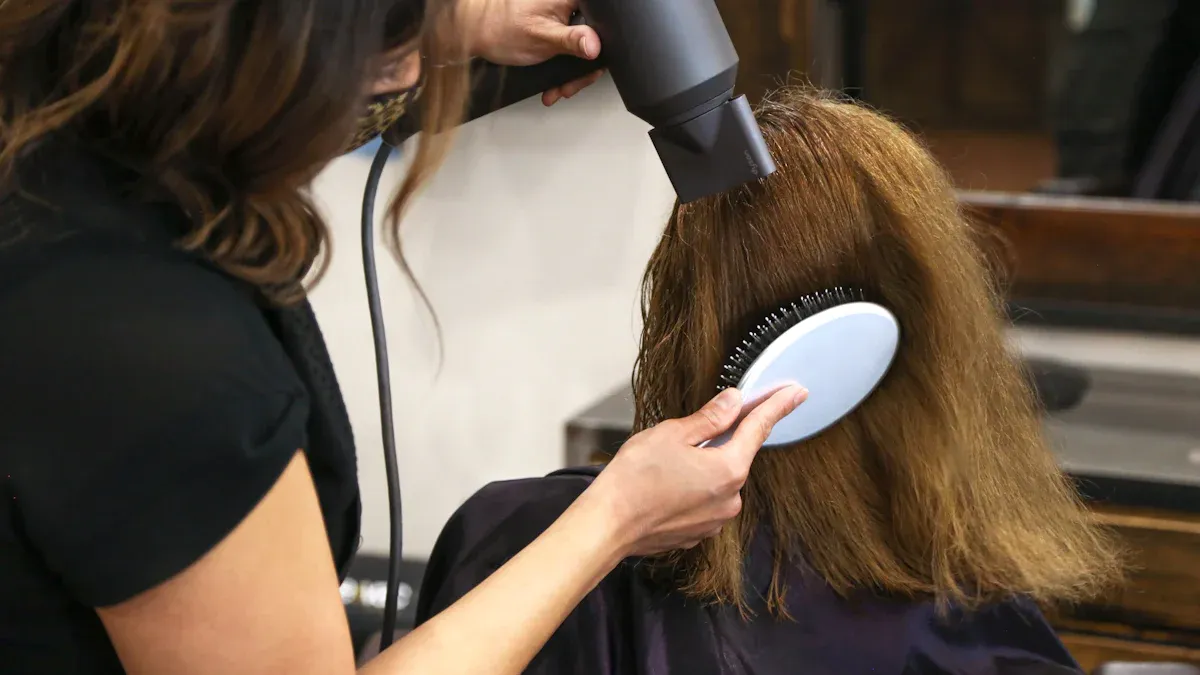
The true measure of any hair tool is its performance and the tangible results it delivers. The Dyson Supersonic hairdryer distinguishes itself through faster drying, improved hair health, and a superior user experience across various hair types.
Drying Speed Comparison by Hair Type
The combination of a powerful motor and Air Multiplier™ technology directly impacts drying time. This effect varies depending on the hair’s texture and density.
Fine and Thin Hair
Individuals with fine hair benefit greatly from the Dyson’s high-velocity airflow. The powerful stream of air quickly wicks away moisture without relying on high temperatures. This rapid drying process minimizes heat exposure, protecting delicate strands from damage and breakage.
Thick and Coarse Hair
Thick hair traditionally requires a long drying time, increasing the risk of heat damage. The Dyson dryer significantly cuts down on drying time for these hair types. Independent tests by Wirecutter found that while some professional models like the Rusk W8less could match its speed, the Dyson was considerably faster than most standard dryers. Its key advantage is achieving this speed with less extreme heat.
Curly and Coily Hair
The drying process for textured hair is about control, not just speed. The Dyson diffuser attachment excels here. It disperses air evenly to gently dry curls and coils. This method helps maintain the natural curl pattern, enhances definition, and reduces frizz, a common issue with turbulent airflow from a traditional hairdryer.
Long-Term Impact on Hair Health
Consistent use of a styling tool reveals its long-term effects. The technology inside the Dyson is engineered to protect and improve the condition of hair over time.
Reducing Frizz and Flyaways
The intelligent heat control prevents the hair cuticle from being damaged by extreme temperatures. A smoother cuticle reflects more light and is less prone to frizz. The precise, controlled airflow, especially with the Flyaway attachment, helps align strands for a sleek, polished finish.
Preserving Hair Strength and Elasticity
Extreme heat can degrade the keratin proteins that give hair its strength. By maintaining a consistent, safe temperature, the Dyson helps preserve the hair’s internal structure. Users often report less breakage and improved elasticity after switching to this advanced dryer.
User Testimonials and Stylist Opinions
Professional and consumer feedback often highlights a noticeable difference in hair quality.
Stylists frequently praise the device for its ergonomic balance and the visible improvement in their clients’ hair health. Many users report that their hair feels softer, looks shinier, and is more manageable with regular use.
This widespread positive reception underscores the real-world benefits of Dyson’s engineering.
Difference 6: The Price vs. Value Equation
The most debated aspect of the Dyson Supersonic hairdryer is its price. The significant cost difference between it and a traditional dryer raises an important question of value. Understanding the factors behind the price helps clarify what consumers are paying for.
Why is the Dyson Hair Dryer So Expensive?
The premium price tag of the Dyson hair dryer is not arbitrary. It reflects a substantial investment in technology, materials, and engineering that sets it apart from mass-market alternatives.
Research and Development Costs
Dyson undertook an immense engineering challenge to reinvent the hairdryer. The company invested a reported $71 million into the research and development of the Supersonic. This massive budget funded a dedicated laboratory, hundreds of prototypes, and extensive testing on various hair types. These costs are a primary driver of the final retail price.
Premium Materials and Build Quality
The device uses high-grade materials that contribute to its durability and luxury feel. The casing is made from a tough, glass-filled nylon that resists heat and impact. This contrasts sharply with the cheaper plastics used in many standard models. The meticulous assembly and finish create a product designed for longevity and a superior tactile experience.
The Technology Inside
The core components of the Dyson are expensive to manufacture. The high-speed digital V9 motor, the onboard microprocessor, the glass bead thermistor, and the unique heating element are all custom-engineered parts.
Note: Each piece of technology, from the motor to the sensors, represents a significant cost that is passed on to the consumer. This is the price of innovation.
Value Proposition of Traditional Dryers
While Dyson offers advanced technology, traditional dryers provide a compelling value proposition centered on accessibility and practicality.
Affordability and Accessibility
The greatest advantage of a conventional dryer is its low cost. Consumers can purchase a functional and reliable tool for a small fraction of the price of a Dyson. They are available in nearly every department store and pharmacy, making them an easy and accessible choice for the average user.
Lifespan and Replacement Cost
A standard dryer may have a shorter lifespan due to its simpler motor and materials. However, its low replacement cost makes this a manageable issue for most budgets. A consumer could buy several traditional dryers over many years for the price of a single Dyson, offering a different kind of long-term value based on low-risk, low-cost replacement.
The Dyson hair dryer redefines the category with its advanced motor, intelligent heat control, and user-centric design, setting it apart from a traditional hairdryer. Dyson created a tool focused on speed and hair health.
- Dyson invested over $124 million in global hair laboratories for faster, safer drying.
- It delivers premium results for all hair types.
This commitment to innovation produced a distinct dryer that protects hair. The Dyson Supersonic hairdryer even won a Good Design Award, cementing its status as more than just a hairdryer.
FAQ
Is the Dyson hair dryer really better for your hair?
Yes, its technology offers significant benefits. The intelligent heat control prevents extreme heat damage by measuring air temperature over 40 times per second. This active regulation helps protect hair’s natural shine and strength, making it a healthier option than many traditional dryers.
Why does the Dyson hair dryer cost so much?
The high price reflects extensive investment and advanced components.
- Research: Dyson invested over $71 million in research and development.
- Technology: It contains a custom high-speed digital motor and a microprocessor.
- Materials: The device uses premium, durable materials for its construction.
Does the Dyson Supersonic dry hair faster?
Yes, it dries hair significantly faster. The powerful V9 digital motor combined with Air Multiplier™ technology produces a high-velocity, focused jet of air. This powerful airflow removes moisture quickly without relying on excessive heat, reducing overall drying time for all hair types.
Can you use the Dyson hair dryer on curly hair?
Absolutely. The Dyson hair dryer is excellent for curly hair, especially with its diffuser attachment. The diffuser disperses air evenly to enhance natural curl patterns and reduce frizz. It simulates natural drying for well-defined, bouncy curls and coils.
Is the Dyson hair dryer quieter than other dryers?
The Dyson dryer produces a different, less jarring sound. Engineers acoustically tuned the motor’s frequency, pushing much of the sound beyond the range of human hearing. While not silent, its higher-pitched hum is generally considered more pleasant than the loud roar of traditional dryers.
Are the magnetic attachments a gimmick?
No, the magnetic attachments offer real functional advantages. They allow for quick, easy swapping and 360-degree rotation for precise styling.
Key Feature: Heat Shield technology keeps the attachments’ surfaces cool to the touch, preventing accidental burns during use.
Is the Dyson hair dryer worth the money?
The value depends on individual priorities. For users seeking faster drying, improved hair health, and a superior user experience, the investment is often justified. Those with budget constraints may find traditional dryers offer sufficient value for basic needs. 🤔