
The global hair dryer market is expanding rapidly, with analysts projecting growth between 5.1% and 8.0% annually. This makes sourcing hair dryers from China a strategic move. Sourcing from China requires vetting hair dryer manufacturers and hair dryer suppliers. These manufacturers offer a competitive price on a BLDC hair dryer or AC hair dryer. Finding a good hair dryer manufacturer is key; this manufacturer must have quality processes. A good supplier helps manage cost. Finding the right suppliers in China is crucial for a good price. A hair dryer factory must have high quality standards.
Why Is Sourcing Hair Dryers from China a Strategic Move?
Businesses gain a significant competitive edge by sourcing hair dryers from China. The country’s vast manufacturing ecosystem offers unparalleled access to innovation, cost efficiencies, and a diverse range of products. Understanding this landscape is the first step toward successful procurement.
China’s Manufacturing Dominance in the Hair Dryer Market
Two primary regions in China lead the world in hair dryer production. Each offers distinct advantages for sourcing.
The Guangdong Manufacturing Cluster
Guangdong province, particularly cities like Shenzhen and Dongguan, is the epicenter of high-end electronics. This region is home to suppliers specializing in advanced technologies. A manufacturer here often produces the best hair dryer models with premium components, making it the ideal location for sourcing innovative, high-performance products.
The Zhejiang Manufacturing Cluster
Zhejiang province, with hubs in Cixi and Ningbo, excels in large-scale, cost-effective manufacturing. Suppliers in this area are experts at producing mid-range and budget-friendly hair dryers in high volumes. This cluster provides an excellent balance of quality and price for mass-market retailers.
Key Product Categories and Technologies
The market demands variety, and manufacturers in China deliver. Knowing which hair dryer is best depends entirely on the target consumer.
High-Speed Brushless Motor Dryers
These premium models use advanced brushless DC (BLDC) motors for ultra-fast drying times and quiet operation. They represent the pinnacle of hair dryer technology and command a higher price.
Ionic and Ceramic Technology Dryers
Ionic dryers emit negative ions to reduce frizz, while ceramic heating elements provide even, gentle heat. Many suppliers offer models combining both technologies, a popular choice for consumers seeking healthier hair care.
Compact and Travel Hair Dryers
Lightweight, often foldable designs make these dryers perfect for travel. A manufacturer in Zhejiang can produce these efficiently, offering a competitive price for a high-demand product segment.
Professional Salon-Grade Dryers
Built for durability and power, these dryers typically feature robust AC motors and long-lasting components. Sourcing these models appeals to the professional stylist market.
Understanding Core Components and Performance
The internal components determine a hair dryer’s quality, price, and performance. Deciding which hair dryer is best requires knowledge of its core parts.
Motor Types: AC, DC, and Brushless
The motor is the heart of a hair dryer. The choice between AC, DC, and Brushless (BLDC) motors directly impacts performance and cost. AC motors are durable and powerful, making them a salon standard. DC motors are lighter and more energy-efficient, common in consumer models. Which hair dryer is best for home use often comes down to a DC motor’s balance of features.
| Feature | AC Motor Hair Dryer | DC Motor Hair Dryer |
|---|---|---|
| Airflow | Strong, high volume | Focused, fast, but less powerful |
| Weight | Heavier | Lighter |
| Noise | Louder | Quieter |
| Durability | Longer lifespan | Shorter lifespan |
| Energy Use | Higher | Lower |
BLDC motors represent the latest evolution, offering superior efficiency, speed, and a longer lifespan than both AC and DC options. Which hair dryer is best for the premium market is almost always a BLDC model. They are significantly quieter and can reduce drying time by up to 75%.
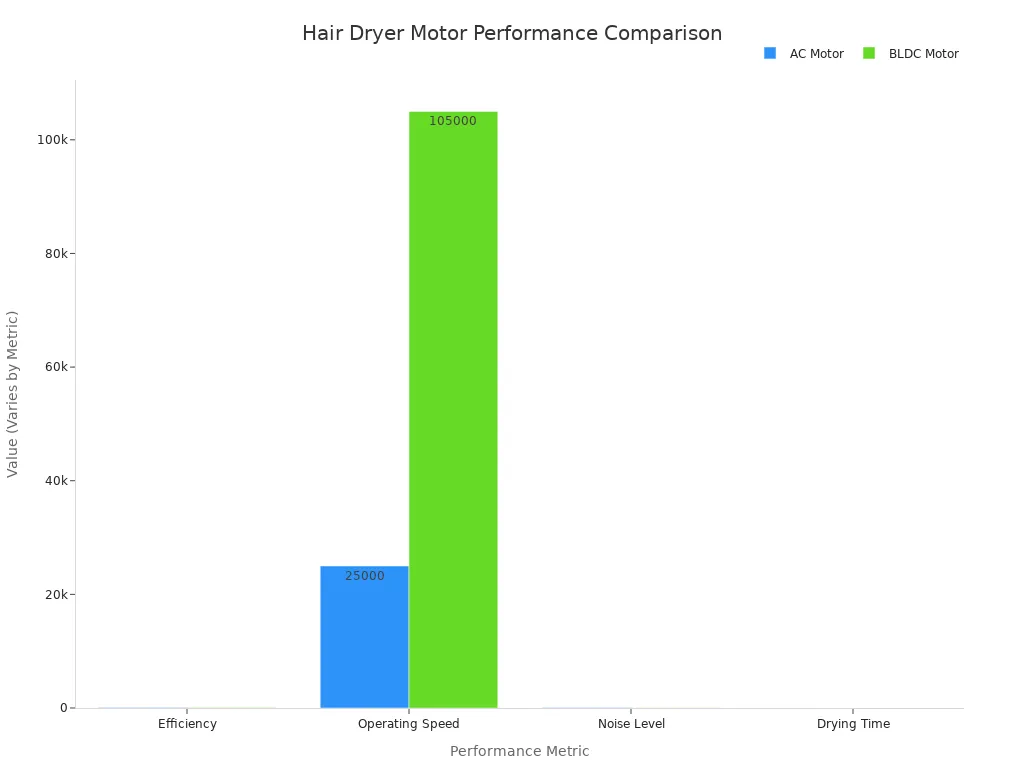
Pro Tip: A BLDC motor reduces a dryer’s weight by 30-40%, creating a more ergonomic and user-friendly product. This is a key selling point for the best hair dryer designs.
Heating Elements: Nichrome vs. Ceramic
Nichrome wire is the traditional, low-cost heating element. Ceramic heaters, however, distribute heat more evenly, reducing the risk of hair damage. Which hair dryer is best for health-conscious consumers? The answer is one with a ceramic element.
Wattage, Airflow, and Performance Metrics
High wattage does not always equal the best hair dryer. Airflow, measured in Cubic Feet per Minute (CFM), is a more critical indicator of drying speed. A skilled manufacturer can optimize both to create an efficient product. Which hair dryer is best is a question of balance. Which hair dryer is best depends on the motor. Which hair dryer is best is also a matter of heating technology.
How to Find Chinese Hair Dryer Manufacturers

Identifying reliable partners is the most critical step in the procurement process. Businesses have several effective channels for sourcing from China. Each channel offers unique advantages for finding the right manufacturer for your specific needs. Exploring these options helps businesses determine where to buy hair dryer models that align with their brand and budget.
Using Online B2B Platforms for Sourcing
Online marketplaces are the most accessible starting point for sourcing. They connect global buyers with millions of suppliers in China. These platforms provide extensive directories and tools to filter and compare potential partners.
Sourcing on Alibaba
Alibaba is the world’s largest B2B platform. It offers an unparalleled selection of hair dryer suppliers. Buyers can find everything from budget-friendly travel dryers to premium BLDC models. The platform’s “Verified Supplier” and “Trade Assurance” programs offer a layer of security for transactions. A search on Alibaba is often the first step for anyone wondering where to buy hair dryer units in bulk.
Sourcing on Made-in-China.com
Made-in-China.com focuses heavily on industrial and electronic goods. It is known for its rigorous supplier verification process. The platform’s “Audited Suppliers” have undergone on-site checks by independent third-party firms like SGS or Bureau Veritas. This makes it a strong choice for finding credible manufacturers.
Sourcing on Global Sources
Global Sources has a long history in international trade, predating the internet with its trade magazines. The platform is highly respected for sourcing electronics and is known for featuring experienced, export-oriented suppliers. It also hosts popular trade shows, creating an integrated online-to-offline sourcing experience.
Platform Comparison at a Glance
Platform Best For Key Feature Alibaba Widest product variety Trade Assurance protection Made-in-China.com Vetted industrial suppliers Audited Supplier reports Global Sources Experienced electronics exporters Integrated trade shows
Working with Sourcing Agents
A sourcing agent acts as a company’s on-the-ground representative in China. This professional can manage the entire procurement process, from finding suppliers to overseeing final shipment. Hiring a hair dryer sourcing agent is a strategic move for businesses seeking to minimize risk and optimize efficiency.
Benefits of Using a Sourcing Agent
An experienced agent provides immense value. They overcome language and cultural barriers, which are often significant hurdles. An agent can negotiate better pricing due to their local market knowledge and relationships. They also manage factory audits, quality control, and logistics, saving businesses considerable time and resources. A good hair dryer sourcing agent streamlines the entire operation.
How to Vet and Hire an Agent
Selecting the right agent is crucial. Businesses should request references from past clients, especially those in the electronics industry. It is important to clarify the agent’s fee structure upfront. Most agents work on a commission model.
- Commissions typically range from 3% to 10% of the total order value.
- The rate often depends on order volume and product complexity; electronics may command a slightly higher rate.
- For a $20,000 order of hair dryers, a 4% commission would result in an $800 agent fee.
A transparent agent will provide a clear contract outlining all services and costs. This ensures there are no hidden fees later in the process.
Alternative Sourcing Channels
Beyond online platforms and agents, other channels offer direct access to high-quality hair dryer manufacturers. These methods are excellent for building strong, long-term business relationships.
Attending Trade Shows like the Canton Fair
Trade shows provide an invaluable opportunity to meet a manufacturer face-to-face. Buyers can physically inspect products and assess a company’s professionalism. For sourcing hair dryers, specialized events are particularly effective.
Pro Tip: Plan to attend industry-specific fairs. The China International Hair Fair (CIHF), for example, features a “Hairdressing tools” category that explicitly includes blow dryers. These focused events attract serious manufacturers and are a great answer to the question of where to buy hair dryer components and finished goods.
Leveraging Industry Associations
Industry associations in China often have directories of member companies. These organizations vet their members, providing a curated list of reputable businesses. Contacting an association for small home appliances can yield introductions to established suppliers that may not be active on large B2B platforms. This approach can uncover hidden gems in the sourcing landscape.
Professional Networking via LinkedIn
LinkedIn is a powerful tool for professional networking. Decision-makers at many Chinese manufacturing companies maintain profiles on the platform. A targeted search can connect a buyer directly with a factory owner or export manager. Building a professional connection first can lead to a more collaborative and transparent sourcing partnership.
A Step-by-Step Guide to Vetting Top-Tier Hair Dryer Manufacturers
After identifying potential partners, the next phase of sourcing involves a rigorous vetting process. This crucial stage separates reliable, quality hair dryer manufacturers from unreliable operators. A systematic approach to due diligence ensures a business partners with top-tier hair dryer manufacturers in China, mitigating risks and securing a stable supply chain.
Verifying Business Legitimacy
The first step is to confirm that a potential partner is a legally registered and legitimate business entity. This foundational check protects buyers from scams and fraudulent suppliers.
Checking Business Licenses and Registration
Every legal company in China has an official business license. Buyers must request and verify this document. The verification process involves several key actions:
- Use the National Enterprise Credit Information Publicity System (NECIPS). This official government database is the most reliable source. Buyers should check the company’s registered name, registration number, establishment date, and business scope. Any discrepancies are a major red flag.
- Cross-Check the Business License. A buyer should request a copy of the license directly from the supplier. They must then compare the details on the document with the information found on NECIPS to confirm its authenticity. The listed business scope must include manufacturing activities.
Confirming Factory vs. Trading Company
Distinguishing between a true manufacturer and a trading company is vital for effective sourcing. A manufacturer offers direct control over production and quality, while a trading company is a middleman. Buyers can use several methods to make this distinction:
- Analyze the Business Scope. A factory’s license will state activities like
manufacturing,processing, orassembly. A trading company’s license will list terms likesales,wholesale, orimport/export. - Request a Live Video Tour. A genuine manufacturer will proudly show its production lines, assembly areas, and quality control labs. Hesitation or offering only office photos suggests it is not a factory.
- Examine the Product Range. Factories specialize in related products, such as various small home appliances. Trading companies often list a wide, disconnected array of items like hair dryers and Bluetooth speakers.
- Ask Technical Questions. A manufacturer’s team can answer detailed questions about motor specifications, material composition, and production processes. A trading company will likely need to consult an external engineer.
- Review Certifications. Real manufacturers often hold ISO 9001 certificates or social audit reports (BSCI/Sedex), which confirm their operational scale and legitimacy.
Essential Certifications and Compliance
Compliance with international standards is non-negotiable. Certifications demonstrate a manufacturer’s commitment to quality and safety, and they are mandatory for market entry in most regions. This is a key differentiator for quality hair dryer manufacturers.
Quality Management: ISO 9001
The ISO 9001 certification indicates that a manufacturer has implemented a robust quality management system (QMS). This standard ensures the supplier follows documented processes for production, inspection, and continuous improvement, leading to consistent product quality.
European Market: CE and RoHS
To sell hair dryers in the European Economic Area (EEA), products must carry the CE mark. This mark is a self-declaration by the manufacturer that the product meets EU safety, health, and environmental protection requirements.
CE Marking: A Trade Passport CE marking is mandatory for electrical products sold in the EU. It requires compliance with several directives, including the Low Voltage Directive (LVD) and Electromagnetic Compatibility (EMC) Directive.
RoHS (Restriction of Hazardous Substances) is also mandatory and a prerequisite for CE marking. It restricts the use of specific hazardous materials in electrical and electronic products.
| Directive | Key Standards | Purpose |
|---|---|---|
| Low Voltage Directive (LVD) | EN 60335-1 | Ensures electrical safety for equipment. |
| EMC Directive | EN 55014-1, EN 55014-2 | Prevents electromagnetic interference. |
| RoHS Directive | EN 62321 | Restricts hazardous substances. |
The RoHS directive limits the concentration of materials like lead, mercury, and cadmium to protect consumer health and the environment.
North American Market: UL / ETL
For the U.S. and Canadian markets, UL (Underwriters Laboratories) or ETL (Intertek) certification is critical. These marks signify that a product has been tested by a Nationally Recognized Testing Laboratory (NRTL) and meets established safety standards. Sourcing products without these certifications can lead to legal liabilities and prevent market access.
Conducting Due Diligence
Thorough due diligence goes beyond paperwork. It involves hands-on evaluation of the factory’s capabilities, processes, and the product itself. This is the final and most important part of the sourcing evaluation.
The Factory Audit Checklist
A factory audit provides a firsthand look at a supplier’s operations. Buyers or their agents should use a detailed checklist to assess key areas. A comprehensive audit for hair dryers includes:
- Product & Component Checks: Power cord, plug type, safety switches, and accessories.
- Functional Tests: Airflow strength, temperature control accuracy, and motor noise levels.
- Safety & Durability Tests: Overheat protection validation, drop tests, and power consumption measurement.
- Quality Control Systems: Inspection stations, testing equipment calibration, and defect tracking procedures.
- Documentation Review: Verifying certifications, production records, and worker training logs.
Requesting and Testing Product Samples
Never place a bulk order without first testing product samples. This step validates the manufacturer’s quality and performance claims. While some suppliers may offer free samples for standard models, buyers usually cover shipping costs. For customized units, paying for these samples is a standard and necessary investment. Requesting free samples can sometimes signal a lack of seriousness, so it is often better to offer to pay. Many suppliers will refund the cost of samples if a bulk order is placed. Some hair dryer suppliers may provide free samples to established clients.
A thorough evaluation of samples should include:
- Electrical Safety Testing: High voltage, insulation resistance, and leakage current tests.
- Performance Testing: Measuring airflow (CFM), temperature accuracy, and noise level (dB).
- Durability Testing: Running the dryer for extended periods to check for overheating or component failure.
- Mechanical Safety: Checking shell strength and power cord tension resistance.
- Cosmetic Inspection: Examining the finish, branding application, and overall build quality.
Testing these samples provides concrete data to compare different suppliers and make an informed decision. It is the best way to confirm the quality of a potential partner in China.
Assessing Production Capacity and Lead Times
Finally, a buyer must confirm that the manufacturer can meet their volume and timeline requirements. Discuss the factory’s monthly production capacity for hair dryers. Clarify the production lead time, which is the time from order confirmation to shipment. A reliable manufacturer provides a clear production schedule and communicates proactively about any potential delays. This ensures the sourcing plan aligns with the business’s launch and inventory goals.
Evaluating OEM/ODM Capabilities
Many businesses seek to create unique products. Evaluating a supplier’s Original Equipment Manufacturer (OEM) and Original Design Manufacturer (ODM) capabilities is therefore essential. OEM involves producing a buyer’s existing design, while ODM requires the manufacturer to design and produce a new product based on the buyer’s concept. A strong partner in this area can transform a product idea into a market reality.
Assessing R&D Department Strength
A supplier’s Research and Development (R&D) department is the engine of innovation. Its strength directly determines the quality and feasibility of a custom hair dryer project. Buyers should investigate several aspects of the R&D team.
- Team Size and Expertise: Ask about the number of engineers and their specializations. A capable team includes mechanical engineers for housing design, electrical engineers for circuitry, and industrial designers for aesthetics.
- Technological Resources: Inquire about the software they use for design and simulation (e.g., SolidWorks, AutoCAD, Pro/E). A well-equipped department uses modern tools for 3D modeling and rapid prototyping.
- Innovation Track Record: A buyer should ask the manufacturer about its recent innovations or patents. This demonstrates a proactive approach to product development rather than simply copying existing designs.
A strong R&D department signals that a manufacturer is a serious long-term partner for custom projects. These suppliers can offer valuable insights that improve a product’s performance and marketability.
Reviewing Past OEM/ODM Projects
Past performance is the best indicator of future success. A buyer must request and carefully review a portfolio of the supplier’s previous OEM and ODM projects. This review provides concrete evidence of their capabilities.
Note: Reputable suppliers will readily share non-confidential examples of their work. Hesitation to provide a portfolio is a significant red flag. It may indicate a lack of experience or poor project outcomes.
When examining past projects, a buyer should assess:
- Complexity and Quality: Did the manufacturer produce simple modifications or complex, from-scratch designs? Examine the build quality, finish, and material choices of these past products.
- Relevance: Look for projects similar to your own concept. If a supplier has experience with high-speed motors or specific ionic technologies, it is better equipped to handle a similar request.
- Client Profile: Ask about the markets their previous OEM/ODM clients serve (e.g., North America, Europe). This indicates their familiarity with the required safety standards and certifications for those regions.
This review helps a business gauge whether a potential manufacturer has the technical skill and experience to execute its vision.
Clarifying Customization Processes
A transparent and structured customization process is the hallmark of a professional ODM/OEM manufacturer. Before committing, a buyer must understand the entire workflow, from concept to completion. This clarity prevents misunderstandings, manages expectations, and controls costs. The process typically involves distinct stages.
| Stage | Key Activities | Buyer’s Responsibility |
|---|---|---|
| 1. Concept Brief | The buyer provides a detailed product requirements document (PRD). | Define target market, features, performance specs, and budget. |
| 2. Design & Engineering | The manufacturer’s R&D team creates initial designs, 3D models, and technical drawings. | Provide feedback and approve final design. |
| 3. Tooling & Molding | The factory develops the necessary molds for mass production. This is a costly and time-consuming step. | Approve tooling costs and timeline. |
| 4. Prototyping & Sampling | The manufacturer produces functional samples for testing and validation. | Thoroughly test samples and request revisions if needed. |
| 5. Mass Production | Once samples are approved, the factory begins full-scale production. | Confirm quality control plan and inspection points. |
Top-tier manufacturers and suppliers provide a dedicated project manager to guide the buyer through each step. This single point of contact ensures clear communication and efficient problem-solving throughout the development cycle.
Navigating Pricing, MOQs, and Payments
Securing a favorable deal requires a deep understanding of pricing, order quantities, and payment norms in China. Businesses must navigate these commercial aspects to optimize cost and build a sustainable partnership with hair dryer suppliers. A clear strategy helps manage budgets and expectations effectively.
Understanding Hair Dryer Cost Structures
The factory price of a hair dryer is directly tied to its components and technology. Manufacturers in China offer products across a wide spectrum of price points. The final cost reflects the quality of the motor, heating element, and materials.
Price Ranges for Budget-Tier Dryers
Budget-tier dryers typically use DC motors and basic nichrome heating elements. These models are the most affordable. The ex-factory price for these units generally falls between $3 to $8. This price point is ideal for promotional items or mass-market retail. The best hair dryer in this category offers good value for its low cost.
Price Ranges for Mid-Range Dryers
Mid-range models often feature more durable AC motors or advanced ionic/ceramic technology. They offer a balance of performance and price. The factory price for these hair dryers ranges from $9 to $20. This category represents the best hair dryer for a large segment of the consumer market.
Price Ranges for Premium High-Speed Dryers
Premium dryers use high-speed brushless (BLDC) motors and sophisticated heating controls. These are the best hair dryer models available, commanding the highest price. The factory price for these advanced units starts at $25 and can exceed $60, depending on the design and features. The high cost is justified by superior performance.
Negotiation and Cost Optimization
Effective negotiation can significantly reduce the final cost. A buyer’s strategy should focus on volume, component selection, and shipping terms. A good manufacturer is often willing to discuss price.
Strategies for Volume-Based Discounts
Suppliers offer a lower price per unit for larger orders. This is because high-volume production runs are more efficient for a manufacturer. Businesses should always inquire about price tiers based on quantity. Committing to a larger order is a primary way to lower the overall procurement cost.
Impact of Component Choices on Price
The choice of internal components has a major impact on the final price. Nichrome wire is a very cost-effective heating element, making it a standard choice for reducing manufacturing costs. Premium heat-resistant materials, however, can increase the price by 20-40%. The best hair dryer often uses higher-cost components for better performance.
| Material | Market Segment | Cost Implication |
|---|---|---|
| Nichrome | Industry standard | Cost-effective |
| Ceramic | Mass market | Base pricing |
| Premium Materials | High-end | Increases price by 20-40% |
Understanding Incoterms: FOB vs. EXW
Incoterms define the responsibilities of the buyer and supplier.
- EXW (Ex Works): The buyer pays a lower unit price but is responsible for all logistics from the factory door.
- FOB (Free On Board): The manufacturer handles costs and logistics to get the goods onto the shipping vessel in China. The FOB price is higher but simplifies logistics for the buyer.
Managing MOQs and Payment Terms
Minimum Order Quantities (MOQs) and payment structures are key terms in any manufacturing agreement. Clear communication with suppliers is essential.
Negotiating the MOQ (Minimum Order Quantity)
The MOQ is the smallest order a factory will accept. For hair dryers, this can range from 500 to 2,000 units. Some manufacturers, however, offer a flexible or negotiable MOQ policy to accommodate different order sizes. A lower MOQ may be possible for standard models or if a buyer commits to a long-term relationship with the supplier.
Standard Payment Structures (30/70 T/T)
The most common payment term in China is a Telegraphic Transfer (T/T). The standard structure is a 30% deposit to start production and the remaining 70% balance paid after the pre-shipment inspection but before the goods are released. This balances risk for both the buyer and the manufacturer.
Pro Tip: Never pay 100% upfront. The 30/70 structure gives a buyer leverage to ensure the best hair dryer quality before final payment. It protects your investment and holds the manufacturer accountable.
Using Secure Payment Methods
For initial orders, businesses should use secure payment channels. Platforms like Alibaba offer Trade Assurance, which holds payment in escrow until the buyer confirms the order meets the agreed-upon quality standards. This adds a crucial layer of protection when working with new manufacturers. The best hair dryer sourcing strategy always prioritizes financial security.
Managing Production and Quality Control for Hair Dryers
Once a business selects a partner, the focus shifts to managing production and ensuring product excellence. A robust framework for oversight is essential for success when sourcing from China. This involves creating a binding legal agreement and implementing a multi-stage quality control plan to protect the buyer’s investment.
The Importance of a Manufacturing Agreement
A formal manufacturing agreement is the foundation of a secure business relationship. This legally binding contract outlines every aspect of the production arrangement, leaving no room for ambiguity. It protects both the buyer and the manufacturer by setting clear expectations.
Key Clauses to Include in Your Contract
A comprehensive contract should detail all critical terms. This document ensures the manufacturer understands all requirements, from product design to delivery schedules. Key clauses include:
- Product Specifications: Defines all technical details, including materials, dimensions, colors, and performance metrics.
- Quality Standards: Specifies the required certifications (CE, UL/ETL), inspection criteria, and procedures for handling defective goods.
- Payment Terms: Outlines the pricing structure, invoicing schedule, and payment method (e.g., 30/70 T/T).
- Delivery Schedule: Sets clear deadlines for production and shipment, including the agreed-upon Incoterms.
- Dispute Resolution: Establishes the process for resolving conflicts, such as negotiation or arbitration.
Protecting Your Intellectual Property (IP)
Protecting a brand’s designs is paramount. An IP clause is crucial for preventing a supplier from misusing proprietary information. This clause should explicitly state that the buyer owns all designs, molds, and trademarks. It prevents the manufacturer from selling the product to other clients or creating knock-offs, safeguarding the buyer’s market position.
Implementing a Quality Control Plan
A proactive quality control strategy is necessary to receive products that meet brand standards. Reputable suppliers in China welcome a structured inspection process. This plan typically involves three key stages.
Pre-Production Inspections (PPI)
A PPI verifies that the raw materials and components meet the required specifications before mass production begins. This early check prevents widespread quality issues down the line.
During Production Inspections (DPI)
A DPI occurs when 15-20% of the order is complete. Inspectors check the initial products coming off the assembly line to catch any deviations from the approved sample, allowing for timely corrections.
Pre-Shipment Inspections (PSI)
A PSI is the final check, conducted when at least 80% of the order is packed. An inspector pulls a random sample to verify workmanship, functionality, packaging, and labeling. This is the last chance to identify defects before final payment and shipment.
Working with Third-Party Inspection Agencies
Many businesses hire independent agencies to manage their quality control in China. These firms provide unbiased, professional assessments of production.
When to Hire an Inspection Service
Hiring an inspection service is wise for large orders, complex products, or when working with new suppliers. Their on-the-ground presence provides peace of mind and ensures adherence to quality standards without the need for the buyer to travel.
Top Inspection Agencies for Electronics in China
Several reputable agencies specialize in consumer electronics. These firms have extensive experience inspecting products like hair dryers. Top-rated options include:
These agencies offer a complete quality control chain, protecting the interests of buyers and helping them build trust with their suppliers.
Logistics: Shipping and Importing Your Hair Dryers
Successfully moving products from a factory in China to a warehouse requires a solid logistics strategy. This final phase involves choosing the right shipping method, navigating complex customs procedures, and accurately calculating import costs. Proper planning at this stage is critical for maintaining profitability and ensuring timely delivery.
Choosing a Shipping Method from China
The primary decision for importers is selecting between air and sea freight. Each method offers a distinct trade-off between speed and price. The choice depends entirely on a business’s inventory needs and budget.
Air Freight vs. Sea Freight
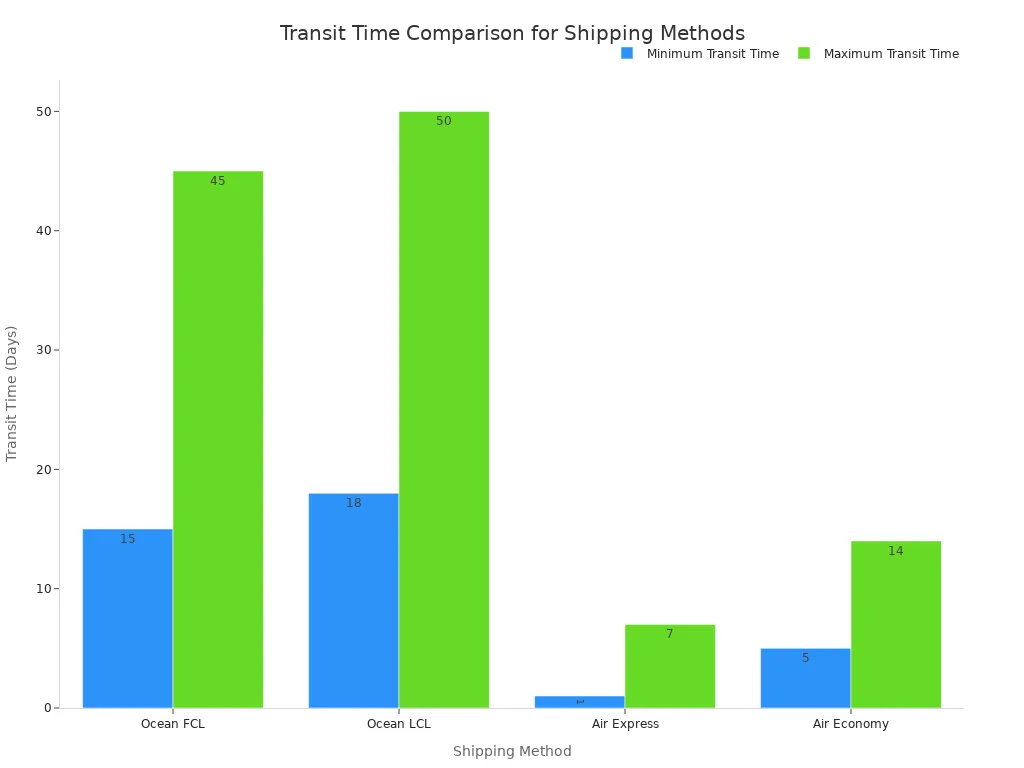
Sea freight is the most common and cost-effective method for shipping large volumes. It offers a significantly lower price per unit but involves longer transit times. Air freight provides much faster delivery, making it ideal for urgent shipments or high-value goods, but it comes at a much higher price.
| Shipping Method | Cost Level | Transit Time (China to USA) |
|---|---|---|
| Ocean FCL | Lowest | 15-45 days |
| Ocean LCL | Low | 18-50 days |
| Air Express | High | 1-7 days |
| Air Economy | Medium | 5-14 days |
Calculating Shipping Costs and Times
The shipping cost is a major component of the total landed price. For less urgent deliveries, ocean freight offers substantial savings. A typical 85kg shipment might cost around $400 by sea versus $600 by air. While air freight can reduce total delivery time to 10-25 days, it often costs 10-15 times more than ocean freight. A freight forwarding agent can provide an accurate price quote based on volume, weight, and destination.
Navigating Customs and Duties
Importing goods from China involves clearing customs and paying applicable taxes. This process requires precise documentation and an understanding of international trade regulations. An experienced customs agent is invaluable here.
Understanding HS Codes for Hair Dryers
Every imported product requires a Harmonized System (HS) code for classification. This code determines the tariff rate.
The specific HS code for electric hair dryers is 8516.31. In the U.S. Harmonized Tariff Schedule (HTS), the full code is 8516.31.0000. This number identifies the product as electrical machinery for hair drying. A customs agent can confirm the correct code.
Working with a Customs Broker
A customs broker or freight forwarding agent is an essential partner for navigating customs. This licensed agent prepares and submits all required documentation, ensuring compliance with import laws. The agent’s price is a small investment to avoid costly delays or penalties. A good agent streamlines the entire process.
Calculating Tariffs and Import Taxes
Tariffs and taxes are calculated based on the product’s HS code and its CIF (Cost, Insurance, Freight) price. The process for calculating duties for goods entering the EU, for example, follows specific steps:
- Find the HS Code: Use the EU’s official tariff database to find the product’s code.
- Check Customs Duty Rate: Enter the HS code and “China” as the country of origin to find the duty rate.
- Calculate Customs Duties: Apply the duty rate to the CIF price of the goods.
- Calculate VAT: Apply the destination country’s VAT rate to the sum of the CIF price and the customs duty.
A reliable customs agent will manage these calculations, ensuring the final price of the goods is accurate and all taxes are paid correctly. This helps businesses forecast the total cost and protect their profit margins.
Successful sourcing hair dryers from China depends on a structured process. A diligent sourcing approach helps businesses build reliable partnerships with hair dryer manufacturers. This sourcing process involves vetting each manufacturer to ensure product quality. Following the guide’s steps for sourcing mitigates risks.
A professional manufacturer welcomes scrutiny. Businesses must avoid common pitfalls like accepting verbal claims and instead validate all certifications from the manufacturer.
This careful sourcing of hair dryers ensures a high-quality final product and long-term profitability.
FAQ
What is a typical MOQ for hair dryers?
A typical Minimum Order Quantity (MOQ) for hair dryers ranges from 500 to 2,000 units. Buyers can often negotiate this number with the manufacturer, especially for standard models or by committing to a long-term partnership.
How can a buyer identify a factory versus a trading company?
A buyer can check the company’s business license. A factory’s license will list terms like manufacturing or production. A trading company’s license will list wholesale or export. A factory also specializes in a narrow product range.
Which certifications are essential for selling hair dryers?
Essential certifications depend on the target market.
- Europe: CE and RoHS are mandatory.
- North America: UL or ETL certification is critical for safety compliance. A buyer must verify these documents to ensure market access.
What are the standard payment terms in China?
The standard payment structure is a Telegraphic Transfer (T/T). A buyer typically pays a 30% deposit to begin production. The remaining 70% balance is due after the pre-shipment inspection but before the goods are shipped.
What is the difference between OEM and ODM?
OEM (Original Equipment Manufacturer) involves a factory producing a buyer’s existing design. ODM (Original Design Manufacturer) means the factory designs and produces a new product based on the buyer’s concept. ODM requires strong R&D capabilities from the supplier.
How much does it cost to ship hair dryers from China?
Shipping costs vary greatly by method. 🚢 Sea freight is the most economical option for large orders but is slow. ✈️ Air freight is much faster but can cost 10-15 times more, making it suitable for urgent or high-value shipments.
What is the HS Code for electric hair dryers?
The primary Harmonized System (HS) code for electric hair dryers is 8516.31. A buyer uses this code for customs declarations and to determine tariff rates. A customs broker can confirm the exact code for a specific country.