

An ionic hair dryer is a styling tool that uses negative ions to dry hair. The ionic technology releases these ions to break down positively charged water molecules on wet hair strands. This unique process helps seal the hair’s cuticles. The result is smoother, shinier hair with significantly less frizz. Their efficiency has made the ionic dryer a market leader. Today, every major hair dryer manufacturer and hair dryer factory produces popular models, from the classic AC hair dryer to the modern BLDC hair dryer.
How an Ionic Blow Dryer Works Its Magic

An ionic blow dryer leverages basic scientific principles to transform the hair drying process. The magic lies in the interaction between the ions it produces and the water on your hair. Understanding this science reveals why this tool is so effective.
The Science of Ions on Your Hair
Positive Charges in Wet Hair
When hair is wet, the water molecules clinging to each strand carry a positive charge. This is due to the natural polarity of water. These positive charges can cause hair cuticles to repel each other and remain open, which leads to frizz and a rougher texture after blow drying.
Negative Ions from the Dryer
An ionic hair dryer is engineered to generate a stream of negative ions. Through electromagnetic attraction, these negative ions seek out and neutralize the positively charged water molecules on the hair. This simple act of neutralization is the foundation of the entire ionic process and sets the stage for faster, healthier drying.
The Drying Process: Ionic vs. Regular Dryers
The core difference between an ionic dryer and a regular one is how each tool removes moisture. A conventional dryer relies almost entirely on high heat to evaporate water, while an ionic model uses a combination of airflow and its powerful ionic function.
Breaking Down Water Molecules
The negative ions do more than just neutralize charges. They actively break down large water droplets into much smaller micro-particles. This process dramatically increases the surface area of the water, which leads to several key benefits:
- Smaller water particles evaporate much faster.
- This accelerated evaporation speeds up the overall hair drying time.
- Some tiny water molecules are small enough to penetrate the hair shaft, helping to hydrate the hair from within.
Sealing the Hair Cuticle
Neutralizing the positive charges on the hair eliminates the repulsive forces that keep cuticles raised. As a result, the cuticles can lie flat and seal shut.
This sealing action is crucial. A closed cuticle creates a smooth surface that reflects light more effectively, giving the hair a brilliant shine. It also locks in the hair’s natural moisture, preventing the over-drying that often occurs with conventional blow drying.
Heat Power vs. Ion Power
A regular dryer blasts hair with hot air, essentially boiling the water off the surface. This method is effective but exposes the hair to prolonged high temperatures, increasing the risk of heat damage. In contrast, an ionic hair dryer achieves faster results without relying solely on heat. The ions do most of the heavy lifting, allowing for a quicker drying session at lower, gentler temperatures. This makes the ionic approach a superior choice for protecting hair health.
Key Benefits of Using an Ionic Hair Dryer
An ionic hair dryer offers significant advantages over traditional models. Its unique ionic function transforms the blow drying experience, delivering superior results for hair health and appearance. The primary benefits include faster drying times, reduced frizz, and enhanced shine.
Achieve Faster Drying Times
One of the most celebrated benefits of an ionic blow dryer is its efficiency. Users often notice a dramatic reduction in the time it takes to dry their hair completely.
How Ions Speed Up Evaporation
The ionic process is the key to this speed. As explained earlier, the negative ions generated by the dryer break large water droplets on the hair into smaller micro-particles. This action increases the water’s surface area, allowing it to evaporate much more quickly. Instead of just blasting hair with heat, the ionic technology works on a molecular level to accelerate drying.
Less Time Exposed to Heat
Achieving faster drying times directly translates to less time the hair is exposed to potentially damaging heat. This is a crucial factor for long-term hair health. A study in the Annals of Dermatology even suggests that controlled, gentle blow drying can be less damaging than slow air-drying, which keeps the hair shaft swollen with water for extended periods.
Reducing heat exposure with an ionic dryer protects the hair’s integrity. Rapidly removing excess water helps maintain the hair’s natural elasticity, making strands stronger and more resilient to breakage.
Get Reduced Frizz and Static
Frizz and static are common frustrations, especially for those with thick or textured hair. The anti-frizz technology inherent in an ionic dryer provides a powerful solution.
Neutralizing Static Electricity
Static electricity occurs when friction creates a positive charge in the hair, causing strands to repel each other and fly away. The ionic dryer combats this directly. The stream of negative ions neutralizes these positive charges on contact. This simple neutralization eliminates the root cause of static, leading to smoother, more manageable hair. The result is a significant reduction in both frizz and static.
Creating a Smoother Finish
With the positive charges neutralized, the hair cuticles are no longer repelling each other. They can lie flat and create a uniform surface. This effect is central to achieving a sleek, polished look. The smoother finish not only looks better but also makes the hair easier to comb and style, preventing tangles and further friction.
Boost Your Hair’s Shine and Softness
Healthy hair is often characterized by its natural luster and soft texture. The ionic drying process enhances both of these qualities by improving the condition of the hair’s surface.
How Sealed Cuticles Reflect Light
A smooth, sealed hair cuticle acts like a mirror. It reflects light evenly, which the eye perceives as shine and gloss. When cuticles are raised or damaged, they create a rough surface that scatters light in multiple directions, making the hair appear dull. The ionic dryer’s ability to seal the cuticle is therefore essential for boosting shine.
- The ionic process flattens and aligns the hair cuticle.
- This creates a smooth, light-reflecting surface.
- The even reflection results in a vibrant, glossy appearance.
Locking in Natural Moisture
While an ionic dryer excels at evaporating surface water, its unique process also helps lock in essential moisture. The ionic function breaks down water into tiny particles, some of which are small enough to penetrate the hair shaft. This internal hydration, combined with the sealed cuticle, prevents the hair from becoming dry and brittle. This method of blow drying helps maintain the hair’s natural moisture balance, leaving it feeling soft and healthy instead of stripped and straw-like.
Are There Any Downsides to Ionic Technology?
While ionic technology offers many advantages, it is not without its potential drawbacks. Understanding these limitations helps users make an informed decision based on their specific hair type and styling goals. The main concerns involve the risk of over-drying, the higher cost, and its suitability for all hair types.
The Risk of Over-Drying
The same efficiency that makes an ionic dryer so appealing can also be a disadvantage under certain conditions. Its powerful ability to break down water molecules can sometimes go too far.
Potential for Limp, Flat Hair
The primary goal for many people with fine hair is to create volume and lift. An ionic dryer’s intense smoothing effect can sometimes work against this goal. By making the hair extremely sleek and removing all traces of frizz, it can inadvertently leave the hair looking limp, flat, and lacking body.
Why It Affects Certain Hair Types
This issue primarily affects individuals with fine, thin, or already very straight hair. These hair types have less natural volume to begin with. The powerful ionic function can be overwhelming, stripping away the texture needed for a fuller appearance. The hair becomes so smooth that it struggles to hold any shape or volume.
Cost and Overall Investment
A noticeable difference between ionic and conventional dryers is the price tag. Ionic models typically represent a higher upfront investment.
Price Comparison with Non-Ionic Dryers
Standard, non-ionic dryers are widely available at lower price points. In contrast, dryers featuring advanced ionic functions are positioned as premium tools, and their cost reflects the sophisticated engineering and materials involved. This price gap can be a significant factor for budget-conscious consumers.
Is the Higher Price Justified?
For many users, the higher cost is a worthwhile investment that pays off over time. The value proposition extends beyond a single styling session.
The long-term benefits accumulate with regular use. Superior motor longevity means the dryer lasts longer, reducing replacement frequency. Faster drying times save valuable minutes each day, while consistent, professional-level results can boost confidence. Most importantly, protecting the hair from cumulative heat damage preserves its health for years to come.
Not a One-Size-Fits-All Solution
No single hair tool is perfect for everyone. The effectiveness of an ionic dryer depends heavily on the user’s hair texture and condition.
Understanding Your Hair’s Needs
Before investing in any new tool, it is crucial to assess your hair’s unique characteristics. Is the primary concern taming frizz, or is it building volume? Is the hair thick and coarse, or fine and delicate? Answering these questions helps determine if an ionic model is the right choice.
When a Ceramic or Tourmaline Dryer is Better
For some hair types, other technologies may be more suitable.
- Ceramic Dryers: These are excellent for fine, dry, or damaged hair because they provide gentle, even heat that prevents over-drying.
- Tourmaline Dryers: Often combined with ionic or ceramic elements, tourmaline is also highly recommended for fine or damaged hair due to its ability to dry hair quickly with less heat.
An intense ionic effect can be too much for thin or dry hair, making ceramic or tourmaline a safer and more effective option.
Is an Ionic Hair Dryer Right for Your Hair Type?
Choosing the right hair tool depends entirely on an individual’s hair texture and needs. An ionic hair dryer is a powerful device, but its intense smoothing properties make it better suited for some hair types than others. Understanding its effects helps users achieve their desired results.
Best for Thick, Coarse, or Frizzy Hair
Individuals with thick, coarse, or frizz-prone hair often find that an ionic dryer is an ideal solution. This technology is uniquely equipped to handle the challenges these hair types present.
Taming Unruly Textures
Coarse hair has a wider diameter, making it more resistant to styling and prone to unruliness. The negative ions produced by an ionic dryer neutralize static and seal the hair cuticle. This action creates a smooth, sleek surface, effectively taming frizz and making the hair much more manageable.
Managing High Hair Density
Thick hair has a high density of strands, which means it holds more water and takes longer to dry. The ionic process excels here by breaking down water molecules for faster evaporation.
- High Power: An ionic dryer with high wattage (1800W or more) provides the powerful airflow needed to dry dense hair efficiently.
- Frizz Reduction: The enhanced negative ion output smooths the cuticle, combating the frizz common in coarse textures.
- Controlled Heat: Multiple speed and heat settings allow users to apply strong airflow without relying on excessive heat, protecting the hair from damage.
Great for Wavy and Curly Hair
The ionic function is also highly beneficial for defining wavy and curly hair patterns while minimizing frizz, a common concern for these hair types.
Defining Curls Without Frizz
The primary goal for curly hair is often to achieve well-defined, frizz-free curls. The ionic technology helps accomplish this by smoothing the hair cuticle without disrupting the natural curl pattern. This process results in shiny, healthy-looking curls that hold their shape. Using a lower temperature setting is crucial to prevent heat from altering the hair’s delicate texture.
Using with a Diffuser Attachment
A diffuser is an essential attachment for anyone with curly hair. It disperses the dryer’s airflow over a wider area, preventing the air from blasting curls out of shape.
Celebrity colorist Mark DeBolt notes that a diffuser lessens static and promotes optimal curl shape. For best results, stylists recommend a specific technique:
- Start with damp hair and apply a curl cream.
- Use low heat and low speed settings on the dryer.
- Place a section of hair into the diffuser bowl and lift it toward the scalp.
- Hold for several seconds before moving to the next section.
- Stop when the hair is about 80% dry to prevent frizz.
A Word of Caution for Fine or Thin Hair
While excellent for thick textures, the powerful smoothing effect of an ionic dryer can be too much for fine or thin hair.
Why It Can Cause Flatness
Fine hair lacks natural body and can be easily weighed down. The intense ionic effect can make strands overly sleek, leading to a flat, limp appearance that lacks volume.
How to Use It on Fine Hair Safely
Individuals with fine hair can still use an ionic tool, but they must employ specific techniques to build volume. Aiming the airflow upward at the roots while drying helps create lift. Using a concentrator nozzle provides precise control, and finishing with a cool shot of air locks the style and volume in place.
How to Choose the Best Ionic Hair Dryer
Selecting the right tool is essential for achieving salon-quality results at home. When you choose an ionic hair dryer model, several key features and materials determine its performance. Understanding these elements helps users find a dryer that matches their hair type and styling needs.
Essential Features to Look For
The best dryers offer control and versatility. These features allow for a customized drying experience that protects hair health.
Adjustable Heat and Speed Settings
Variable heat and speed settings are non-negotiable. They provide the flexibility to adjust the airflow and temperature for different hair types and styling goals. Lower settings are ideal for fine hair, while higher settings can speed up drying for thick textures.
The Cool Shot Button
The cool shot button is a critical feature for finishing a style. It delivers a burst of cool air that sets the hair in place.
When hair is heated, its hydrogen bonds are broken, making it pliable. The cool air rapidly re-establishes these bonds, locking the style in its new shape. This process enhances longevity and adds a final touch of shine.
Wattage and Motor Power
Wattage indicates the power of a dryer’s motor. A higher wattage generally produces stronger airflow, which reduces drying time. The right wattage depends on hair thickness.
| Hair Type | Recommended Wattage |
|---|---|
| Fine/Thin | < 1800 watts |
| Most Hair Types | 1500-1875 watts |
| Thick/Coarse | > 2000 watts |
Modern ionic professional hair dryers often use advanced motors. While AC motors are durable, many premium brands now use lighter, quieter BLDC motors. These generate high-velocity airflow for faster drying without extreme heat.
Understanding Different Dryer Materials
The materials used in a professional hair dryer often enhance its ionic function, providing additional benefits.
Ionic-Ceramic Dryers
Ceramic is a popular material because it heats up evenly and produces gentle, far-infrared heat. An ionic-ceramic dryer is excellent for fine or damaged hair, as it dries the hair without causing hot spots.
Ionic-Tourmaline Dryers
Tourmaline is a gemstone that, when heated, generates a high output of negative ions. This material boosts the dryer’s ionic effect, allowing for faster drying at lower temperatures and superior frizz control.
Ionic-Titanium Dryers
Titanium is a lightweight metal known for its ability to maintain a consistent, high temperature. An ionic-titanium dryer is powerful and efficient, making it a great choice for very thick or coarse hair.
Must-Have Attachments
Attachments direct the dryer’s airflow for specific styling purposes. The two most essential attachments are concentrators and diffusers.
Concentrator Nozzles
A concentrator nozzle is a narrow attachment that creates a focused stream of air. This precision is ideal for:
- Creating sleek, straight styles.
- Smoothing the hair cuticle for a polished finish.
- Targeting specific sections, like bangs or roots.
Diffusers
A diffuser is a large, bowl-shaped attachment that disperses airflow gently. It is a must-have for wavy or curly hair. Its primary functions are to enhance natural texture, define curls without causing frizz, and add volume.
Tips for Getting the Most Out of Your Dryer
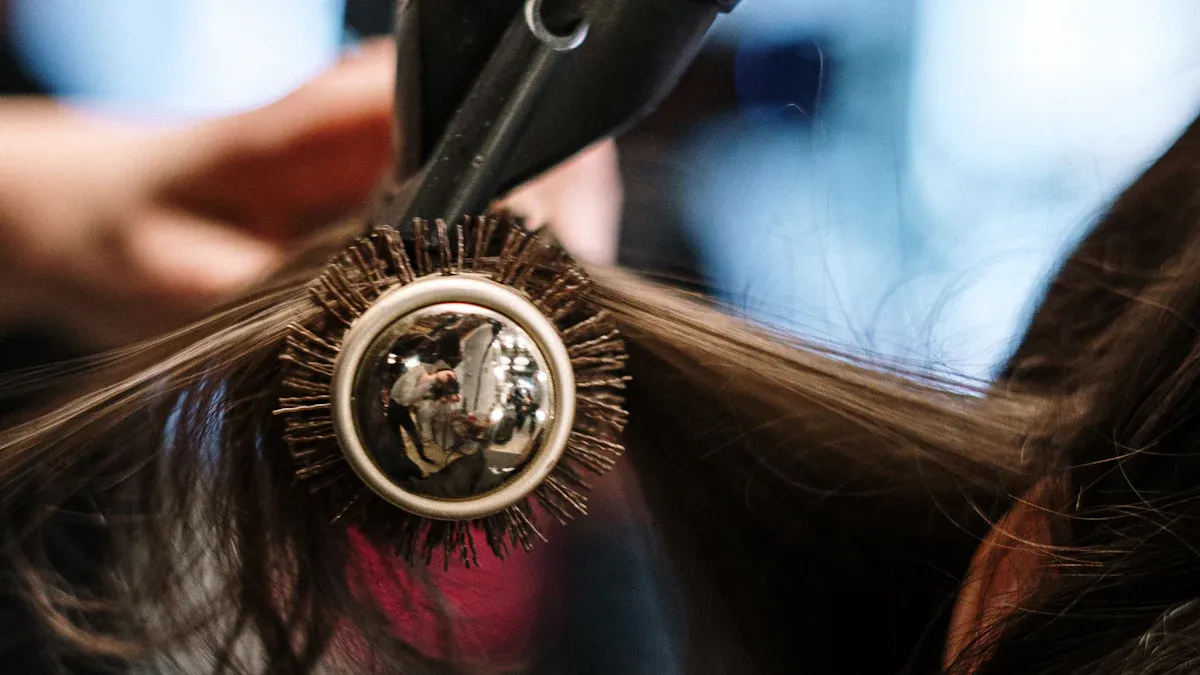
Owning a powerful tool is only half the battle. Using the correct techniques ensures users can maximize the benefits of their professional hair dryer and protect their hair from damage. Proper hair care during the blow drying process is essential for achieving salon-quality results.
Proper Usage Techniques
Following a few fundamental steps can dramatically improve the outcome of any styling session. These professional habits lead to healthier, shinier hair.
Start with Towel-Dried Hair
Attempting to dry soaking wet hair is a common mistake. This approach prolongs the hair drying time and exposes the hair to unnecessary heat. For best results, users should gently blot their hair with a microfiber towel until it is about 60-70% dry before beginning the blow drying process.
Always Apply a Heat Protectant
A heat protectant is a non-negotiable step. It creates a barrier between the heat and the hair shaft, minimizing damage. This rule applies even when using a lower temperature or a diffuser. Applying a quality protectant is a simple action that preserves the hair’s long-term health.
Section Your Hair Before Drying
Trying to dry the entire head of hair at once is inefficient. Professionals work in small, manageable sections for a reason. This method provides superior control and ensures each part of the hair is dried evenly.
For a sleek, glass-like finish, stylists recommend using a concentrator nozzle on small sections with a paddle brush. This technique smooths the cuticle effectively and reduces the need for multiple passes with a flat iron.
Common Mistakes to Avoid
The advanced ionic function can be counteracted by poor habits. Avoiding these common errors is key to unlocking the full potential of ionic professional hair dryers.
Overusing the Highest Heat Setting
The biggest advantage of an ionic dryer is its ability to dry hair quickly without extreme heat. The negative ions do most of the work. Overusing the highest heat setting can burn the hair, leaving it brittle and frizzy. Users should opt for low-to-medium heat to let the ionic technology perform its magic.
Holding the Dryer Too Close to Hair
Positioning is critical. Holding the dryer too close to the hair or scalp can cause significant damage, including breakage and even burns.
- Safe Distance: Maintain a distance of about six inches between the nozzle and your hair.
- Constant Motion: Always keep the dryer moving to distribute heat evenly and prevent hot spots.
Forgetting to Use the Cool Shot
The cool shot button is not just an extra feature; it is a vital styling tool. After a section is dry and styled, a blast of cool air locks the style in place. This action seals the hair cuticle, which enhances shine and ensures the look lasts longer. Forgetting this final step means missing out on a polished, durable finish.
An ionic hair dryer is a powerful hair care tool for achieving smooth, shiny results. Its ionic function releases negative ions to dry hair faster while significantly reducing frizz. This technology is especially beneficial for individuals with thick, coarse, or frizz-prone hair. People with fine hair can also see benefits but should use lower settings to avoid weighing the hair down. Choosing the right ionic dryer requires considering personal hair type, essential features, and necessary attachments to achieve optimal outcomes.
FAQ
What is the main difference between ionic and ceramic dryers?
An ionic dryer uses negative ions to break down water for faster drying and frizz reduction. A ceramic dryer provides gentle, even heat, making it ideal for fine or damaged hair. Many modern dryers combine both technologies for balanced performance.
Can an ionic dryer damage hair?
Any hair dryer can cause damage if used improperly. Users should avoid the highest heat setting and never hold the dryer too close to the hair. The ionic function itself is safe and helps reduce heat exposure by speeding up drying time.
Do I still need a heat protectant with an ionic dryer?
Yes. A heat protectant is essential regardless of the dryer type. It creates a protective barrier on the hair shaft. This simple step minimizes potential heat damage and preserves the hair’s health, even when using lower temperature settings.
How do I know if my dryer is ionic? 🔎
Manufacturers clearly label their products. Check the dryer’s packaging, user manual, or the device itself for terms like “ionic,” “ion technology,” or “anti-frizz.” Many models also feature an indicator light to show when the ionic function is active.
Is an ionic dryer good for creating volume?
An ionic dryer’s primary function is to create a sleek, smooth finish, which can sometimes reduce volume in fine hair. To build volume, users should aim the airflow at the roots and finish with a cool shot to lock in lift.
How often should someone use an ionic dryer?
Users can use an ionic dryer as often as they wash their hair. The key is proper technique.
Always start with towel-dried hair and use a heat protectant. Correct usage makes it a safe tool for a regular hair care routine.