
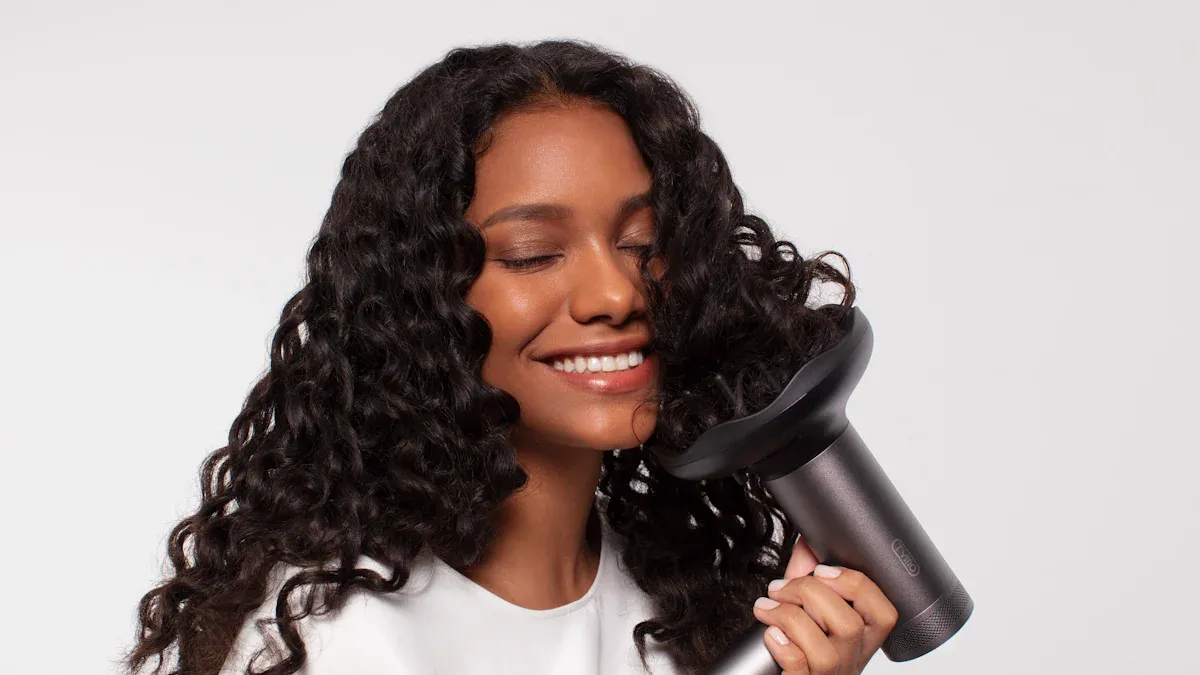
Uma marca premium fabricante de secadores de cabelo produz secadores de cabelo Laifen com engenharia superior. Este modelo moderno Secador de cabelo BLDC supera facilmente o desempenho de um secador Secador de cabelo AC. tradicional. Um controlo de qualidade fábrica de secadores de cabelo de topo garante que cada unidade ajude os utilizadores a obter resultados profissionais em casa. O sucesso depende de alguns princípios fundamentais.
Dica Profissional: Para um acabamento impecável, os utilizadores devem sempre:
- Começar com o cabelo 70-80% seco.
- Selecionar as definições de calor e velocidade apropriadas para o seu tipo de cabelo.
- Utilizar o bico de concentração correto para o estilo desejado.
- Fixar o penteado com o botão de jato de ar frio para um brilho adicional.
A Base: Preparação Pré-Secagem para o Seu Penteado Laifen
Um penteado perfeito começa muito antes de ligar o secador. Uma preparação adequada protege o cabelo de danos e garante um acabamento liso e profissional. Estes passos fundamentais criam a tela perfeita para o styling e são essenciais para maximizar os benefícios do seu secador de cabelo Laifen.. Seguir esta rotina de preparação torna todo o processo de secagem mais rápido e eficaz.
Dica 1: Comece com Cabelo Húmido, Não Ensopado
A Regra dos 70-80% Seco
Os utilizadores devem sempre começar a estilizar quando o seu cabelo estiver 70-80% seco ao ar.. O cabelo molhado é extremamente frágil porque as suas ligações de hidrogénio internas estão quebradas,, tornando-o propenso a danos. Aplicar calor elevado a cabelo ensopado essencialmente ferve a água dentro das fibras, causando danos significativos. Começar com cabelo húmido minimiza a exposição total ao calor, protege a integridade do cabelo e acelera o tempo de styling.
Porque as Toalhas de Microfibra São as Suas Melhores Amigas
As toalhas de felpo tradicionais criam fricção que pode danificar a camada externa do cabelo, ou cutícula. Isto leva a frizz e quebra. As toalhas de microfibra são uma escolha superior por várias razões:
- Absorvem o excesso de água rapidamente sem esfregar agressivamente.
- A sua textura suave minimiza a fricção contra a haste capilar.
- Os utilizadores podem espremer e pressionar suavemente as mechas para remover a humidade.
Dica de Técnica: Após a lavagem, esprema suavemente a água do cabelo.. Em seguida, envolva-o numa toalha de microfibra durante 10-15 minutos. Isto ajuda o cabelo a atingir o estado húmido ideal sem causar danos.
Dica 2: Proteja as Suas Madeixas com Protetor Térmico
Porque É um Passo Não Negociável
Um protetor térmico de qualidade é um escudo essencial para o seu cabelo. Estes produtos contêm polímeros e silicone que formam uma película protetora sobre cada fio. Esta película retarda a condução de calor e distribui-o de forma mais uniforme, reduzindo o risco de danos térmicos. Muitas fórmulas, como um bom spray protetor de calor, oferecem proteção contra temperaturas até 232°C (450°F).. Usar um protetor térmico é o passo mais importante para manter o cabelo saudável durante o styling com calor.
Como Aplicá-lo para uma Cobertura Total
Uma aplicação adequada garante que cada fio esteja protegido. Os utilizadores devem aplicar o protetor térmico em cabelo húmido, seco com toalha, antes de usar o secador.
- Divida o cabelo em 2-4 grandes secções.
- Segure o frasco do spray protetor térmico a 15-20 cm de distância da cabeça.
- Pulverize o produto uniformemente das raízes às pontas em cada secção.
- Use um pente para distribuir o protetor térmico completamente.
Dica 3: Desembaraçar para uma Secagem Lisa e Sem Emaranhados
Escolhendo a Ferramenta Certa: Pentes de Dentes Largos
Desembaraçar cabelo molhado requer uma abordagem suave. A Academia Americana de Dermatologia recomenda o uso de um pente de dentes largos.. Os espaços largos entre os dentes deslizam pelo cabelo com fricção mínima, soltando os nós sem puxar ou partir os fios frágeis. As escovas, em contraste, podem agarrar-se e causar quebra significativa no cabelo molhado.
Técnicas Suaves de Desembaraçar para Prevenir Quebra
Uma técnica adequada evita stress desnecessário no cabelo. Os utilizadores devem sempre começar a desembaraçar a partir das pontas e subir gradualmente até às raízes. Segurar a secção de cabelo que está a ser penteada ajuda a reduzir a tensão no couro cabeludo. Este método remove os emaranhados de forma eficiente e prepara o cabelo para uma experiência de secagem suave e sem emaranhados.
Decifrando o Seu Laifen: Um Guia para Definições e Funcionalidades
Compreender as funcionalidades avançadas dos secadores de cabelo Laifen é a chave para desbloquear todo o seu potencial. As várias definições de calor, velocidade e tecnologia não são arbitrárias; são projetadas para tipos de cabelo e objetivos de styling específicos. Este guia abrangente ajuda os utilizadores a navegar por estas opções para resultados mais saudáveis e bonitos.
Dica 4: Adeque o Calor e a Velocidade ao Seu Tipo de Cabelo
Usar as definições corretas é crucial para proteger a integridade do cabelo. O calor excessivo decompõe as proteínas de queratina essenciais que dão estrutura ao cabelo. Este dano compromete a cutícula, levando à perda de humidade, secura persistente e quebra. Selecionar a temperatura e o fluxo de ar corretos previne este dano antes que ele comece..
Low Speed/Cool Air for Fine or Damaged Hair
Fine or chemically treated hair is highly susceptible to heat damage. Individuals with this hair type should primarily use the low-speed and cool air setting. This gentle airflow provides effective drying without overwhelming fragile strands. The cool air setting is particularly useful for minimizing heat exposure while still achieving a smooth finish.
Medium Speed/Warm Air for Normal Hair
Normal hair that is neither overly fine nor coarse benefits from a balanced approach. A medium speed paired with warm air provides efficient drying without causing unnecessary stress. This combination is ideal for everyday styling, quickly removing moisture while maintaining the hair’s natural health and shine.
High Speed/Hot Air for Thick or Coarse Hair
Thick, coarse, or very curly hair textures require more power to dry effectively. The high-speed, high-heat setting is designed for this purpose. It delivers powerful airflow to penetrate dense hair sections, significantly reducing overall drying time. Users should keep the dryer moving to distribute the heat evenly.
Quick Reference Guide: The following table offers a starting point for finding the perfect settings. Users can adjust based on their hair’s specific needs.
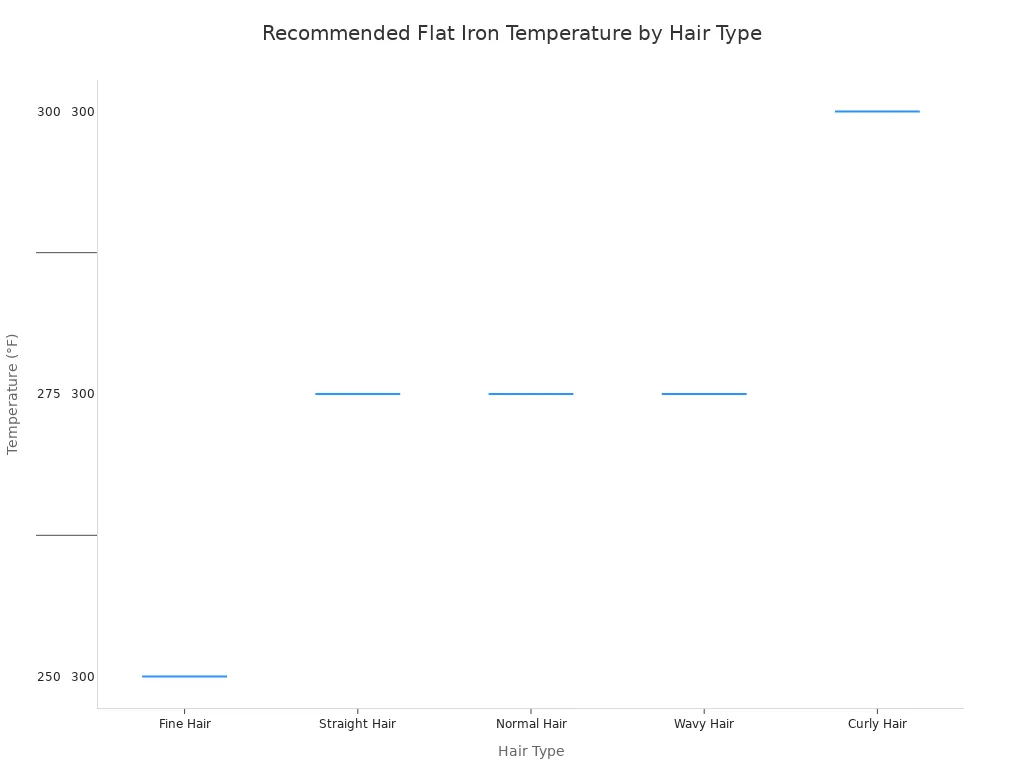
Tipo de Cabelo Recommended Heat Recommended Speed Fine or Damaged Cool / Low Low – Medium Normal or Wavy Warm / Medium Médio Thick or Coarse Hot / High Alto Cacheado Cool – Warm Baixo
Tip 5: Leverage Smart Temperature Control
Laifen dryers incorporate intelligent technology to protect hair from extreme heat. These features work automatically to provide a safer, more consistent styling experience.
Understanding Laifen’s Auto-Regulating Heat
A built-in microprocessor monitors the exit air temperature 100 times per second. This smart chip ensures the heat remains consistent and never reaches damaging levels. If it detects a temperature spike, it instantly adjusts the heating element. This auto-regulation prevents the “hot spots” common in traditional dryers, offering superior protection against thermal damage.
Using the Circulating Heat Option for Gentle Drying
Laifen’s unique circulating mode automatically cycles between hot and cool air. This feature is perfect for users who need gentle yet effective drying, especially those with sensitive scalps or delicate hair. The alternating temperatures prevent any single area from overheating, making it a safe option for children and for finishing a style with a natural, healthy look.
Tip 6: Harness the Power of Negative Ions
Ionic technology is a cornerstone of modern hair care. It actively improves hair condition during the styling process, turning a simple blowout into a frizz-fighting treatment.
What Are Negative Ions?
Water and friction can leave hair with a positive electrical charge, which causes the cuticles to lift and repel each other, resulting in static and frizz. Negative ions are molecules with an extra electron. Laifen dryers generate over 200 million negative ions that are propelled onto the hair with the airflow.
How They Combat Frizz and Boost Shine
These negative ions work in two primary ways:
- Neutralize Static: They neutralize the positive charge on the hair, instantly calming static and flyaways.
- Seal the Cuticle: They help quebrar as moléculas de água on the hair’s surface, allowing for faster evaporation. This process also helps to flatten and seal the hair cuticle. A sealed cuticle creates a smooth, uniform surface that reflects more light, significantly boosting natural shine and creating a polished finish.
Mastering Attachments for Professional Styling
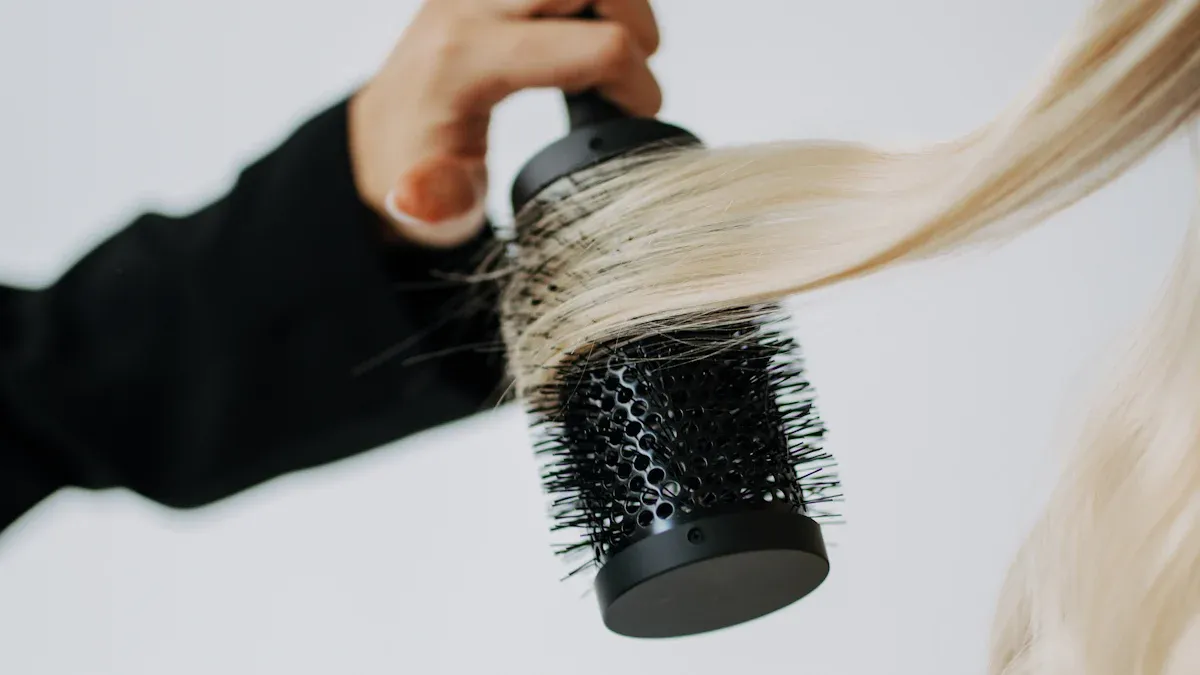
Laifen hair dryers come with magnetic attachments that are more than just accessories; they are precision tools. Each nozzle and diffuser is engineered to manipulate airflow for specific outcomes. Mastering these attachments transforms a standard blowout into a professional styling session, allowing users to achieve sleekness, volume, or defined curls with expert control.
Tip 7: The Concentrator Nozzle for Sleekness
Directing Airflow Down the Hair Shaft
The concentrator nozzle is the key to achieving a smooth, glossy finish. It works by focusing the powerful airflow into a flat, concentrated stream. Users should always aim this stream downward, from the roots to the ends of the hair. This technique smooths the hair’s outer layer, the cuticle. When the cuticles lie flat, they reflect more light, which significantly enhances natural shine and eliminates frizz. Directing airflow against the grain or without a nozzle creates chaotic turbulence, lifting the cuticles and resulting in a rough, frizzy texture.
How to Use with a Brush for a Smooth Finish
Combining the concentrator nozzle with a brush creates the tension needed for a pin-straight style. The brush holds the hair taut while the directed airflow seals the cuticle.
- Maintain Tension: Use a round or paddle brush to pull each section of hair taut as you dry it. This tension is critical for forcing the cuticle to lie flat.
- Follow the Brush: Always point the concentrator nozzle downward, following the movement of the brush from root to tip. This ensures the airflow is always smoothing the cuticle in the right direction.
- Work in Sections: This method is most effective when working on small, manageable sections of hair, ensuring each one is dried completely for a uniform, sleek result.
Tip 8: The Diffuser for Curls and Volume
Enhancing Natural Curls Without Frizz
The diffuser attachment is essential for anyone with wavy, curly, or coily hair. Its large, bowl-like shape disperses the dryer’s airflow over a wider area. This gentle circulation dries curls without blowing them around, which prevents the disruption of their natural pattern and minimizes frizz. For best results, users should place a section of their curls into the diffuser bowl, bring it up toward the scalp, and hold it for several seconds before moving to the next section.
Creating Root Lift and Body
A diffuser is also a fantastic tool for building volume, even for those without curly hair. The prongs can be used to lift hair at the scalp, creating lasting body.
Volume-Boosting Techniques 💡 To achieve maximum lift at the roots, professionals recommend several methods:
- Flip and Diffuse: Flip the hair upside down and diffuse. This technique uses gravity to lift the roots away from the scalp during the drying process.
- Clip the Roots: Before you begin, place small claw clips or duckbill clips at the roots along your part and crown. Diffuse the hair with the clips in place to set the lift. Remove them only once the hair is completely dry.
- Target the Roots: Use the diffuser’s prongs to gently lift sections of hair at the scalp and direct the warm air right at the roots for a targeted volume boost.
Tip 9: The Cool Shot Button to Set Your Style
When and How to Use the Cool Shot
The cool shot button is a finishing tool that locks a style in place. Heat makes hair pliable and easy to shape, while cool air sets it. Professionals use this feature strategically to ensure longevity. After a section is fully styled and dry with heat, users should press and hold the cool shot button for 5-10 seconds, aiming the cool air at that section. For extra volume, flip the hair upside down and give the roots a final blast of cool air. This is more effective than a standard cool air setting because it provides an instant, intense drop in temperature.
Sealing the Hair Cuticle for Lasting Hold
The blast of cold air does more than just cool the hair down. It triggers a physical change that is crucial for a polished, long-lasting look. When hair is heated, its internal hydrogen bonds are temporarily broken, allowing it to be reshaped. The cool shot rapidly reforms these bonds in the new shape.
| Característica | Como Funciona | Benefit for Your Hair |
|---|---|---|
| Função | Instantly disables the heating element to blow ambient air. | Rapidly cools hair to lock in the desired shape. |
| Mecanismo | Sets the hydrogen bonds within the hair shaft. | The style (curl or straightness) holds its form for much longer. |
| Cuticle Impact | Closes the hair cuticles that were opened by heat. | Creates a smoother surface, boosts shine, and reduces frizz. |
This final step in the drying routine ensures the style holds its shape and provides a beautiful, glossy finish that looks healthy and protected.
How to Use a Hair Dryer: Core Techniques for Flawless Results
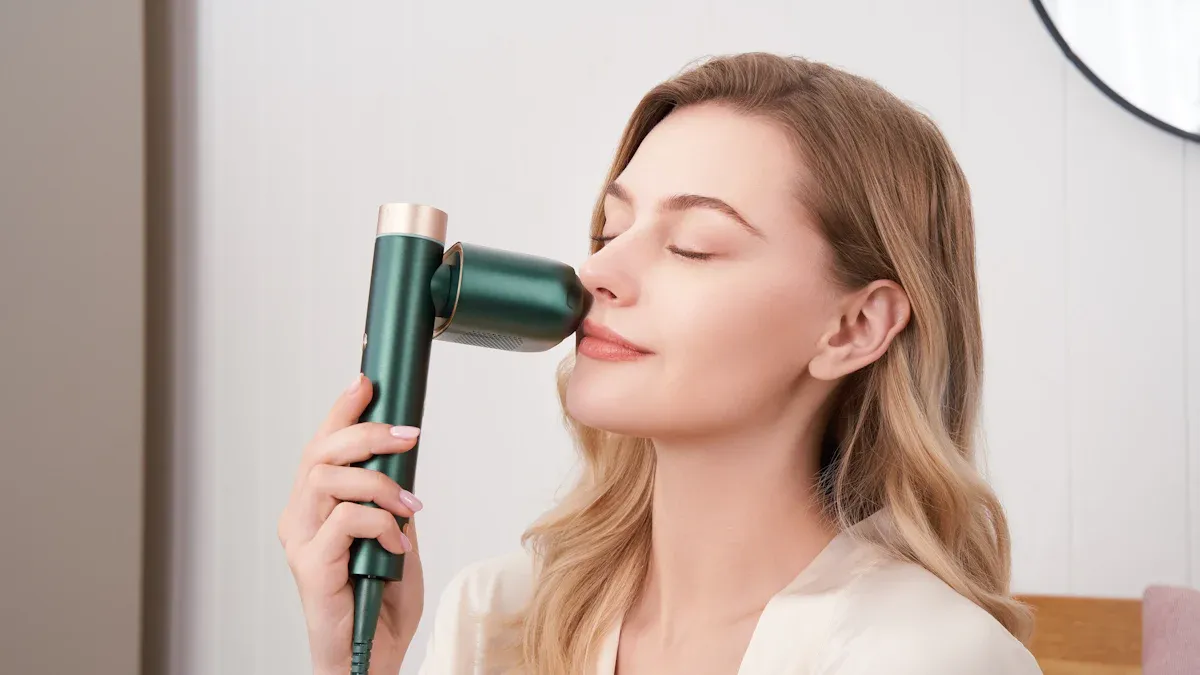
Beyond settings and attachments, proper technique is what separates an average result from a professional one. This comprehensive guide covers the fundamental methods for using a hair dryer effectively. Mastering these core skills ensures an even, healthy, and beautifully styled finish every time. These steps are essential for anyone interested in mastering the art of hair drying at home.
Tip 10: Section Your Hair Like a Pro
Why Sectioning Leads to Faster, Even Drying
Properly sectioning hair before styling accelerates the process and yields salon-quality results. Trying to dry the entire head of hair at once is inefficient and leads to unevenly dried patches. Working with smaller, organized sections provides several key advantages:
- Enhanced Control: Smaller sections are far more manageable and reduce styling frustration.
- Consistency: Sectioning helps achieve uniform results, preventing missed damp spots.
- Eficiência: It keeps undried hair out of the way, speeding up the entire drying process.
- Reduced Damage: This method minimizes repeated heat exposure on any single area, promoting healthier hair.
A Simple Method Using Clips
A simple sectioning technique makes a significant difference. Users can achieve professional-level control with just a few clips.
- Start by creating a center or side part.
- Divide the hair into four equal quadrants: two in the front and two in the back.
- Use large clips to secure three of the quadrants, leaving one down to work on.
- Focus on completely drying one section before moving to the next.
Tip 11: Master the Movement and Distance
Keep the Dryer in Constant Motion
A critical rule for how to use a hair dryer safely is to never hold it stationary. Concentrating heat on one spot can quickly scorch the hair and scalp. Users should keep the Laifen dryer in continuous motion, sweeping it over the hair section. This distributes heat and airflow evenly, preventing overheating and potential damage.
Maintain the Optimal 6-Inch Distance
Distance is just as important as movement. A research study indicates that using a hair dryer at a distance of 15 cm (about 6 inches) with continuous motion causes less damage than even air-drying. Holding the dryer too close exposes hair to intense, concentrated heat. Maintaining this optimal distance protects the hair’s integrity while still allowing for efficient drying.
Safety Note ⚠️ Always keep the dryer about 6 inches away from your hair. This simple habit is one of the most effective ways to prevent heat damage while styling.
Tip 12: Dry from Roots to Ends
Building Volume by Focusing on the Roots First
For maximum volume and lift, users should always begin drying at the roots. The roots can hold more water and take longer to dry. By lifting sections of hair away from the scalp and directing the airflow at the roots, users build foundational volume that lasts. This approach sets the shape of the style from the base up.
Ensuring Ends Stay Healthy
Hair ends are the oldest and most fragile part of the hair shaft. They require the least amount of heat. The root-to-end drying direction naturally protects them. As the airflow moves down the hair shaft, the ends receive gentle, diffused heat. This method ensures they are not over-dried, which helps prevent split ends and breakage. This is a key part of how to use a hair dryer for long-term hair health.
Advanced Styling with Laifen Hair Dryers
Once users master the basics, they can explore advanced styling methods to achieve specific, salon-quality looks. The powerful motor and intelligent features of secadores Laifen make them ideal tools for creating everything from pin-straight styles to voluminous curls. These specialized techniques unlock the full creative potential of the dryer.
Tip 13: Achieving a Pin-Straight, Sleek Look
Creating Tension with a Round or Paddle Brush
Creating a sleek, straight finish requires tension. This tension smooths the hair cuticle, which is essential for a glossy look. Users can achieve this with the right tools and methods.
- Brush Choice: A round brush or a paddle brush works best for this purpose.
- Nozzle Use: Attach the concentrator nozzle to focus the airflow.
- Técnica: Work in small sections. Place the brush at the roots and pull the hair taut. Follow the brush down the hair shaft with the dryer, always keeping the airflow pointed downwards to seal the cuticle and prevent frizz.
Sealing with the Cool Shot for Extra Gloss
Heat makes hair moldable, but cold sets the style. After a section is completely dry and straight, users should activate the cool shot button. A 5-10 second blast of cool air over the section locks the straight shape in place. This rapid cooling also seals the hair cuticle tightly, creating a smooth surface that reflects more light for a high-gloss finish.
Tip 14: Defining and Enhancing Curls and Coils
The “Pixie-Diffusing” Method for Definition
Pixie-diffusing is a popular technique for enhancing curl definition and minimizing frizz across all curl types, from 2A waves to 4C coils. It provides excellent control over the drying process.
- Apply styling products to wet hair.
- Set the diffuser to the lowest heat and speed settings.
- Tilt the head to one side. Gather a section of hair into the diffuser bowl and lift it toward the scalp.
- Hold for 20-30 seconds, then turn the dryer off before moving to the next section.
- Repeat this process until the hair is about 80% dry, allowing the rest to air-dry.
The “Hover” Method for Maximum Volume
Different diffusing methods achieve different results. While pixie-diffusing enhances definition, the hover method is ideal for preserving the natural curl pattern and promoting elongation.
Diffusing Guide 💡 Users can choose a method based on their styling goals.
Técnica Melhor Para Goals Difusão Pixie Wavy, Curly Curl definition, root lift Difusão Flutuante Cabelos Cacheados Preserving natural curl pattern Stretch Diffusing Cabelo Crespo Elongating curls
Tip 15: Creating Lasting Volume in Fine Hair
The Upside-Down Drying Technique
Gravity is a powerful tool for creating volume. Users with fine hair can achieve significant lift by starting their drying process upside down. Flip the hair over and use the diffuser on medium heat. Gently shake the hair with your fingers while moving the diffuser in circular motions near the scalp. This lifts the roots away from the head, building a strong foundation for a voluminous style.
Using a Round Brush at the Crown
The crown is a key area for creating the illusion of fuller hair. To build targeted lift, users should section off the hair at the crown. Using a round brush, pull each piece upward and backward while directing airflow at the roots. Hold for a few seconds, then use the cool shot to set the lift before releasing the section.
Keeping Your Laifen in Peak Condition
Proper maintenance ensures your hair dryer performs optimally and safely for years. Consistent care protects the advanced motor and internal components from damage caused by dust and debris. These simple habits are essential for preserving the power and efficiency of laifen hair dryers.
Tip 16: The Importance of Regular Maintenance
How a Clean Dryer Protects Your Investment
Regular maintenance is the most effective way to protect your investment. A clean filter allows for unrestricted airflow. This prevents the motor from working harder than necessary, which reduces the risk of overheating and component failure. Consistent cleaning ensures the dryer operates at peak efficiency and significantly extends its operational life.
A professional maintenance guide emphasizes that regular cleaning extends the lifespan significantly. Neglecting this task forces the dryer to work harder, which can lead to overheating, slower performance, and eventual breakdown.
Signs Your Filter Needs Cleaning
The dryer will often provide clear signals when its filter is clogged. Users should watch for these signs to prevent performance issues and potential damage.
- A noticeable decrease in airflow or power.
- The dryer feels hotter than usual during operation.
- Drying times become significantly longer.
- The dryer shuts off unexpectedly (a safety feature to prevent overheating).
- A faint burning smell from dust and lint inside.
- Visible buildup of dust, hair, or lint on the filter screen.
Tip 17: How to Clean Your Laifen’s Filter
A Simple Step-by-Step Guide
Cleaning the filter is a quick and easy process. Users should perform this maintenance regularly to keep their dryer in top shape.
- Unplug the Dryer: Always disconnect the dryer from the power source before cleaning.
- Acessar o Filtro: Segure firmemente o cabo e gire a tampa do filtro na parte inferior do cabo no sentido anti-horário para removê-la.
- Limpe o Filtro: Use um pano macio e seco ou uma escova de cerdas macias para limpar suavemente qualquer poeira e resíduos da malha do filtro. Evite usar água.
- Recoloque a Tampa: Alinhe a tampa e gire-a no sentido horário até que ela encaixe com segurança no lugar.
Com Que Frequência Limpar
A frequência ideal de limpeza depende do uso. Para uso doméstico médio, verificar e limpar o filtro uma vez por mês é uma boa prática. Para usuários intensivos ou em ambientes com mais poeira ou pelos de animais, recomenda-se uma verificação quinzenal para garantir o fluxo de ar ideal.
Dica 18: Armazenamento e Cuidados Adequados
Armazenar o Secador com Segurança
O armazenamento adequado evita danos acidentais. Os utilizadores devem guardar o secador num local fresco e seco. Ambientes húmidos, como uma casa de banho com vapor, podem levar a corrosão interna ao longo do tempo. Utilizar a argola de suspensão integrada é uma excelente forma de manter o secador longe de superfícies e reduzir o risco de quedas.
Melhores Práticas para o Cuidado com o Cabo
O cabo de alimentação é vital para a segurança e função do secador. Os utilizadores nunca devem enrolar o cabo com força à volta do corpo do secador. Este erro comum exerce tensão sobre os fios internos, levando a desgaste e potenciais riscos elétricos. Em vez disso, faça laços suaves com o cabo em círculos soltos para o armazenar. Inspecione regularmente o cabo quanto a quaisquer torções ou danos.
Obter resultados profissionais requer uma estratégia de três partes: preparação adequada, técnica correta e manutenção consistente. Os utilizadores desbloqueiam todo o potencial do secador seguindo alguns princípios fundamentais.
Pontos-Chave para o Sucesso 🏆
- Comece sempre com cabelo protegido e seco com toalha.
- Selecione o calor, a velocidade e o bico adequados para o seu tipo de cabelo.
- Limpe o filtro regularmente para garantir o desempenho máximo.
Seguir estes passos permite aos utilizadores desfrutar de um cabelo saudável e bem estilizado em casa com os seus secadores Laifen.
Perguntas Frequentes
Os utilizadores podem estilizar cabelo com tintura com um secador Laifen?
Sim. Os utilizadores devem selecionar a configuração fria ou morna para proteger a integridade da cor. O controlo inteligente de temperatura evita calor extremo, o que ajuda a minimizar o desbotamento da cor. Aplique sempre primeiro um protetor térmico para uma proteção e vivacidade ótimas.
Como é que um secador Laifen é diferente de um tradicional?
Os secadores Laifen utilizam um motor brushless de alta velocidade para secagem mais rápida e menos ruído. Também apresentam controlo inteligente de temperatura e tecnologia de iões negativos. Estas funcionalidades protegem o cabelo de danos causados pelo calor, reduzem o frizz e aumentam o brilho para resultados mais saudáveis.
Qual é o propósito do modo de calor circulante?
O modo circulante alterna automaticamente entre ar quente e frio. Esta funcionalidade proporciona uma secagem suave, sendo ideal para couros cabeludos sensíveis, cabelo de crianças ou para finalizar um penteado. Evita o sobreaquecimento e garante uma experiência confortável e segura.
Por que razão os acessórios são magnéticos?
O design magnético permite mudanças de acessórios rápidas e seguras. Os utilizadores podem alternar sem esforço entre o bico concentrador e o difusor. Este sistema proporciona uma ligação forte durante a utilização e simplifica o processo de estilização para máxima conveniência.
O secador Laifen é seguro para usar no cabelo de crianças?
Sim, é seguro para crianças. Os utilizadores devem utilizar a velocidade baixa e a configuração de ar frio ou o modo circulante. Estas opções suaves secam o cabelo de forma eficaz sem expor o cabelo e o couro cabeludo delicados de uma criança a altas temperaturas.
Com que frequência devem os utilizadores limpar o filtro?
Os utilizadores devem limpar o filtro pelo menos uma vez por mês para um desempenho ideal. Para uso intensivo ou em ambientes empoeirados, recomenda-se uma limpeza quinzenal. Um filtro limpo garante o fluxo de ar máximo e protege o motor de sobreaquecer.