
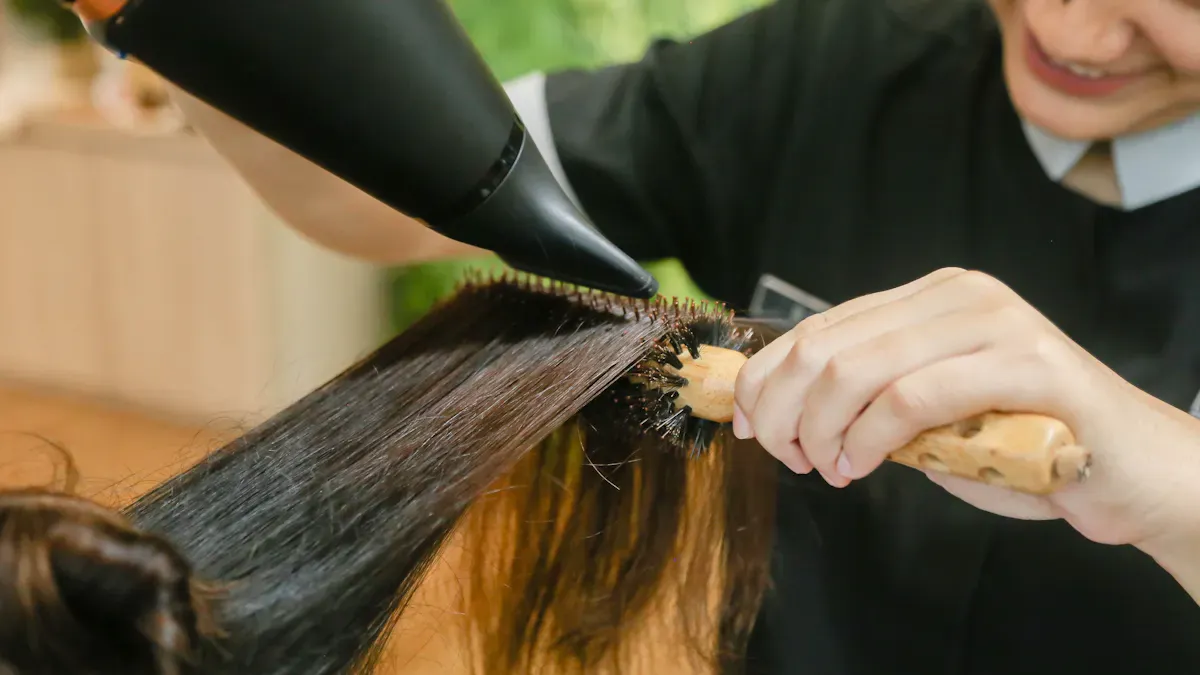
A brush hair dryer blends drying and styling in one device, while a regular hair dryer, such as a Фен с BLDC двигателем или Фен с AC двигателем, requires a separate brush or comb for styling. Many users value time savings, with 58% of women listing faster styling as their top priority, according to an Allure Survey in 2023. The table below summarizes key reasons for selecting a brush hair dryer over a traditional model, based on insights from a leading производителем фенов и заводом по производству фенов:
| Reason | Детали |
|---|---|
| Time savings | 58% cite styling time as primary concern |
| Heat damage | 120°F temperature difference between tool types |
| Styling versatility | Round brush limitations vs. attachment options |
What Is a Brush Hair Dryer?
How a Brush Hair Dryer Works
Brush Hair Dryer Design and Features
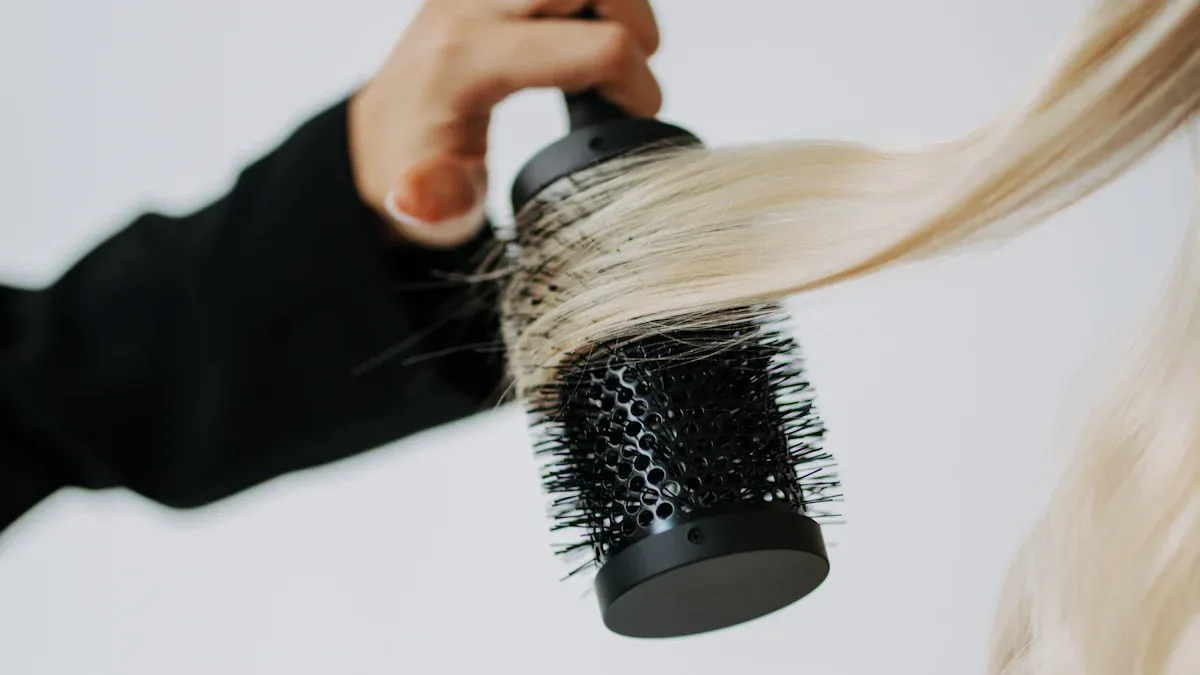
A brush hair dryer combines the functions of a traditional hair brush and a hair dryer. This tool features a barrel with built-in heating elements and air vents, allowing it to dry and style hair at the same time. Most models use ceramic or tourmaline technology for even heat distribution, which helps minimize hot spots and reduce frizz. The bristles detangle hair while the device blows hot air, making the styling process faster and more efficient. Many users appreciate that a dryer brush simplifies hair styling and supports the creation of both curls and straight styles. The thickness of the brush attachment can affect the size of curls, giving users more control over their look.
Using a Brush Hair Dryer
To use a dryer brush, a person typically starts with towel-dried hair. They section the hair and glide the tool from roots to ends, allowing the heated barrel and vented bristles to dry and shape each section. This process detangles, smooths, and adds volume in one step. Hot air brushes have become popular because they dry and style hair simultaneously, reducing the need for multiple tools and saving time during the morning routine.
Types of Dryer Brushes
Rotating Dryer Brush
A rotating dryer brush features a barrel that spins automatically, helping users achieve salon-like blowouts at home. The rotating action lifts the hair and creates volume, making it easier to style layers or add body.
Hot Air Brush
A hot air brush merges the functionality of a round brush with the drying power of a hair dryer. It uses a heated barrel and vented bristles to provide even heat and airflow. This type of dryer brush helps achieve smooth, voluminous styles while minimizing frizz.
Blow Dry Brush
A blow dry brush offers a straightforward approach to styling. It dries and shapes hair in one motion, making it ideal for quick blowouts. Many models, such as the Revlon One-Step Volumizer 2.0 and Drybar Reserve 3-in-1, combine multiple functions to reduce clutter and streamline the hair care routine.
| Brush Name | Distinguishing Features | Ценовой сегмент |
|---|---|---|
| T3 Airebrush | Variety of heat and speed settings; two brush heads included | Выше |
| Revlon One-Step Volumizer 2.0 | Affordable; recommended to avoid highest setting | Ниже |
| Drybar Reserve 3-in-1 | Multiple functions in one tool | Средний ценовой сегмент |
| amika Blow Dry Brush | Praised for brush head size; fewer options | Средний ценовой сегмент |
Who Should Use a Brush Hair Dryer?
Best Hair Types for a Brush Hair Dryer
Professional stylists recommend dryer brushes for a range of hair types. Curly hair benefits from ionic and ceramic features, which help maintain natural texture and reduce frizz. Straight hair responds well to a round barrel and adjustable heat settings, delivering salon-quality results. Users with damaged or fragile hair often report less breakage and improved condition when using a blow dry brush correctly.
Styling Goals with a Brush Hair Dryer
A dryer brush suits those who want to simplify their routine and achieve smooth, voluminous blowouts at home. This tool works well for creating curls, straightening hair, or adding body without switching between multiple devices. People seeking to minimize heat damage and streamline their hair care process often choose a hot air brush or blow dry brush for daily styling. The latest hair drying technology in these tools supports efficient, gentle styling for a variety of hair types and goals.
What Is a Regular Hair Dryer?
How a Hair Dryer Works
Hair Dryer Design and Features
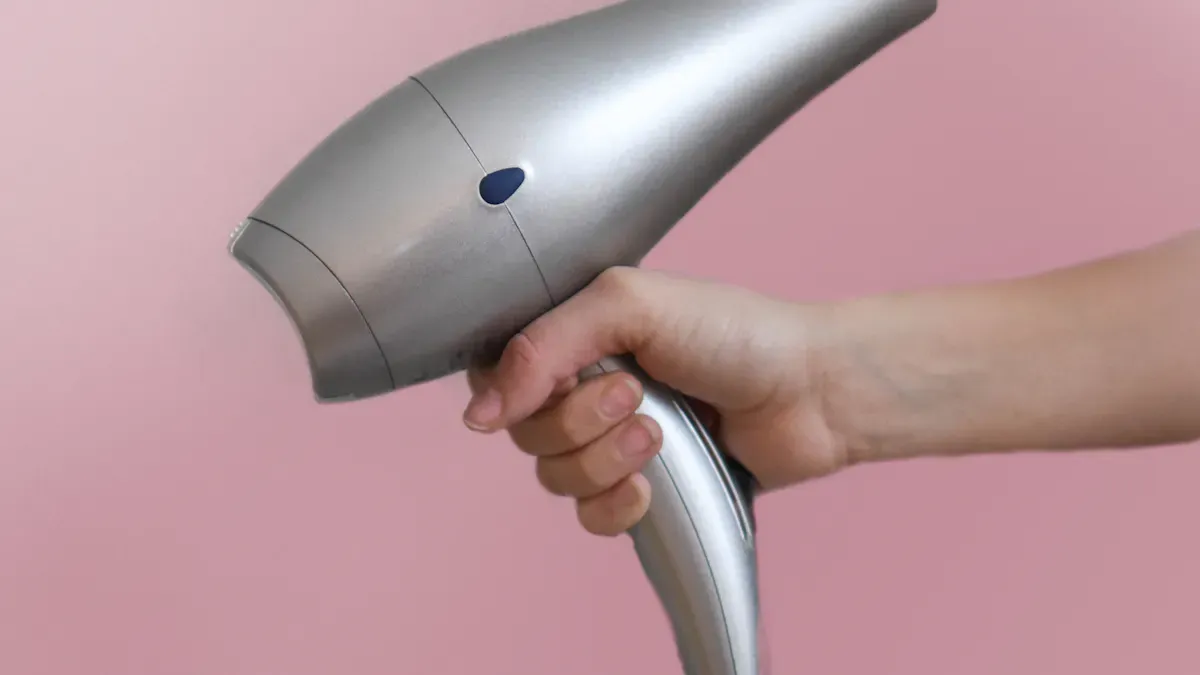
A regular hair dryer uses a motor to draw air through a heating element. The device then expels warm air through a nozzle, allowing users to dry their hair quickly. Most models include adjustable heat and speed settings, which help users control the drying process. Many hair dryers feature lightweight designs, ergonomic handles, and removable filters for easy cleaning. Advanced heat control has become a standard in new launches, with 51% of products offering this technology. BLDC hair dryers represent a high-end option, providing salon-level performance and cost-effective solutions for professional stylists.
| Особенность | Описание |
|---|---|
| Adjustable Heat | Multiple temperature settings |
| Speed Control | Variable airflow options |
| Removable Filter | Easy maintenance and cleaning |
| . | Comfortable for extended use |
| Advanced Heat Control | Minimizes heat damage |
Using a Hair Dryer
Users typically start with damp hair. They section the hair and direct the airflow from roots to ends. Many people use a brush or comb to style while drying. The regular blow dryer allows for precise control, making it suitable for a variety of styling techniques. Some users prefer to use attachments, such as diffusers or concentrators, to achieve specific results. The process requires coordination and practice, especially for complex styles.
Types of Hair Dryers
Ionic Hair Dryer
An ionic hair dryer emits negative ions, which break down water molecules and speed up drying. This technology helps reduce frizz and leaves hair smoother. Many professionals recommend ionic models for thick or curly hair.
Ceramic Hair Dryer
Ceramic hair dryers use ceramic heating elements to distribute heat evenly. This feature prevents hot spots and minimizes damage. Ceramic models suit users who want gentle drying and consistent results.
Tourmaline Hair Dryer
Tourmaline hair dryers incorporate crushed tourmaline gemstones in the heating element. This technology produces both negative ions and infrared heat. Tourmaline models deliver fast drying and enhanced shine, making them popular among users seeking a polished finish.
Tip: When choosing a hair dryer, consider the unique technologies and features that match your hair type and styling needs.
Who Should Use a Regular Hair Dryer?
Best Hair Types for a Hair Dryer
Regular hair dryers work well for all hair types. Thick and coarse hair benefits from powerful airflow and high heat settings. Fine hair requires lower heat and gentle drying. Curly hair responds best to diffusers and ionic technology, which help maintain natural texture.
Styling Goals with a Hair Dryer
A hair dryer supports a wide range of styling goals. Users can create sleek, straight looks, add volume, or enhance curls. The device offers versatility, allowing for both everyday styling and advanced techniques. Many people choose a hair dryer for its ability to deliver salon-quality results at home.
- Adoption rates for hair dryers have increased steadily. In 2015, 70% of women reported using a hair dryer. This figure rose to 75% in 2016 and reached 79% in 2017. Despite a gradual decline in retail unit sales from 2010 to 2018, the market continues to evolve with innovative designs and eco-friendly products.
Key Differences Between a Brush Hair Dryer and a Regular Hair Dryer
Design and Structure
Shape and Build of a Brush Hair Dryer vs. Hair Dryer
A brush hair dryer features a cylindrical or oval barrel with integrated bristles, combining the functions of a brush and a dryer in one device. This design allows users to dry and style hair simultaneously. In contrast, a regular hair dryer has a pistol-shaped body with a nozzle that directs airflow. Users must pair it with a separate brush or comb for styling. The following table highlights the main design differences:
| Особенность | Фен | Dryer Brush |
|---|---|---|
| Настройки температуры | Typically 2-3 settings (low, medium, high) | Similar settings, may include cool air feature |
| Speed Efficiency | Faster drying due to concentrated hot air | Slower, but combines drying and styling |
| Настройка | More options with various attachments | Limited customization with brush types |
The comparison shows that a dryer brush streamlines the styling process, while a hair dryer offers more flexibility in terms of speed and attachments.
Насадки и аксессуары
Regular hair dryers often come with a range of attachments, such as concentrator nozzles and diffusers. These accessories allow users to customize their styling routine, whether they want to smooth hair, add volume, or define curls. A concentrator nozzle channels airflow for a sleek finish, while a diffuser enhances natural texture and reduces frizz. Dryer brushes, on the other hand, typically offer fewer attachments. Some models include a diffuser to promote curl definition, but most rely on the built-in brush head for styling.
| Тип фена | Функциональность | Насадки |
|---|---|---|
| Brush Hair Dryer | Enhances natural texture, reduces frizz | Диффузоры |
| Regular Hair Dryer | Delivers concentrated airflow for rapid drying | Концентраторы (сопла-концентраторы) |
- Brush hair dryers use diffusers to promote curl definition and minimize frizz.
- Regular hair dryers utilize concentrator nozzles to channel air for a sleek, polished look.
Usage and Styling Process
One-Step Styling with a Blow Dry Brush
A blow dry brush simplifies the styling process by combining drying and brushing in a single step. Users can dry, detangle, and shape their hair using only one hand. This approach saves time and reduces the need for multiple tools. The lightweight design of a dryer brush makes it easy for beginners to achieve smooth, voluminous results without advanced skills.
Multi-Step Styling with a Hair Dryer
A regular hair dryer requires a multi-step process. Users must coordinate both hands—one for the dryer and one for the brush. This method allows for greater control and customization, as different brushes and attachments can create a variety of styles. However, it demands more time and practice to master. The traditional blow dryer offers higher speed and temperature settings, making it suitable for all hair lengths and types.
- Traditional blow dryers require two hands and skill to achieve desired styles.
- Users can select different brushes for curly or straight looks.
- Blow dry brushes combine drying and styling, making them easy for beginners but less versatile for advanced techniques.
Skill Level Needed
The skill required for each tool varies. A hot air brush is beginner-friendly and ideal for those who lack coordination or experience. It allows users to achieve a salon-quality blowout at home with minimal effort. In contrast, a traditional hair dryer demands more skill and experience, especially for advanced styling techniques.
| Тип фена | Required Skill Level |
|---|---|
| Hot Air Brush | Beginner-friendly, ideal for those lacking coordination |
| Традиционный фен | Requires more skill and experience for advanced techniques |
Styling Results and Versatility
Volume and Smoothness with a Hot Air Brush
A hot air brush excels at creating volume and smoothness. The heated barrel and bristles lift the roots and smooth the hair cuticle, resulting in a salon-quality blowout. This tool works best for those seeking a streamlined routine and consistent results. The dryer brush reduces frizz and enhances shine, making it a popular choice for everyday styling.
Curling, Straightening, and Other Styles
A regular hair dryer offers greater versatility in styling. With the right attachments and brushes, users can achieve sleek, straight looks, voluminous curls, or soft waves. Round brush styling with a hair dryer creates soft waves and loose curls, while a concentrator nozzle delivers a polished, straight finish. Curling irons remain the best option for tight, structured curls, but a hair dryer provides a balance between versatility and hair health.
| Особенность | Фен | Dryer Brush |
|---|---|---|
| Функциональность | Uses hot air for drying and styling | Combines drying and styling in one |
| Универсальность | High, with various attachments | Limited to brush-style results |
| Styling Results | Sleek, straight, or voluminous curls | Smooth, salon-quality blowout |
| Удобство | Requires multiple tools | All-in-one solution |
| Идеально для | Various hair types and styles | Streamlined styling routine |
Note: The choice between a blow dry brush and a traditional hair dryer depends on hair type, desired style, and personal preferences. A comparison of these tools reveals that a dryer brush offers convenience and ease of use, while a hair dryer provides more styling options and customization.
Power, Performance, and Speed
Heat and Airflow Comparison
A dryer brush operates with a lower power rating compared to a traditional hair dryer. Most dryer brushes use between 800 and 1,300 watts, while regular hair dryers range from 1,000 to 2,100 watts. This difference in wattage means that a hair dryer can generate more heat and stronger airflow. Users often notice that a dryer brush provides a gentler drying experience, which benefits those with fine or fragile hair. In contrast, a hair dryer suits thicker hair types that require higher heat and airflow for efficient drying.
| Тип фена | Power Rating (Watts) |
|---|---|
| Hair Dryer Brushes | 800-1,300 |
| Традиционные фены | 1,000-2,100 |
A comparison of these tools shows that a hair dryer delivers more power, making it the preferred choice for users who prioritize speed and performance. A dryer brush, however, excels in styling and offers a more controlled heat application, reducing the risk of heat damage.
Drying Speed Differences
Drying speed remains a crucial factor for many users. A blow dry brush combines drying and styling, which can shorten the overall routine. For shoulder-length hair, a traditional hair dryer typically requires 8 to 12 minutes for rough drying. Styling with a separate brush adds another 7 to 10 minutes, resulting in a total routine of 15 to 22 minutes. A dryer brush, on the other hand, completes both tasks in 7 to 15 minutes.
| Аспект | Традиционный фен | Щетка-фен |
|---|---|---|
| Rough Dry Time | 8-12 минут | 7-10 минут |
| Доп. время на укладку | 7-10 минут | Встроенная функция (0 минут доп.) |
| Общее время процедуры | 15-22 минуты | 7-15 минут |
This comparison highlights the efficiency of a blow dry brush for those seeking a streamlined process. While a hair dryer offers faster drying due to higher wattage, the dryer brush saves time by eliminating the need for separate styling tools.
Convenience and Maintenance
Travel and Storage
Convenience plays a significant role in tool selection. A dryer brush offers an all-in-one solution, which simplifies packing for travel and reduces clutter at home. Its design eliminates the need for multiple brushes and attachments. Many users appreciate the compact nature of a blow dry brush, especially when space is limited. A traditional hair dryer, while often more powerful, requires additional tools such as brushes and nozzles. This increases the number of items to carry and store.
Tip: For frequent travelers or those with limited storage, a dryer brush provides a practical and space-saving option.
Cleaning and Upkeep
Maintenance requirements differ between these two tools. A dryer brush simplifies the process by combining drying and styling, which reduces the number of items that need cleaning. Users can remove hair from the bristles and wipe the barrel after each use. Regular hair dryers require more attention, as users must clean the filter, maintain attachments, and wash separate brushes. This comparison demonstrates that a dryer brush streamlines daily routines and minimizes upkeep.
| Особенность | Brush Hair Dryers | Традиционные фены |
|---|---|---|
| Удобство | More convenient for daily maintenance | Less convenient, requires separate tools |
| Обслуживание | Simplifies styling process | Requires more coordination and time |
| Мощность сушки | Less powerful, suitable for fine to medium hair | More powerful, better for thicker hair types |
| Универсальность | Limited to styling and drying | Versatile for various hair types and styles |
| Пользовательский опыт | Salon-quality results with minimal practice | Preferred by professionals for advanced techniques |
A dryer brush appeals to users who value simplicity and ease of use. A hair dryer remains the preferred choice for those who require versatility and advanced styling options.
Pros and Cons of Brush Hair Dryers and Regular Hair Dryers
Brush Hair Dryer Pros
Easy to Use for Beginners
A brush hair dryer offers a straightforward experience for those new to at-home styling. Many users appreciate the one-handed operation, which eliminates the need to coordinate a separate brush and dryer. The ergonomic design reduces arm fatigue and streamlines the process. Beginners often find that this tool prevents common styling mistakes and delivers consistent results with minimal effort.
Tip: Many first-time users report that a brush hair dryer removes the learning curve associated with traditional blowouts.
Time-Saving Styling
This tool combines drying and styling into a single step. Users no longer need to switch between devices or repeat sections. The round barrel design lifts hair at the roots, creating volume while drying. This efficiency appeals to those with busy schedules who want salon-quality results in less time.
| Pros of Brush Hair Dryers |
|---|
| Superior convenience through one-handed operation |
| Creates smoother results with enhanced volume |
| Reduces arm fatigue and streamlines styling process |
| Achieves results similar to traditional methods with less effort |
: Технология SmoothWrap использует как положительные, так и отрицательные ионы. Эта система двойных ионов помогает волосам чувствовать себя ухоженными и увлажненными, создавая заметный подъем и объем у корней, не вызывая пушистости.
A brush hair dryer typically uses lower heat settings than a traditional hair dryer. This gentle approach helps protect fragile or damaged hair from excessive heat exposure. The even heat distribution from ceramic or tourmaline technology also minimizes hot spots and reduces frizz.
Brush Hair Dryer Cons
Limited Styling Options
While convenient, this tool offers fewer customization options. Users cannot easily switch between different attachments or create highly defined curls and waves. The built-in brush head limits the range of styles compared to a traditional hair dryer.
Not Ideal for All Hair Types
Some hair types, especially very thick or tightly coiled hair, may not achieve optimal results with a brush hair dryer. The lower power and fixed brush design can struggle to dry dense hair efficiently or provide the control needed for complex styles.
Lower Power Compared to Hair Dryers
Most brush hair dryers operate at a lower wattage. This means they may take longer to dry very wet or thick hair. Users seeking maximum drying speed or high-powered airflow may prefer a traditional hair dryer.
Regular Hair Dryer Pros
Versatile Styling with Attachments
A regular hair dryer stands out for its versatility. It often comes with multiple heat and speed settings, allowing users to tailor the experience to their hair type and desired outcome. Attachments like concentrator nozzles help achieve sleek, straight looks, while diffusers enhance natural curls. This flexibility supports a wide range of styles.
- Regular hair dryers provide multiple heat and speed settings for customization.
- Attachments such as concentrators and diffusers expand styling possibilities.
Suitable for All Hair Types
This tool works well for fine, thick, curly, or straight hair. The adjustable settings and variety of attachments make it a reliable choice for anyone seeking professional results at home.
More Power and Faster Drying
A regular hair dryer typically delivers higher wattage and stronger airflow. This power reduces drying time, especially for those with long or thick hair. Many users value the efficiency and performance that a traditional model provides.
Regular Hair Dryer Cons
Требует больше навыков и координации
Operating a regular hair dryer demands practice and coordination. Users must hold the dryer in one hand and a brush in the other. This process can challenge those who lack experience or dexterity. Achieving salon-quality results often requires learning proper techniques. Many people find it difficult to manage both tools, especially when styling the back of the head. Beginners may struggle with even drying and consistent tension, which can affect the final look.
Can Be Time-Consuming
A traditional hair dryer can extend the styling routine. Users often need to section their hair, switch between tools, and repeat motions for each part. This multi-step process increases the total time spent on drying and styling. People with thick or long hair may spend even more time to achieve the desired result. The need for attachments, such as diffusers or concentrators, adds another layer of complexity. For those with busy schedules, this time commitment can become a drawback.
Potential for More Heat Damage
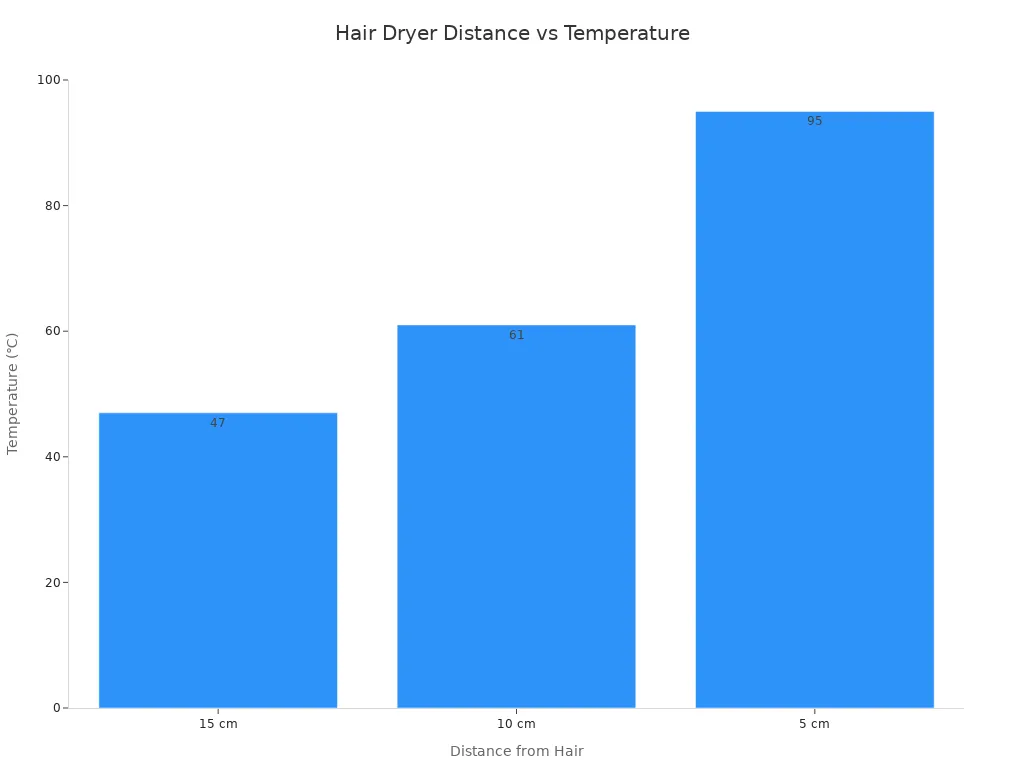
Regular hair dryers pose a higher risk of heat damage, especially when used incorrectly. The distance between the dryer and the hair plays a critical role in the amount of damage. The following table shows how temperature and proximity affect hair surface health:
| Метод сушки | Distance | Температура | Hair Surface Damage |
|---|---|---|---|
| Hair dryer | 15 cm | 47℃ | Less damage than natural drying |
| Hair dryer | 10 cm | 61℃ | Increased damage |
| Hair dryer | 5 cm | 95℃ | Significantly increased damage |
- Applying a hair dryer to very wet hair can prolong drying time and increase the risk of harm.
- Hair remains most vulnerable when wet, making it more susceptible to thermal damage.
- Direct heat exposure can cause water inside the hair shaft to boil, leading to permanent changes in texture and strength.
Note: Maintaining a safe distance and using moderate heat settings can help reduce the risk of damage. Users should avoid placing the dryer too close to the scalp or hair strands.
Which Should You Choose: Brush Hair Dryer or Regular Hair Dryer?
Choosing Based on Hair Type
Selecting the right styling tool depends heavily on hair type. The following table compares how a traditional hair dryer and a reverse-air dryer perform for different textures and needs:
| Особенность | Традиционный фен | RevAir Reverse-Air Dryer |
|---|---|---|
| Heat Level | High (200°F–300°F+) | Low (uses half the heat) |
| Уровень трения | High – brush + air tension | Low – no brushing needed |
| Влияние на здоровье волос | Can lead to frizz, breakage | Supports hydration, reduces breakage |
| Stretching Capability | Minimal without added tools | Smooths and stretches curls |
| Curl Pattern Preservation | Often disrupts natural patterns | Maintains curl integrity |
| Идеально для | Fine, straight, or short hair | All textures, especially curly, coily, and thick hair |
Тонкие или редкие волосы
Fine or thin hair responds well to a blow dry brush or hot air brush. These tools use lower heat and gentle bristles, which help prevent breakage and add volume. A traditional hair dryer may dry fine hair quickly, but it can cause frizz if used at high temperatures.
Густые или жесткие волосы
Thick or coarse hair often requires more power and higher heat settings. A regular hair dryer with a strong motor and multiple attachments works best for these hair types. While a blow dry brush can style thick hair, it may take longer to achieve a salon-quality blowout.
Curly or Wavy Hair
Curly and wavy hair benefits from tools that preserve curl patterns and minimize frizz. A hot air brush with ionic technology helps maintain definition and shine. For those who want to stretch curls or achieve a smooth finish, a blow dry brush offers a gentle alternative to traditional methods.
Прямые волосы
Straight hair adapts easily to both tools. A blow dry brush creates volume and smoothness, while a regular hair dryer delivers quick drying and sleek styles. The choice depends on the desired finish and daily routine.
Choosing Based on Styling Goals
When deciding between a hot air brush and a traditional blow dryer, consider the style you want to achieve and the time available.
Everyday Blowouts with a Blow Dry Brush
A blow dry brush simplifies daily routines. It dries and styles hair in one step, making it ideal for those who want a salon-quality blowout at home.
Adding Volume and Body with a Hot Air Brush
A hot air brush lifts roots and adds body. This tool suits users who want fuller, bouncier hair without using multiple devices.
Sleek and Straight Styles
For sleek, straight looks, a regular hair dryer with a concentrator nozzle provides precise airflow. This method works well for all hair types and delivers a polished finish.
Creating Curls and Waves
A blow dry brush can create loose waves and soft curls, especially on medium-length hair. For tighter curls, a traditional hair dryer paired with a round brush or curling iron offers more control.
Choosing Based on Skill Level and Lifestyle
Tip: Consider your experience and daily schedule before selecting a styling tool.
Beginners and Easy Styling
Beginners often prefer a blow dry brush or hot air brush. These tools require less coordination and deliver consistent results with minimal effort.
Busy Schedules and Quick Results
People with limited time benefit from the efficiency of a blow dry brush. It combines drying and styling, reducing the total time spent on hair care.
Travel-Friendly Options
A blow dry brush offers a compact, all-in-one solution for travel. It eliminates the need for separate brushes and attachments, making it easy to pack and store.
Brush hair dryers and regular hair dryers each offer distinct advantages. Users should evaluate their hair type, styling goals, and daily habits before making a choice.
- Brush hair dryers, such as the Drybar Double Shot, deliver efficient results without overheating.
- Models like the Revlon One Step may risk hair damage but remain budget-friendly.
- Blow dryer brushes save time for long hair and provide easy handling for short hair.
For quick volume and simple styling, a brush hair dryer works best. Those seeking versatility and power should consider a traditional hair dryer.
Часто задаваемые вопросы
What is the main advantage of a brush hair dryer over a regular hair dryer?
A brush hair dryer combines drying and styling in one tool. This design saves time and simplifies the process. Many users find it easier to achieve smooth, voluminous results without advanced skills.
Can a brush hair dryer replace a flat iron or curling iron?
A brush hair dryer creates volume and smoothness but cannot fully replace a flat iron or curling iron. For pin-straight styles or tight curls, users still need specialized tools.
Is a brush hair dryer safe for color-treated or damaged hair?
Yes, most brush hair dryers use lower heat and even distribution. This approach helps protect color-treated or fragile hair from excessive damage. Always use a heat protectant for extra safety.
How often should users clean their brush hair dryer?
Users should remove hair from the bristles after each use. Wipe the barrel weekly. For best performance, check the manufacturer’s instructions for specific cleaning tips.
Do regular hair dryers work for all hair types?
Regular hair dryers suit all hair types. Adjustable heat and speed settings, along with attachments, allow users to customize the drying process for fine, thick, curly, or straight hair.
Can a blow dry brush create curls and waves?
A blow dry brush can create loose waves and soft curls, especially on medium-length hair. For tighter curls, users should use a curling iron or wand.
What attachments come with regular hair dryers?
Most regular hair dryers include a concentrator nozzle for sleek styles and a diffuser for enhancing curls. Some models offer additional attachments for specialized styling.
Are brush hair dryers travel-friendly?
Yes, brush hair dryers offer an all-in-one solution. Their compact design makes them easy to pack and идеальным для путешествий.