
Travelers often face varying electrical standards when abroad. Whether you use a Фен с BLDC двигателем или Фен с AC двигателем, it’s crucial to ensure the device is compatible with the local voltage and plug type. Many Dual Voltage Hair Dryers are designed with switches that make them suitable for international travel. Every reputable производителем фенов и заводом по производству фенов advises users to verify the settings on their hair dryers before plugging them in.
- Always inspect the voltage switch on your Dual Voltage Hair Dryers.
- Choose the correct travel adapter for the local outlets.
Double-check all settings to avoid accidents and safeguard your equipment, as recommended by leading hair dryer manufacturers and hair dryer factories.
Understanding Dual Voltage Hair Dryers for Travel
What Does Dual Voltage Mean?
Explanation of 110V vs. 220-240V
Electrical standards differ across countries. Most travel destinations use either 110-120V or 220-240V for their outlets. For example, the United States and Canada operate on 120V, while the United Kingdom, Germany, and Australia use 230V. Japan uses 100V, which is unique among popular destinations. The following table summarizes common voltage standards and plug types:
| Местоположение | Plug Voltage (Volts) | Тип(ы) вилки | Frequency (Hertz) |
|---|---|---|---|
| Соединенные Штаты | 120 | Тип A, B | 60 |
| Соединенное Королевство | 230 | Тип G | 50 |
| Германия | 230 | Type C, F | 50 |
| Япония | 100 | Тип A, B | 50/60 |
| Австралия | 230 | Тип I | 50 |
| South Africa | 230 | Type C, M | 50 |
| Бразилия | 127/220 | Type A, B, C, N | 60 |
| India | 230 | Type C, D | 50 |
| China | 220 | Type A, C, I | 50 |
| Канада | 120 | Тип A, B | 60 |
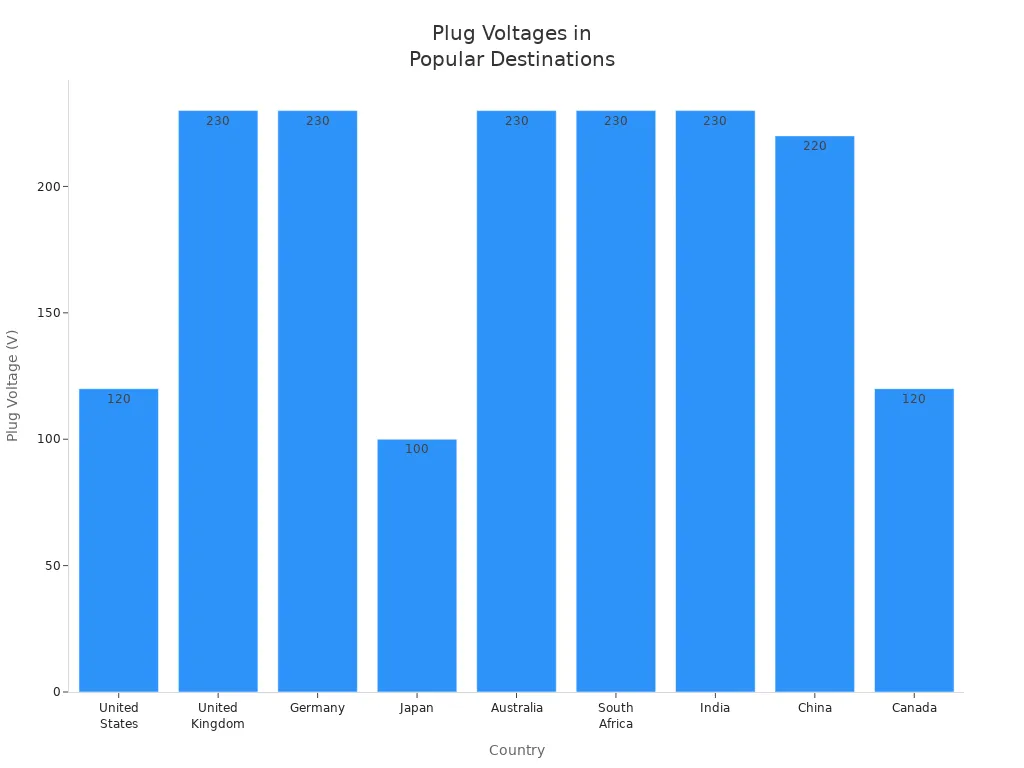
A dual voltage hair dryer can operate safely on both 110-120V and 220-240V systems. This feature allows travelers to use their hair styling tools without a voltage converter, reducing the risk of device damage.
How dual voltage hair dryers switch between voltages
Manufacturers design dual voltage hair dryers with either automatic or manual switching. Automatic models detect the local voltage and adjust internally. Manual models require the user to set the voltage switch, usually located on the handle or base. Setting the correct voltage ensures the travel hair dryer works safely and efficiently.
How to Identify Dual Voltage Hair Dryers
Checking the label or manual for voltage information
Identifying a dual voltage hair dryer before travel prevents accidents. The most reliable method involves checking the voltage label on the device. Look for markings such as ‘INPUT’ or a range like ‘100-240V’ for automatic switching. Manuals also provide this information. If the label shows only one voltage, such as ‘120V’, the device is not suitable for international use.
Signs your hair dryer is not dual voltage
Single voltage models lack a voltage switch and display only one voltage rating. These devices require a voltage converter when used in countries with different electrical standards. Using us electronics abroad without proper adaptation can lead to malfunction or hazards.
Why Dual Voltage Matters for Travel
Risks of using single voltage devices abroad
Using a single voltage hair dryer in a country with a different voltage standard can cause overheating, malfunction, or even fire hazards. Devices not designed for the local voltage may fail quickly. Many budget models lack adequate internal regulation, increasing the risk.
“Voltage range labels are meaningless without verification of auto-sensing circuitry and thermal cutoff redundancy. I’ve tested over 70 travel dryers—the failure rate for units lacking active thermal management exceeds 68% after 3–5 European uses.” — Dr. Lena Varga, Electrical Safety Researcher, TU Delft Electrotechnical Lab
Benefits of dual voltage hair dryers for frequent travelers
Dual voltage hair dryers offer convenience and safety. They operate on both major voltage systems, preventing mismatches that could damage the device. This capability reduces the need for a voltage converter and ensures user safety. Frequent travelers benefit from robust surge protection and compatibility with local outlets. A dual voltage hair styling device provides peace of mind and reliable performance for those who use hair styling tools abroad.
Step-by-Step Safety Tips for Using Dual Voltage Hair Dryers Abroad

Check the Voltage Switch Before You Travel
Locating the voltage switch on your hair dryer
Travelers often overlook the importance of locating the voltage switch before departure. Most dual voltage hair dryers feature a slider or dial, usually positioned on the handle or near the power cord entry. Manufacturers mark the switch clearly with voltage ranges such as “110–120V” or “220–240V.” He or she should examine the rating label for these markings. The manual or product page typically confirms dual-voltage capability, sometimes labeled as “worldwide voltage.”
Setting the correct voltage for your destination country
Setting the voltage switch correctly prevents device failure and safety hazards. The following steps guide travelers through the process:
- Check the rating label for “110–120V / 220–240V” or “100–240V 50/60Hz.”
- Verify that the manual or product page mentions “dual-voltage/worldwide voltage.”
- If the device has a manual switch, set it to the correct voltage for the destination country before plugging in.
- Confirm dual voltage by checking for “INPUT AC 120V – 240V” or a switch for 125V or 250V.
- Proceed to set the voltage switch if dual voltage is confirmed.
User error, especially forgetting to adjust the voltage switch, remains a common issue. Incorrect manual switch settings account for 60% of failures in dual voltage hair dryers. This oversight can lead to device damage and potential safety hazards.
Use the Right Travel Adapter for Plug Compatibility
Common plug types by country (Europe, UK, Australia, Asia)
Travelers encounter a variety of plug types when using electrical outlets abroad. Compatibility depends on the region. The table below summarizes common plug types and voltage standards:
| Регион | Распространенные типы вилок | Напряжение (В) | Notes |
|---|---|---|---|
| Австралия | Тип I | 230 | All outlets accept angled flat pins with mandatory child safety shutters. |
| New Zealand | Тип I | 230 | Identical to Australian standard. |
| Fiji | Тип I | 240 | Higher voltage; some resorts offer US-style A/B for tourists. |
| UK | Тип G | 230 | Three rectangular pins in a triangular pattern with built-in fuses. |
| Германия | Type F | 230 | Side grounding clips; Type C works for ungrounded devices. |
| France | Type E | 230 | Many sockets accept both E and F plugs. |
| Япония | Тип A/B | 100 | Older buildings favor unpolarized Type A; newer use grounded Type B. |
| China | Тип I | 220 | Type A persists in older buildings; Type C works in many hotels. |
| India | Type D/M | 230 | Transitioning to Type M for heavier appliances. |
| Thailand | Type O | 220 | US-style A/B and European C widely accepted in tourist areas. |
| Singapore | Тип G | 230 | Follows British colonial standard. |
| Malaysia | Тип G | 240 | Same as Singapore but operates at slightly higher voltage. |
| South Korea | Type C | 220 | Officially uses European-style outlets; older buildings may have US A/B. |
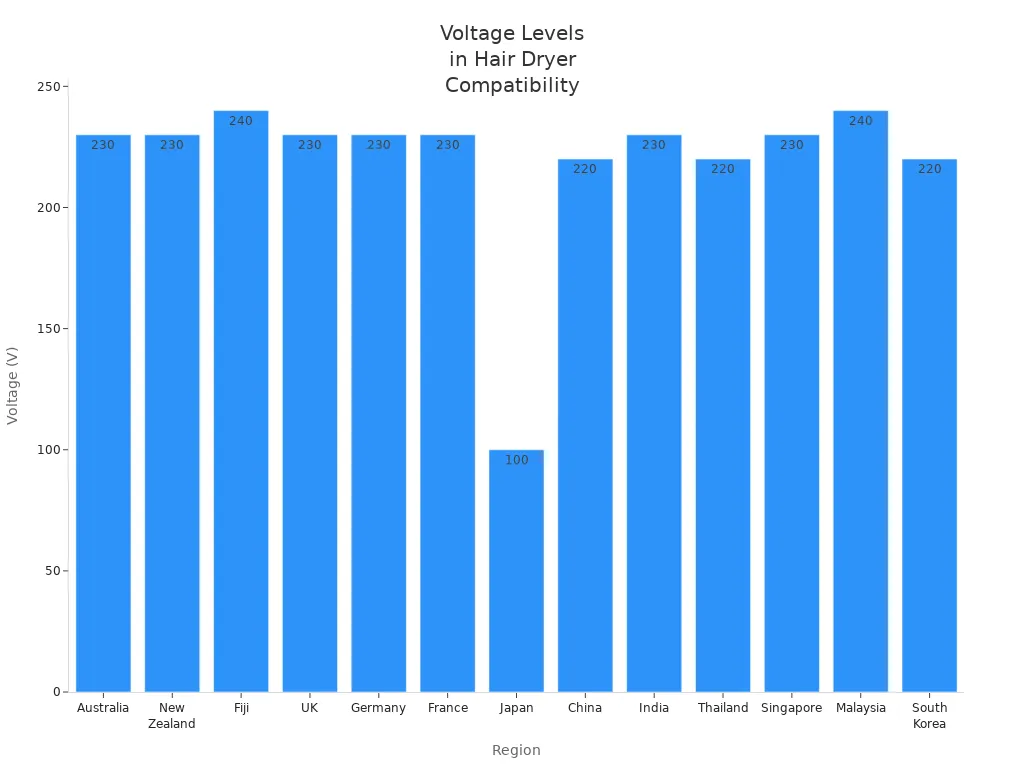
How to choose a quality travel adapter
Selecting a quality travel adapter ensures safe operation of dual voltage hair dryers. He or she should look for adapters with robust construction, surge protection, and compatibility with the destination’s plug type. Universal travel adapter models offer flexibility for multiple regions. Travelers should avoid cheap adapters that lack safety certifications. A reliable travel adapter prevents loose connections and reduces the risk of electrical faults.
Why you don’t need a voltage converter with dual voltage hair dryers
Dual voltage hair dryers eliminate the need for a converter. These devices operate safely on both 110–120V and 220–240V systems. Travelers only require a travel adapter to match the plug type. Using a converter with dual voltage hair dryers can cause unnecessary complications and may even damage the device. Universal travel adapter models provide the necessary plug compatibility without altering voltage.
Inspect Your Hair Dryer and Cords Before Use
Checking for visible damage or wear
Inspection of the hair dryer and its cords remains essential before plugging into electrical outlets abroad. He or she should check for cracks, exposed wires, or discoloration. Surface defects may indicate internal damage. The packaging should meet thickness requirements, and marking information must be accurate.
Ensuring the cord is intact and safe
A safe cord prevents electrical hazards. Travelers should confirm that the power cord meets specifications and shows no signs of wear. Structural safety inspections ensure the air inlet design prevents hair entanglement. Internal wiring must appear neat. Electrical safety tests, such as voltage withstand and insulation resistance, verify device integrity. Mechanical safety tests, including power cord tension and stability, further ensure reliability. Functional tests confirm that all gear switches operate normally and temperature adjustments remain accurate.
| Шаг | Описание |
|---|---|
| 1 | Knowledge of product standards: Familiarize with electrical safety standards of the target market and confirm product certification. |
| 2 | Collation of technical documents: Check completeness of technical documents like specifications and circuit diagrams. |
| 3 | Preparation of inspection tools: Use specialized equipment such as multimeters and leakage testers. |
| 4 | Packaging inspection: Ensure outer box material and thickness meet requirements and that marking information is accurate. |
| 5 | Product appearance inspection: Check for surface defects and ensure power cord specifications are met. |
| 6 | Structural safety inspections: Ensure air inlet design prevents hair entanglement and internal wiring is neat. |
| 7 | Electrical safety tests: Conduct voltage withstand and insulation resistance tests. |
| 8 | Mechanical safety tests: Perform power cord tension and stability tests. |
| 9 | Verification of overheating protection: Simulate blockage to check thermostat functionality. |
| 10 | Basic functional tests: Ensure all gear switches function normally and temperature adjustments are accurate. |
| 11 | Noise tests: Measure noise levels from a distance of 1 meter. |
| 12 | Wind speed and temperature tests: Use anemometer and infrared thermometer to measure air velocity and temperature. |
Tip: Travelers should always inspect their hair dryer and cords before use. This practice reduces the risk of malfunction and ensures safe operation when using electrical outlets abroad.
Test Your Hair Dryer on a Low Setting First
How to safely test for proper operation
He or she should always begin by plugging the dual voltage hair dryer into the outlet and selecting the lowest heat and airflow setting. This approach allows the user to observe the device’s initial response without exposing it to maximum electrical load. The low setting reduces the risk of sudden overheating or electrical faults. He or she should keep the device away from flammable materials and ensure the cord remains untangled.
A step-by-step process helps ensure safe testing:
- Set the voltage switch to match the destination country’s standard.
- Attach the correct travel adapter for plug compatibility.
- Plug the hair dryer into the outlet.
- Select the lowest heat and airflow setting.
- Hold the device in the air, away from surfaces and water.
- Observe the device for 60–90 seconds.
Tip: He or she can use a small digital thermometer to check the surface temperature of the hair dryer and adapter during the test. If the adapter or casing exceeds 60°C (140°F), the device may not operate safely.
Monitoring for unusual sounds, smells, or overheating
During the test, he or she should pay close attention to the hair dryer’s behavior. Unusual sounds, such as buzzing, rattling, or inconsistent airflow, may indicate internal electrical issues. A burning smell or visible smoke signals immediate malfunction and requires unplugging the device at once. The casing should remain cool to the touch. If the casing exceeds 65°C after two minutes of use, poor thermal management may exist.
A 2023 study revealed that 68% of sub-1,100W dryers marketed as ‘global travel’ exceeded safe surface temperature thresholds (70°C) after only 90 seconds of continuous operation. He or she should avoid using any device that shows these signs.
Signs of unsafe operation include:
- The casing feels hot, exceeding 65°C after two minutes.
- The adapter surface temperature rises above 60°C (140°F).
- The device emits unusual sounds or vibrations.
- A burning smell or visible smoke appears.
- The airflow fluctuates or stops unexpectedly.
| Observation | Safe? | Необходимые действия |
|---|---|---|
| Casing cool (<65°C) | Да | Continue use |
| Adapter <60°C | Да | Continue use |
| Unusual sounds | Нет | Unplug immediately |
| Burning smell/smoke | Нет | Unplug and inspect |
| Airflow irregular | Нет | Unplug and check device |
Note: He or she should never ignore signs of overheating or malfunction. Immediate action prevents electrical hazards and protects both the user and the device.
Common Mistakes to Avoid When Traveling with Dual Voltage Hair Dryers
Forgetting to Switch the Voltage Setting
Many travelers overlook the voltage switch on their фены с двойным напряжением,. He or she may assume the device will automatically adjust, but manual models require the user to set the correct voltage before plugging in. Failing to switch the voltage can result in immediate device failure. The hair dryer may overheat, spark, or stop working altogether. This mistake often occurs when traveling with hair styling tools to countries with different electrical standards. He or she should always check the voltage setting before use, especially after packing or unpacking the device.
Tip: Always review the voltage switch before plugging in your hair styling tools abroad. This simple step prevents costly accidents and ensures safe operation.
Using the Wrong Travel Adapter or Voltage Converter
Selecting the wrong travel adapter or voltage converter poses significant risks. He or she may encounter outlets that do not match the plug type of their hair styling tools. Using an incompatible adapter can cause the device to malfunction. In some cases, a traveler experienced their hair dryer blowing up due to a voltage mismatch, highlighting the dangers of incorrect adapters. The following list outlines the hazards associated with improper adapter or converter use:
- Overheating may occur if the voltage does not match the device requirements.
- Devices can spark or catch fire when plugged into incompatible outlets.
- Not using a converter when required can cause hair styling tools to stop working or become dangerously hot.
A table summarizes the consequences of using the wrong adapter or voltage converter:
| Ошибка | Possible Outcome |
|---|---|
| Wrong voltage adapter | Device overheats |
| Incorrect voltage converter | Appliance sparks or fails |
| No converter when needed | Device stops or overheats |
He or she should always verify the adapter and voltage converter compatibility before traveling with hair styling tools. Dual voltage hair dryers do not require a voltage converter, but a quality travel adapter remains essential for plug compatibility.
Overloading Outlets or Power Strips Abroad
Overloading electrical outlets or power strips with hair styling tools creates safety hazards. Many travelers attempt to plug multiple devices into a single outlet using multi-outlet adapters. This practice increases the risk of overheating and electrical fires, especially in foreign environments where standards may differ. High-power appliances like hair dryers draw significant current, which can strain local wiring. He or she should avoid using multi-outlet adapters for hair styling tools and instead plug them directly into wall outlets.
- Overloading outlets with high-power devices can cause overheating and fires.
- Electrical standards vary abroad, increasing the risk.
- Plug hair styling tools directly into wall outlets for safety.
Note: When traveling with hair styling tools, always prioritize safety by avoiding overloaded outlets and power strips. This precaution reduces the risk of electrical hazards and ensures reliable operation.
Ignoring Signs of Damage or Malfunction
Travelers often overlook subtle warning signs when using dual voltage hair dryers abroad. Ignoring these indicators can lead to device failure, personal injury, or even electrical hazards. He or she should always remain vigilant and recognize when a hair dryer shows signs of trouble.
Распространённые признаки мошенничества включают:
- Unusual smells, such as burning or melting plastic
- Excessive heat from the casing or cord
- Automatic shutoffs that occur without user input
- Buzzing, rattling, or inconsistent airflow
- Visible damage, including cracks or exposed wires
He or she should never dismiss these symptoms as minor inconveniences. Each sign points to a potential underlying issue that could worsen with continued use. For example, a burning smell often signals internal electrical problems. Excessive heat may indicate voltage incompatibility or a failing thermal cutoff. Automatic shutoffs can result from overheating or faulty internal components.
Совет: Always check the device label before packing for a trip. This simple step helps prevent damage caused by using the wrong voltage or plug type.
Environmental factors also play a significant role in device safety. Exposure to condensation, high humidity, or sudden temperature changes can cause thermal shock or internal corrosion. These conditions weaken the hair dryer’s components and increase the risk of malfunction. He or she should store hair styling tools in a dry, temperature-controlled environment whenever possible.
Использование plug adapter alone with a single-voltage hair dryer in Europe remains a common mistake. This practice can lead to immediate device failure or create safety hazards. Dual voltage hair dryers do not require a voltage converter, but single-voltage models do. He or she should always verify the voltage compatibility before plugging in.
Checklist for safe operation:
- Inspect the hair dryer and cord for visible damage before each use
- Confirm the voltage setting matches the local standard
- Monitor for unusual sounds, smells, or excessive heat during operation
- Unplug the device immediately if any warning sign appears
Ignoring these signs can result in permanent damage to the hair dryer or pose a risk to personal safety. Travelers who remain attentive and proactive can avoid costly repairs and ensure their hair styling tools function reliably throughout their journey.
Extra Safety Precautions for Dual Voltage Hair Dryers During Travel
Use GFCI Outlets When Possible
He or she should always seek out GFCI (Ground Fault Circuit Interrupter) outlets when using dual voltage hair dryers in hotels or hostels. GFCI outlets provide an extra layer of protection against electrical hazards, especially in environments where moisture is present. These outlets detect imbalances in electrical current and shut off power instantly if a fault occurs. This feature reduces the risk of electrical shock and enhances safety for travelers who use hair dryers in bathrooms or near sinks.
The following table highlights key safety features found in GFCI outlets and dual voltage hair dryers:
| Функция безопасности | Объяснение |
|---|---|
| GFCI Protection | Prevents electrical shocks when using hair dryers near water sources, enhancing safety in damp environments. |
| Thermal Cutoff | Prevents overheating, which is crucial in poorly ventilated areas like hostel bathrooms. |
Tip: He or she should test the GFCI outlet by pressing the “Test” and “Reset” buttons before plugging in any device. This simple step confirms the outlet’s functionality and ensures a safer experience.
Keep Hair Dryers Away from Water Sources
He or she must keep dual voltage hair dryers away from water sources at all times. Water and electricity create a dangerous combination, increasing the risk of shock or fire. Bathrooms often contain sinks, showers, and tubs that can expose devices to moisture. He or she should place the hair dryer on a dry, stable surface and avoid using it near running water. If the device falls into water, unplug it immediately without touching the water.
- Place the hair dryer on a countertop far from sinks and tubs.
- Dry hands thoroughly before handling the device.
- Never use the hair dryer in a wet or humid environment.
Note: Many hotel bathrooms feature outlets close to water sources. He or she should always check the location of the outlet and choose a safer spot if possible.
Unplug After Each Use to Prevent Hazards
He or she should always unplug dual voltage hair dryers after each use. Leaving the device plugged in increases the risk of electrical accidents, especially in unfamiliar environments. Unplugging prevents accidental activation and protects both the device and personal belongings from damage.
The table below explains why unplugging after use remains essential:
| Safety Tip | Описание |
|---|---|
| Unplug After Use | Always turn the dryer off and unplug it after every use. |
- Unplugging the hair dryer prevents accidental damage to the device and your belongings.
- He or she reduces the risk of fire and electrical shock by disconnecting the device from the outlet.
Alert: He or she should never leave the hair dryer plugged in unattended. This practice ensures safety and prolongs the life of the device during travel.
Store Safely When Not in Use
He or she should always store dual voltage hair dryers in a secure location when not in use. Proper storage prevents accidental damage and extends the life of the device. Many travelers place their hair dryers on countertops or in drawers, but these areas often expose the device to moisture, dust, or physical impact. A dry, cool environment protects the internal components and maintains optimal performance.
He or she can follow these steps to ensure safe storage:
- Allow the hair dryer to cool completely before storing.
- Wipe the exterior with a soft, dry cloth to remove any moisture or residue.
- Coil the cord loosely to prevent kinks or stress on the wiring.
- Place the device in a designated drawer or cabinet away from water sources.
- Avoid stacking heavy items on top of the hair dryer.
Tip: He or she should never store the hair dryer near sinks, bathtubs, or humid areas. Moisture can cause internal corrosion and increase the risk of malfunction.
A table summarizes safe storage practices:
| Storage Practice | Преимущество |
|---|---|
| Охладите фен перед хранением | Предотвращает повреждения от тепла |
| Dry cloth wipe | Removes moisture |
| Loose cord coil | Reduces wire stress |
| Dedicated drawer/cabinet | Shields from impact/moisture |
| No heavy stacking | Avoids physical damage |
He or she should inspect the storage area regularly. Clean surroundings reduce dust buildup and help maintain the device’s reliability. Travelers who store their hair dryers safely enjoy consistent performance and minimize the risk of electrical hazards.
Use a Protective Case for Transit
Travelers often pack dual voltage hair dryers in luggage with other items. Without proper protection, the device faces risks from shifting weight, accidental drops, or rough handling. A dedicated, padded travel case or sturdy zippered pouch shields the hair dryer and its accessories from these hazards.
He or she benefits from using a protective case in several ways:
- The padded lining absorbs shocks and prevents scratches.
- The case keeps the hair dryer separate from toiletries and clothing, reducing exposure to moisture.
- Accessories such as diffusers and concentrator nozzles remain organized and secure.
- The sturdy exterior resists crushing forces during transit.
Note: He or she should select a case designed specifically for hair dryers. Generic bags may lack the necessary padding or compartments.
A protective case ensures the hair dryer remains in excellent condition for use upon arrival. Travelers who invest in quality cases avoid costly repairs and enjoy peace of mind throughout their journey.
Checklist for transit safety:
- Use a padded, zippered case for the hair dryer and accessories.
- Поместите футляр в центр чемодана, окружив его мягкими предметами.
- Не размещайте устройство рядом с жидкостями или острыми предметами.
- Проверяйте футляр на наличие повреждений перед каждой поездкой.
🧳 Путешественники, соблюдающие эти меры предосторожности, защищают свои фены с двойным напряжением от типичных рисков в поездках и обеспечивают их надежную работу за границей.
Краткий контрольный список для безопасного путешествия с феном с двойным напряжением
Перед выездом из дома
Ему или ей следует тщательно подготовиться перед любой международной поездкой с феном. Следующий контрольный список помогает путешественникам избежать распространенных ошибок и обеспечивает безопасную эксплуатацию:
- Убедитесь, что фен поддерживает двойным напряжением. Найдите наклейку с надписью ‘INPUT AC 120V – 240V‘ или ‘120V-240V’.’
- Если устройство рассчитано на одно напряжение, например, 120V или 125V, необходим преобразователь напряжения. Мощные дорожные преобразователи напряжения для фенов часто выходят из строя, и на них не стоит полагаться.
- Проверьте мощность фена. Преобразователь должен соответствовать этой мощности или превышать ее.
- Выберите дорожный адаптер, подходящий для розеток страны назначения. Дорожный адаптер необходим для совместимости вилки.
- Берите преобразователь только в том случае, если фен не поддерживает двойное напряжение. Избегайте использования ненадежных преобразователей для мощных приборов.
- По возможности выбирайте фен с автоматической регулировкой напряжения. Эта функция упрощает настройку и снижает риски.
- Используйте минимальный температурный режим, чтобы предотвратить перегрузку во время работы.
Совет: Ему или ей следует следить за индикатором преобразователя. Если он загорается красным, отключите устройство и дайте преобразователю остыть.
Перед включением в розетку за границей
По прибытии путешественники должны выполнить несколько проверок безопасности, чтобы обеспечить правильную работу:
- Проверьте наклейку на фене, вилку или инструкцию на предмет характеристик напряжения.
- Если есть переключатель напряжения, установите его в соответствии с местным стандартом.
- Используйте только сертифицированные преобразователи с соответствующей номинальной мощностью. Избегайте универсальных преобразователей, не имеющих сертификатов безопасности.
- Проверьте розетку на наличие надлежащего заземления и ее физическое состояние.
- Протестируйте дорожный адаптер с маломощным устройством перед подключением фена.
- Никогда не пытайтесь использовать в Европе фен, рассчитанный только на 120V или 125V, только с адаптером. Для устройств с одним напряжением требуется преобразователь напряжения.
| Проверка безопасности | Необходимые действия |
|---|---|
| Подтверждение маркировки напряжения | Установите правильное напряжение |
| Тест адаптера | Сначала используйте маломощное устройство |
| Сертификация преобразователя | Проверка номинальной мощности |
| Осмотр розетки | Проверка заземления |
Внимание: Ему или ей следует избегать использования мощных преобразователей напряжения для фенов. Эти устройства часто выходят из строя и представляют угрозу безопасности.
После каждого использования
После сушки волос путешественники должны принять меры для поддержания постоянной безопасности:
- Отключите фен от сети сразу после использования. Это предотвращает случайное включение и снижает риск возгорания.
- Дайте устройству остыть перед хранением.
- Ограничьте сеансы сушки 5–10 минутами. Продолжительная работа увеличивает риск перегрева.
- Следите за преобразователем во время использования. Если преобразователь нагревается или индикатор меняется, отключите его и дайте остыть.
- Храните фен в сухом, безопасном месте, вдали от источников воды.
- Перед следующим использованием проверьте шнур и вилку на наличие признаков износа или повреждений.
Примечание: Ему или ей следует всегда проверять устройство после каждого использования на наличие необычных запахов, чрезмерного нагрева или видимых повреждений. Раннее обнаружение предотвращает опасности и продлевает срок службы устройства.
🧳 Путешественники, которые следуют этим советам для поездок за границу, защищают свои фены и обеспечивают их безопасную работу на протяжении всего путешествия.
Путешественникам полезно соблюдать основные правила безопасности при использовании фенов с двойным напряжением за границей. Ему или ей всегда следует проверять совместимость напряжения,, выбирать сертифицированные устройства с двойным напряжением и брать правильные адаптеры для вилок. Эти шаги снижают риск повреждения устройства и возникновения опасностей, связанных с электричеством. Благодаря бдительности путешественники обеспечивают надежную работу и более безопасный опыт.
- Проверяйте совместимость напряжения для систем 110-120V и 220-240V.
- Используйте фены, сертифицированные для двойного напряжения.
- Берите необходимые адаптеры для вилок для международных поездок.
Постоянное внимание к этим рекомендациям защищает как пользователя, так и устройство во время каждого путешествия.
Часто задаваемые вопросы
Будет ли фен с двойным напряжением работать в любой стране?
A Фен с двойным напряжением работает в большинстве стран. Ему или ей необходимо установить правильное напряжение и использовать совместимый адаптер для вилки. Всегда проверяйте маркировку на устройстве и местное напряжение перед использованием.
Как узнать, поддерживает ли фен двойное напряжение?
Ему или ей следует найти наклейку с надписью “110-120V/220-240V” или “100-240V”. Эта информация также указана в инструкции или на странице товара. Модели с одним напряжением отображают только одно значение.
Нужен ли преобразователь напряжения для фена с двойным напряжением?
Нет, для фена с двойным напряжением преобразователь напряжения не требуется. Ему или ей нужен только дорожный адаптер для совместимости вилки. Использование преобразователя с устройствами с двойным напряжением может привести к повреждению.
Что делать, если фен перегревается за границей?
Ему или ей следует немедленно отключить устройство от сети. Дайте ему остыть перед проверкой на повреждения. Если перегрев продолжается, прекратите использование фена и обратитесь к производителю или квалифицированному технику.
Можно ли использовать фен с двойным напряжением через удлинитель?
Ему или ей следует избегать подключения фена к удлинителю, особенно за границей. Высокомощные устройства могут перегружать удлинители и розетки. Для безопасности подключайте фен непосредственно в розетку на стене.
Безопасно ли использовать фен с двойным напряжением в ванной комнате за рубежом?
Ему или ей следует использовать розетки УЗО при их наличии и держать устройство подальше от источников воды. Никогда не используйте фен мокрыми руками или рядом с раковинами и ваннами. Безопасность остаётся главным приоритетом.
Какие аксессуары помогают защитить фен во время путешествий?
Сумка для путешествий с мягкой подкладкой защищает фен от ударов и влаги. Ему или ей также следует использовать органайзеры для шнура, чтобы предотвратить спутывание. Хранение устройства в сухом, безопасном месте продлевает срок его службы.