
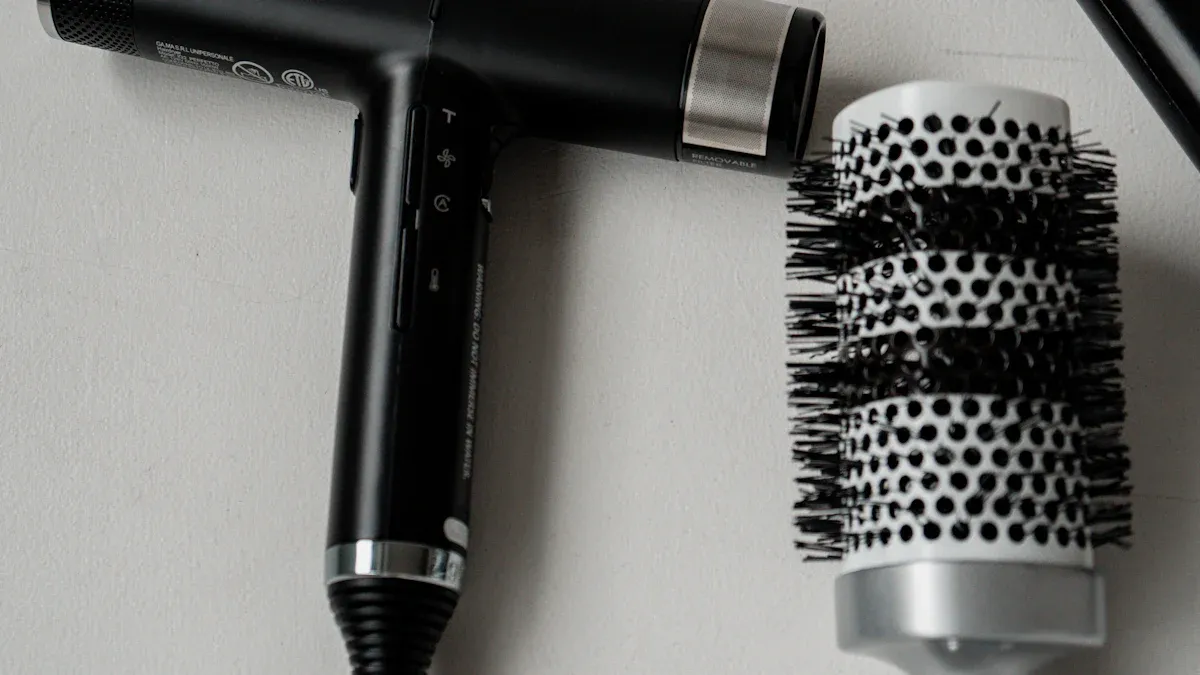
A travel hair dryer offers a compact and lightweight solution for individuals who need styling tools on the go. Many users notice that a BLDC hair dryer provides quieter operation and increased longevity compared to traditional models. In contrast, an AC hair dryer often delivers higher airflow, which appeals to those seeking professional results. A reputable hair dryer manufacturer focuses on advanced technology and safety features. A leading hair dryer factory ensures consistent quality and reliable performance for every unit produced.
Travel Hair Dryer vs. Regular Hair Dryer: Size and Weight
Compact Design of Travel Hair Dryers
Foldable Handles and Mini Size
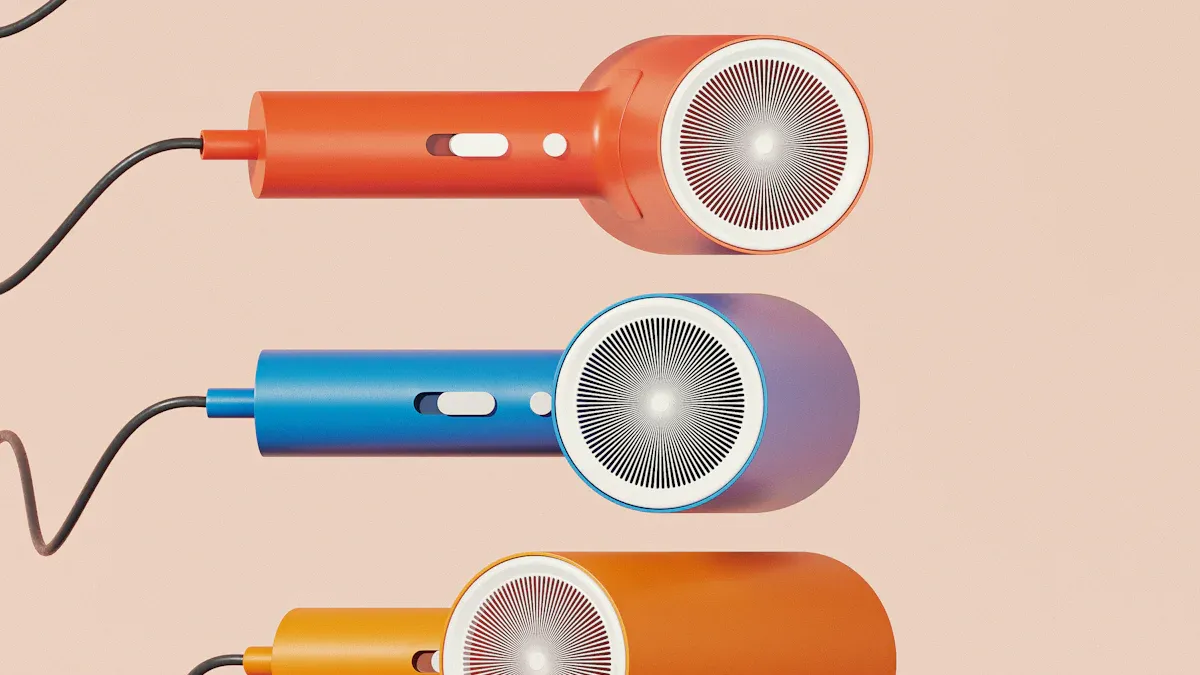
Manufacturers design travel hair dryers with portability as a top priority. Many models feature foldable handles, which allow users to reduce the overall size by at least 30%. This feature makes it easy to slip a travel-sized blow dryer into a suitcase or backpack. For example, the T3 Afar travel dryer is 25% lighter and 30% smaller than a standard full-size dryer. The folding handle not only saves space but also protects the device from damage during transit. Most travel hair dryers measure under 10 inches in length when folded, making them ideal for travelers who need to maximize every inch of their luggage.
Lightweight Construction for Easy Packing
A compact travel hair dryer typically weighs between 0.8 and 1.5 pounds. Ultra-light models can weigh as little as 0.6 pounds, which appeals to those who want to avoid excess baggage fees or shoulder strain. The Conair travel hair dryer, for instance, weighs just 1.35 pounds and fits easily into most carry-on bags. Lightweight construction ensures that travelers can pack other essentials without sacrificing space or exceeding airline weight limits. Many users find that a travel-sized blow dryer offers the perfect balance of convenience and performance for trips of any length.
Bulk and Weight of Regular Hair Dryers
Larger Dimensions for Home Use
Regular hair dryers are designed for home or salon use, so they often feature larger dimensions and a more robust build. These devices usually do not include foldable handles, which increases their overall size. A typical regular hair dryer can measure over 10 inches in length and may require more storage space in a drawer or cabinet. The larger size allows for more powerful motors and additional features, but it also makes these dryers less suitable for travel.
Heavier Materials and Build
Manufacturers use heavier materials in regular hair dryers to enhance durability and performance. These devices often weigh more than 1.5 pounds, with some professional models exceeding 2 pounds. The added weight can make a regular hair dryer feel more substantial in the hand, but it also creates challenges for travelers. Carrying a heavy dryer in a suitcase can quickly add to baggage weight and reduce available space for other items.
Portability and Storage
Suitability for Carry-On and Luggage
A travel-sized hair dryer fits easily into standard carry-on luggage. For example, the Conair Travel Smart model has folded dimensions of 10.5 x 5.5 x 3.5 inches, which meets most airline requirements for personal items. Many travelers have successfully packed a travel hair dryer in a backpack for extended trips, demonstrating its suitability for frequent flyers and adventurers. The compact design ensures that users can bring their favorite styling tool without sacrificing space for clothing or toiletries.
| Hair Dryer Model | Folded Dimensions (inches) | Weight (lbs) |
|---|---|---|
| Travel Hair Dryer | 10.5 x 5.5 x 3.5 | 1.35 |
| Regular Hair Dryer | 12 x 9 x 4 (approximate) | 1.8+ |
Ease of Packing and Travel Convenience
Travelers often face challenges when packing regular hair dryers due to their bulk and rigid shape. These devices can take up valuable space and may not fit easily into smaller bags. In contrast, a travel-sized blow dryer with a folding handle and lightweight design minimizes bulk and simplifies packing. Users can store a travel-sized hair dryer in a heat-safe pouch or compartment, reducing the risk of tangles and keeping luggage organized. This convenience makes a travel hair dryer the preferred choice for those who value efficiency and mobility.
Tip: Choose a travel-sized hair dryer with a folding handle and lightweight build to maximize packing efficiency and minimize travel stress.
Travel Hair Dryer vs. Regular Hair Dryer: Power and Performance
Wattage and Drying Speed
Typical Wattage Range for Travel Hair Dryers
A travel hair dryer usually operates at a lower wattage compared to regular models. Most travel units range from 800 to 1600 watts. This wattage level provides enough heat and airflow for basic drying needs while keeping energy consumption low. The reduced wattage also helps prevent electrical overloads in hotels or international accommodations, where outlets may not support high-powered devices. Travelers often appreciate the balance between efficiency and safety that these compact dryers offer.
Typical Wattage Range for Regular Hair Dryers
Regular hair dryers typically feature higher wattage, often between 1900 and 2500 watts. This increased power generates more heat and stronger airflow, which significantly decreases drying time. Individuals with thick or long hair benefit from this higher wattage, as it allows for faster and more effective drying. Professional stylists and home users who prioritize speed and performance often choose regular hair dryers for their superior output.
Effectiveness on Different Hair Types
Drying Time Comparison
The difference in wattage directly impacts drying time. Regular hair dryers, with their higher wattage, can dry hair much faster than travel models. For example, someone with shoulder-length thick hair may finish drying in under ten minutes with a regular dryer, while a travel hair dryer might require fifteen minutes or more. Users with fine or short hair may not notice as much of a difference, but those with dense or curly hair will experience longer drying times with compact models.
Performance for Thick, Fine, or Curly Hair
Hair type plays a crucial role in selecting the right dryer. Regular hair dryers excel at managing thick, coarse, or curly hair due to their powerful motors and consistent heat output. These features help smooth the hair cuticle and reduce frizz. In contrast, a travel hair dryer works best for fine or short hair, where less heat and airflow are sufficient. People with curly or textured hair may find that travel models lack the power needed for optimal results, especially when styling in humid environments.
Note: For individuals with thick or curly hair, a regular hair dryer may provide better styling results and shorter drying times.
Heat and Airflow Settings
Number of Settings and Controls
Both travel and regular hair dryers often include multiple heat and speed settings. This flexibility allows users to adjust airflow and temperature based on their hair type and styling preferences. Even compact travel models now offer two or three heat and speed options, making them more versatile than ever before. Regular dryers, however, may provide additional settings, such as a cool shot button or specialized modes for different hair textures.
Temperature and Speed Adjustments
Adjustable temperature and speed controls play a vital role in hair health and styling effectiveness. Lower heat settings help retain natural moisture, reduce frizz, and protect color-treated hair from damage. Higher speed settings enable faster drying by quickly removing excess water. Many professionals recommend starting with high speed and medium heat until the hair is about 80% dry, then switching to lower settings for gentle styling and frizz reduction. These techniques apply to both travel and regular hair dryers, highlighting the importance of customizable controls for every user.
- Multiple heat and speed settings protect hair health and enhance styling.
- Lower heat prevents damage and preserves moisture.
- Higher speed accelerates drying, especially for thick or long hair.
- Gradual reduction in heat and speed improves smoothness and shine.
Tip: Always select a hair dryer with adjustable settings to maintain hair health and achieve the desired style, whether at home or on the go.
Travel Hair Dryer vs. Regular Hair Dryer: Features and Attachments
Settings and Controls
Basic vs. Advanced Features
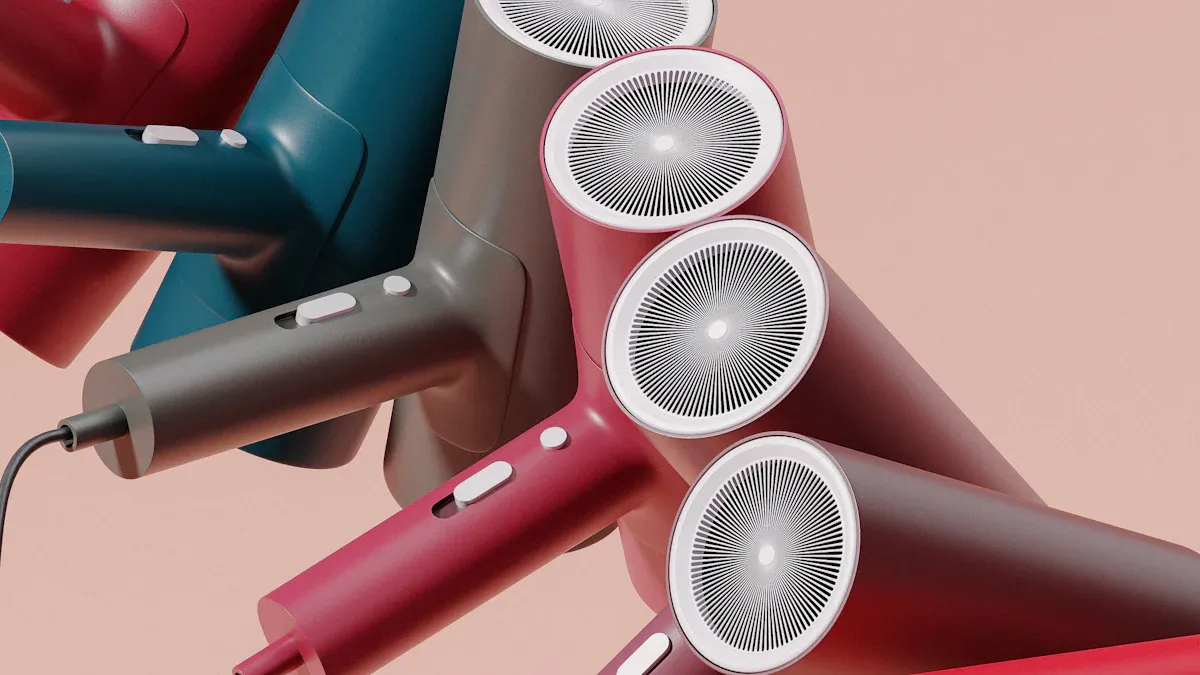
Travel hair dryers often include only essential settings. Most models offer two heat and speed options, which suit basic drying needs. Regular hair dryers, on the other hand, frequently provide advanced features. These may include multiple heat and speed settings, ionic technology, and even digital displays. Users who want more control over their styling process often prefer a regular dryer for its versatility. A travel size hair dryer focuses on simplicity and ease of use, making it ideal for quick touch-ups or basic drying while away from home.
Cool Shot Button and Other Options
Many regular hair dryers feature a cool shot button. This function releases a burst of cool air to help set a hairstyle and add shine. Some travel models also include this feature, but it remains less common. Additional options, such as turbo boost or dedicated styling modes, usually appear only in full-size models. These extra controls allow users to customize their drying experience and achieve salon-quality results at home.
Attachments and Accessories
Diffusers, Concentrators, and Storage Bags
Attachments can enhance the performance of any hair dryer. Regular hair dryers often come with diffusers for curly hair and concentrator nozzles for precise styling. These accessories help users achieve specific looks and manage different hair types. Travel blow dryer models may include a basic concentrator, but rarely offer a diffuser due to size constraints. Many travel dryers come with a storage bag, which protects the device and keeps cords organized during transit.
Included Accessories for Travel and Home Use
A travel blow dryer usually arrives with minimal accessories. Manufacturers prioritize portability, so they limit the number of included items. In contrast, regular hair dryers may include multiple attachments and even replacement filters. Users who need a wide range of styling tools may find a regular dryer more suitable for home use. Travelers benefit from the compact design and simple accessory set of a travel model.
Voltage Compatibility and International Use
Dual Voltage Capabilities of Travel Hair Dryers
Voltage compatibility plays a crucial role for international travelers. Many travel hair dryers support dual voltage, allowing them to operate safely in countries with different electrical standards. Users can switch between 110-120V and 220-240V, which covers most regions worldwide. This feature eliminates the risk of damaging the device or causing electrical hazards. A dual voltage travel size hair dryer only requires a plug adapter to fit local outlets.
Need for Adapters and Converters
Travelers frequently require adapters or converters for their hair dryers when visiting other countries. Plug shapes and voltage levels vary across regions. A dual voltage dryer works with just a plug adapter. However, a single voltage hair dryer needs both a voltage converter and a plug adapter to function safely abroad. Using a single voltage hair dryer without the proper converter can result in device failure or safety risks. For this reason, many travelers choose dual voltage models for convenience and peace of mind.
Tip: Always check the voltage compatibility of your hair dryer before traveling internationally to avoid damage or inconvenience.
Travel Hair Dryer vs. Regular Hair Dryer: Convenience and Use Cases
Best Uses for Travel Hair Dryers
Frequent Travelers and Vacationers
Travelers often seek tools that simplify their routines and reduce luggage weight. A travel hair dryer fits this need perfectly. Many people choose these compact devices for vacations, business trips, or weekend getaways. They appreciate the ability to maintain their preferred hairstyle without relying on hotel amenities. The best travel blow dryers offer dual voltage capabilities, which allow users to style their hair in different countries without worrying about power compatibility. These dryers also save valuable space in suitcases, making them a top choice for those who pack efficiently.
- Compact size fits easily in carry-on bags.
- Lightweight design prevents excess baggage fees.
- Dual voltage operation supports international travel.
Gym, Office, and On-the-Go Use
Busy professionals and fitness enthusiasts often require quick styling solutions outside the home. A travel hair dryer provides a convenient option for use at the gym, office, or even in a locker room. Its small size and portability allow users to freshen up after workouts or before important meetings. The best travel blow dryers deliver reliable performance in a compact package, ensuring that hair looks polished throughout the day. Many people keep a travel-sized dryer in their gym bag or desk drawer for emergencies.
Tip: For those who value flexibility and mobility, a travel hair dryer offers unmatched convenience for styling on the go.
Best Uses for Regular Hair Dryers
Daily Home Styling
Regular hair dryers excel in home environments where storage space and power supply are not limited. Individuals who style their hair daily benefit from the higher wattage and advanced features of these models. Regular dryers often include multiple heat and speed settings, which help users achieve a variety of looks. They also handle thick or long hair more efficiently than compact models. For those who prioritize performance and versatility, a regular hair dryer remains the preferred choice for everyday use.
Professional and Salon Applications
Salons and professional stylists require tools that deliver consistent results and withstand frequent use. Regular hair dryers meet these demands with powerful motors, durable construction, and a range of attachments. These dryers support advanced styling techniques and accommodate all hair types. Professionals rely on regular dryers to create smooth, shiny finishes and reduce drying time for clients. The robust build of these devices ensures longevity in high-traffic environments.
Storage, Maintenance, and Durability
Cleaning and Care Differences
Travel hair dryers typically feature simple designs that require minimal maintenance. Users can clean the air filter and wipe the exterior with a damp cloth. Regular hair dryers may include removable filters and more complex components, which demand regular cleaning to maintain optimal performance. Proper care extends the lifespan of both types, but regular dryers often need more attention due to their higher usage rates.
Longevity and Durability Over Time
Manufacturers build regular hair dryers with durability in mind, using sturdy materials that withstand daily wear. These models often last several years, especially with proper maintenance. Travel hair dryers, while convenient, may not match the longevity of full-size models. Their lightweight construction and frequent packing can lead to faster wear. However, users who handle their travel dryers carefully can still enjoy reliable performance for many trips.
Travel Hair Dryer vs. Regular Hair Dryer: Pros and Cons Table
Travel Hair Dryer Pros and Cons
Advantages of Travel Hair Dryers
A travel hair dryer offers several benefits for users who prioritize convenience and mobility. Many models feature a foldable handle, which enhances portability and makes packing easier. Dual voltage capability allows travelers to use the device internationally without worrying about electrical compatibility. Some travel hair dryers include No Heat Damage technology, which helps protect hair health during frequent use.
- Foldable handle for compact storage
- Dual voltage for international travel
- Technology that minimizes heat damage
Users often appreciate the lightweight design, which reduces strain when carrying luggage.
Disadvantages of Travel Hair Dryers
Despite their convenience, travel hair dryers have some limitations. Many models feel slightly heavier and bulkier when they offer higher wattage. The build quality may not match that of premium full-size dryers, leading to concerns about durability. Drying times can increase, especially for individuals with thick hair, due to less focused airflow.
- Longer drying times for thick or curly hair
- Less durable construction compared to salon models
- Limited airflow and fewer advanced features
| Pros | Cons |
|---|---|
| Portability due to foldable handle | Slightly heavier and bulkier with higher wattage |
| Dual voltage capability for international travel | Less durable build compared to higher-end models |
| Commitment to hair health with No Heat Damage technology | Longer drying times for very thick hair due to less focused airflow |
Regular Hair Dryer Pros and Cons
Advantages of Regular Hair Dryers
Regular hair dryers deliver powerful performance and advanced features. Many models dry hair faster than natural methods, which saves time during daily routines. These dryers often prevent bacteria accumulation on the scalp and help manage scalp issues such as dandruff. Multiple temperature and speed modes provide greater control for different hair types.
- Faster drying times for all hair types
- Advanced features like ion emitters for frizz control
- Removable filters for easy cleaning
Disadvantages of Regular Hair Dryers
Regular hair dryers can present risks if used incorrectly. High temperatures may cause burns or dehydrate hair, weakening its structure. Some users report that excessive heat can lead to bubble hair or leave hair matted. The larger size and heavier build also make these dryers less suitable for travel.
- Risk of burns and dehydration with improper use
- Potential to weaken hair structure over time
- Bulkier design not ideal for travel
| Pros | Cons |
|---|---|
| Prevents bacteria accumulation on the scalp | Can cause burns and dehydration of hair |
| Dries hair faster than natural methods | Weakens hair structure if used incorrectly |
| Helps with scalp issues like dandruff | Can lead to bubble hair due to high temperatures |
| May ruin hair texture and leave it matted |
Quick-Reference Comparison Chart
The following table summarizes the main differences between portable and full-size hair dryers:
| Feature | Portable Hair Dryers | Full-Size Hair Dryers |
|---|---|---|
| Power | Lower power, less efficient performance | Greater power, faster styling times |
| Noise Level | Often noisier | Quieter operation |
| Temperature Modes | Fewer modes, less control | More modes and volume control |
| Portability | Emphasizes convenience, foldable design | Bulkier, not designed for travel |
| Dual Voltage | Often includes dual voltage settings | Typically not dual voltage |
| Additional Functions | May combine multiple functions | Focused on hair drying |
| Cleaning Features | Less common | Removable magnetic filters |
| Ion Emitters | Less common | More commonly included |
This chart helps users quickly identify which type of hair dryer best fits their lifestyle and styling needs.
Travel hair dryers and regular hair dryers serve different needs. Travelers value a compact foldable design under 1.5 pounds, dual voltage capability for international safety, and an optimal wattage range of 1200-1875W. Regular models offer advanced features for home or salon use. Consumers should consider these factors:
- Dual voltage for global use
- Lightweight, portable build
- Ionic technology for frizz control
- Versatile heat and speed settings
Selecting the right model depends on travel habits, hair type, and styling preferences.
FAQ
What makes a travel hair dryer different from a regular hair dryer?
A travel hair dryer features a compact, lightweight design. It often includes a foldable handle and dual voltage capability. Regular hair dryers offer more power, advanced features, and attachments. Travelers choose travel models for portability and convenience.
Can a travel hair dryer work on all hair types?
Travel hair dryers suit fine or short hair best. They may struggle with thick or curly hair due to lower wattage. Regular hair dryers provide better results for dense or textured hair because of higher airflow and heat.
Is dual voltage necessary for international travel?
Yes, dual voltage ensures safe operation in countries with different electrical standards. Travelers only need a plug adapter for compatibility. Using a single-voltage dryer abroad without a converter can damage the device.
Do travel hair dryers damage hair more than regular models?
Most travel hair dryers use lower heat settings, which reduces the risk of heat damage. However, fewer settings may limit control. Users should always select the lowest effective temperature to protect hair health.
Are hotel hair dryers as effective as personal travel dryers?
Hotel hair dryers often lack power and advanced features. Personal travel dryers provide consistent performance, dual voltage, and familiar controls. Many travelers prefer bringing their own device for reliability.
How long does a travel hair dryer typically last?
Travel hair dryers last several years with proper care. Frequent packing and lightweight construction may reduce lifespan compared to regular models. Users should clean filters and store the dryer in a protective pouch.
What attachments come with travel hair dryers?
Most travel hair dryers include a basic concentrator nozzle. Diffusers and other attachments are rare due to size constraints. Some models offer a storage bag for added convenience.
Can a travel hair dryer replace a regular hair dryer at home?
A travel hair dryer works for occasional use or short hair. Regular hair dryers perform better for daily styling, thick hair, or advanced techniques. Many users keep both for flexibility.