
Para prepararse bien para un viaje seguro hay que seguir unos pasos concretos a la hora de hacer la maleta. En primer lugar, el viajero debe asegurarse de que su secador de pelo de viaje esté completamente frío. A continuación, debe guardar el secador doblado en una funda protectora. Para utilizar el aparato en el extranjero hay que prestar mucha atención a las normas eléctricas. Siempre hay que comprobar el voltaje del lugar de destino. Un moderno Secador de pelo BLDC de una marca líder de secadores de pelo suele ser compatible con doble voltaje. Un modelo más antiguo Secador de pelo AC desde un otro de secadores de pelo puede que no. Por eso es imprescindible comprobar la tensión máxima que admite la secadora antes de cualquier viaje.
Preparativos previos al viaje para tu secador de pelo
Una preparación adecuada antes de un viaje garantiza que el secador de pelo funcione de forma segura y eficaz al llegar al destino. El viajero protege tanto el aparato como sus pertenencias con unos sencillos pasos previos a la preparación del equipaje. Estas medidas son fundamentales para disfrutar de una experiencia de viaje sin contratiempos.
Deja que se enfríe por completo
El riesgo de incendio y fusión
Un viajero nunca debe meter en la maleta un secador de pelo caliente o muy caliente. El calor residual de la boquilla y la resistencia del aparato supone un riesgo importante. Puede derretir fácilmente objetos de plástico, dañar tejidos delicados o incluso provocar un riesgo de incendio dentro de una maleta muy llena. Esta sencilla precaución es una norma fundamental para la seguridad en los viajes.
¿Cuánto tiempo hay que esperar antes de hacer las maletas?
Tras su último uso, se debe dejar el secador desenchufado sobre una superficie resistente al calor, como una encimera de azulejos. Por lo general, basta con esperar entre 15 y 30 minutos para que el aparato se enfríe hasta alcanzar una temperatura segura. Basta con tocar rápidamente la boquilla para comprobar que está completamente fría antes de guardarlo.
Limpia tu secadora para que funcione al máximo rendimiento
Limpieza de la rejilla de entrada de aire
Una secadora limpia es una secadora eficiente. Con el paso del tiempo, la rejilla de entrada de aire trasera acumula polvo, pelusas y pelos. Esta obstrucción limita el flujo de aire y obliga al motor a esforzarse más. Entre las consecuencias de un conducto de ventilación obstruido se encuentran:
- Sobrecalentamiento: El electrodoméstico puede alcanzar temperaturas peligrosamente altas y activar su sistema de apagado automático de seguridad.
- Reducción del caudal de aire: El secador genera un flujo de aire más débil, lo que reduce su eficacia.
- Tiempos de secado más largos: El usuario necesitará más tiempo para secarse el pelo, lo que le provocará frustración.
- Aumento de la tensión en los componentes: El motor y las piezas internas se desgastan más rápidamente debido a la sobrecarga y al exceso de calor.
El viajero puede utilizar un cepillo pequeño o un paño seco para limpiar la rejilla de ventilación y garantizar así un rendimiento óptimo.
Limpieza del exterior
También conviene limpiar el cuerpo del secador de pelo de viaje con un paño seco o ligeramente húmedo. De este modo se eliminan los residuos de los productos capilares, que pueden volverse pegajosos y atraer la suciedad. Un exterior limpio hace que el aparato resulte más agradable de manejar.
Plegar y fijar el electrodoméstico
Cómo plegar el mango
La mayoría de los secadores de viaje modernos cuentan con un asa plegable diseñada para que ocupen menos espacio. Este mecanismo mejora considerablemente la comodidad a la hora de viajar, ya que reduce la longitud total del aparato en 25-47% en comparación con los modelos de asa fija. El viajero debe plegar con cuidado el asa hasta que encaje con un clic en su posición compacta. De este modo, se reduce al mínimo el espacio que ocupa el secador en el equipaje.
Fijación de boquillas y difusores
Los accesorios, como las boquillas concentradoras y los difusores, son pequeños y se pierden con facilidad. Es recomendable retirar estos accesorios del secador antes de empaquetarlo. Guardarlos en una bolsa pequeña y hermética y, a continuación, colocarlos junto a la unidad principal evita que se pierdan o se aplasten durante el transporte.
Cómo guardar el secador de pelo de viaje
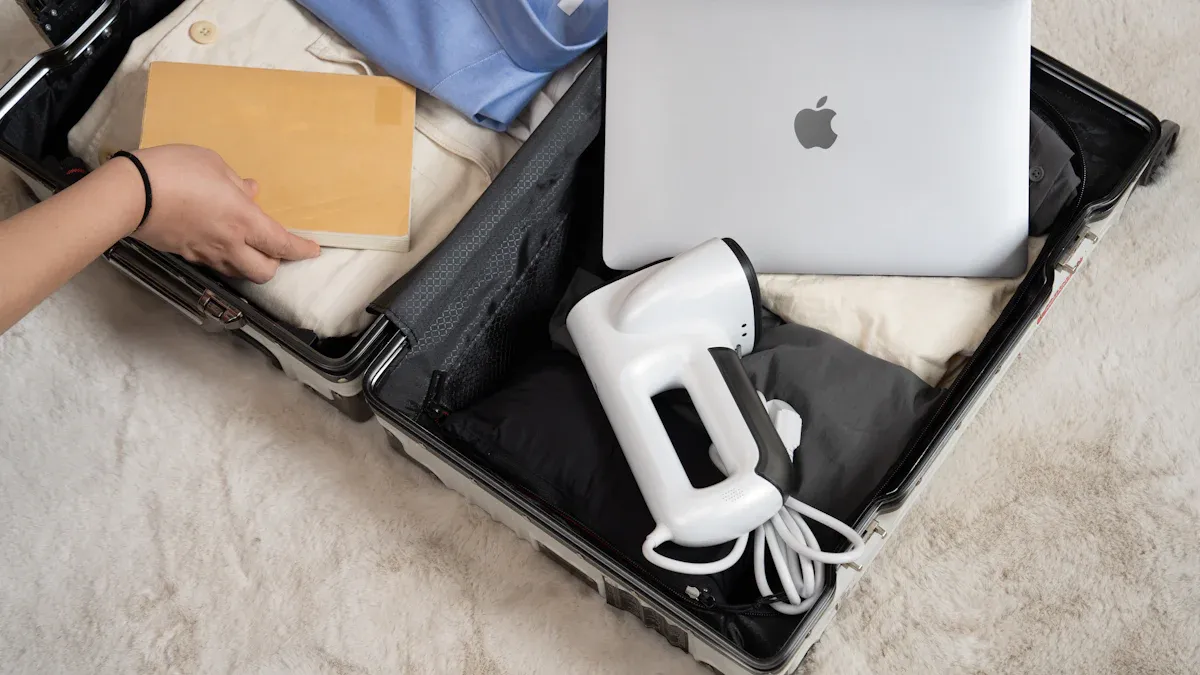
Una vez preparado el electrodoméstico, el viajero debe embalarlo correctamente para evitar que sufra daños durante el transporte. El proceso de embalaje consta de tres pasos fundamentales: fijar el cable, elegir una funda protectora y colocar la secadora de forma estratégica dentro del equipaje. Si se siguen correctamente estos pasos, se garantiza que el electrodoméstico llegue listo para su uso.
La forma correcta de enrollar el cable
El cable de alimentación suele ser el primer componente que falla en un aparato para el cabello debido a un almacenamiento inadecuado. Se puede alargar considerablemente la vida útil del secador utilizando una técnica segura para enrollarlo.
El método del lazo suelto
El viajero debe enrollar el cable formando varios bucles grandes y sueltos, de forma similar a como se enrollaría una manguera de jardín. Este método, a veces denominado técnica “por encima-por debajo”, evita que el cable se retuerza y se ejerza tensión sobre el cableado interno. Una vez enrollado, se puede sujetar el haz con una sencilla brida de velcro o pasando el enchufe por el centro de los bucles. Así se mantiene el cable ordenado sin que sufra daños.
Por qué es peligroso envolver demasiado apretado
Muchas personas enrollan instintivamente el cable con fuerza alrededor del cuerpo de la secadora. Este hábito tan común resulta extremadamente perjudicial para el electrodoméstico. Enrollar el cable del secador de pelo con fuerza alrededor del cuerpo del aparato crea puntos de tensión, sobre todo en la zona donde el cable se une al mango. Estos puntos de tensión son la causa técnica que provoca daños internos en el cable con el paso del tiempo. Esta tensión repetida puede provocar que los cables se deshilachen, lo que puede dar lugar a cortes intermitentes de corriente, cortocircuitos o un fallo total del electrodoméstico.
Elige tu funda protectora
Una funda protectora protege el secador de golpes, arañazos y la presión que ejercen otros objetos dentro de la maleta. El viajero dispone de varias opciones, que van desde fundas especializadas hasta sencillas soluciones caseras.
Uso de una bolsa resistente al calor
Para garantizar la máxima seguridad y comodidad, una funda resistente al calor es una excelente inversión. Estos accesorios permiten guardar el secador incluso cuando aún está ligeramente caliente, lo cual resulta ideal para las salidas con prisa.
- Las bolsas de alta calidad para aparatos de peluquería deben mantener su estabilidad estructural cuando se exponen a temperaturas superiores a 250 °C.
- Para garantizar un rendimiento fiable, deben someterse a pruebas de resistencia térmica hasta los 300 °C.
- Muchas bolsas modernas cuentan con revestimientos avanzados recubiertos de silicona, que ofrecen una mayor protección térmica y durabilidad.
La caja o bolsa original
El embalaje en el que viene una secadora suele ser una solución de almacenamiento perfecta. Algunos modelos de gama alta incluyen un estuche diseñado específicamente para ello que ofrece una protección superior. Por ejemplo, un estuche de gama alta puede estar fabricado con una elegante piel vegana y ser descrito por los usuarios como ‘bonito y resistente’. Este tipo de estuche está diseñado específicamente para guardar la secadora y sus accesorios, y a veces cuenta con seis bolsillos protectores, con compartimentos transparentes y de malla que permiten una organización óptima. Esto lo convierte en una opción compacta y práctica para viajar.
Protección casera con ropa o calzado
Un viajero puede crear un relleno eficaz sin necesidad de ningún equipo especial. Un método sencillo consiste en envolver la secadora en una prenda suave y gruesa, como un jersey o unos vaqueros. Otra técnica ingeniosa es colocar la prenda doblada, secadora compacta en el interior de un zapato limpio, lo que proporciona una estructura sorprendentemente rígida y protectora.
Colocación estratégica en tu equipaje
El lugar donde se coloque la secadora dentro del equipaje es tan importante como la forma en que se envuelva. Colocarla en el centro crea una barrera protectora fundamental frente a las fuerzas externas.
El método de la “zona de amortiguación”
La creación de una “zona de amortiguación” es una técnica profesional de embalaje que protege los objetos frágiles de los golpes. El viajero puede aplicar este método siguiendo unos sencillos pasos. Sophie, diseñadora, perfeccionó esta estrategia envolviendo cada objeto delicado, colocándolo en una caja forrada de espuma y colocándolo en el centro de su maleta, entre capas de tela vaquera.
Para crear tu propia zona de seguridad:
- Cubre el fondo de la maleta con ropa suave, como jerséis.
- Envuelve cada secador por separado en un paño o guárdalo en su funda.
- Coloca la secadora envuelta en el centro de la maleta.
- Rellena todos los huecos que haya alrededor con calcetines enrollados, ropa interior o camisetas para evitar que se mueva.
- Añade una última capa superior de prendas suaves para amortiguar la presión.
Ventajas de utilizar una funda rígida
Una maleta rígida ofrece un exterior firme, pero sigue siendo fundamental organizar bien el equipaje en su interior. El objetivo es crear una carga estable y equilibrada que reduzca al mínimo los movimientos.
“Los pasajeros se fijan en el peso de la secadora, pero la verdadera variable es cómo interactúa con el resto del contenido de la bolsa. Un artículo de 500 gramos mal distribuido puede hacer que una bolsa de 9,2 kg resulte ‘pesada’ al tacto para un agente, mientras que una unidad de 750 gramos bien integrada se percibe como neutra. Formamos a nuestro personal para que reconozca las cargas equilibradas, no solo los números que marca la báscula”. — Javier Méndez, asesor sénior de operaciones de la División de Normas de Pasajeros de la IATA
Para lograr este equilibrio con un Un secador de viaje, hay que colocarlo en posición horizontal en el tercio inferior de la maleta, centrado sobre las ruedas. Esta ubicación fija el peso y estabiliza toda la carga. A María R., estilista editorial, le funcionó colocar su secador en la base de su maleta en más de 11 vuelos. Su conclusión resume la estrategia: “No se trata de llevar menos… Se trata de llevar más inteligente.”. Este ingenioso método de transporte protege el electrodoméstico de posibles daños.
Equipaje de mano frente a equipaje facturado: ¿dónde llevar el secador de pelo?
El viajero debe decidir si lleva el secador de pelo en el equipaje de mano o en el equipaje facturado. Esta decisión depende de la normativa de la compañía aérea, de las preferencias personales y del tipo de viaje que se haya planeado. Conocer las normas y las ventajas e inconvenientes de cada opción ayuda a proteger el aparato.
Normas de las compañías aéreas y de la TSA
Las compañías aéreas y los organismos de seguridad, como la TSA, cuentan con directrices claras sobre los dispositivos electrónicos. Por lo general, se permite llevar un secador de pelo estándar con cable tanto en el equipaje de mano como en el facturado.
Cómo hacer la maleta de mano
Un viajero puede llevar un secador de pelo con cable en su equipaje de mano sin ningún problema. Sin embargo, modelos inalámbricos están sujetos a normativas diferentes. Los secadores inalámbricos se consideran dispositivos electrónicos portátiles con baterías de iones de litio. La normativa permite a los viajeros llevar hasta dos baterías de repuesto de iones de litio, cada una de menos de 160 Wh, únicamente en su equipaje de mano. Cada batería de repuesto debe protegerse individualmente para evitar cortocircuitos.
Cómo hacer la maleta para el equipaje facturado
También está permitido llevar un secador de pelo en el equipaje facturado. Esta opción permite ganar un valioso espacio en el equipaje de mano. Es importante asegurarse de que el secador esté bien protegido utilizando el método de la “zona de amortiguación”, ya que el equipaje facturado suele sufrir un manejo más brusco durante el transporte.
Ventajas e inconvenientes de cada opción
Cada método de hacer la maleta tiene sus ventajas y desventajas. El viajero debe sopesar estos factores para determinar cuál es la mejor opción para su viaje concreto.
| Aspecto | Equipaje de mano | Equipaje facturado |
|---|---|---|
| Ventajas | Reduce el riesgo de pérdida o daños; acceso inmediato al llegar. | Libera espacio en la cabina; evita controles de seguridad adicionales; es más adecuado para accesorios voluminosos. |
| Desventajas | Ocupa un espacio valioso; puede ser necesario retirarlo para pasar el control de seguridad. | Mayor riesgo de daños, pérdida o robo; inaccesible durante las escalas. |
Por qué el equipaje de mano suele ser más seguro
Consejo Profesional: Llevar los aparatos electrónicos de valor en el equipaje de mano es la forma más segura de viajar. ✈️
Llevar el secador en el equipaje de mano permite al viajero tener un control total sobre su manejo. Este método elimina el riesgo de que el aparato se pierda, sea robado o resulte dañado por el personal encargado del equipaje. Cuando se trata de un aparato de peluquería caro o imprescindible, la tranquilidad que ofrece llevarlo en la cabina es muy importante.
Cuándo llevar equipaje facturado
Un viajero puede optar por meter su secador en el equipaje facturado para ahorrar espacio en el equipaje de mano y poder llevar otros artículos imprescindibles. Esta es también una opción práctica si la persona viaja con un convertidor de voltaje pesado y de alta potencia, que suele ser más adecuado para el equipaje facturado. Además, así hay un artículo menos que sacar de la maleta durante el control de seguridad.
Todo lo que hay que saber sobre la electricidad en el mundo: tensión y enchufes
Un viajero debe conocer los conceptos básicos sobre la red eléctrica mundial para poder utilizarla aparatos para el cabello en el extranjero de forma segura. Cada país utiliza un sistema eléctrico diferente. Esto significa que la tensión de la toma de corriente y la forma del enchufe pueden variar considerablemente. Ignorar estas diferencias puede estropear un electrodoméstico y suponer un riesgo para la seguridad.
Introducción a la tensión eléctrica: 110 V frente a 220 V
La tensión es la medida de la presión eléctrica. La mayoría de los países utilizan uno de los dos estándares de tensión principales. Una discrepancia entre la tensión que requiere un electrodoméstico y la tensión suministrada por la toma de corriente resulta peligrosa.
El estándar de 110-120 V en Norteamérica
En Norteamérica, Japón y algunos otros países se utiliza un estándar de tensión de aproximadamente 110-120 voltios (V). Los electrodomésticos de estas regiones están diseñados específicamente para esta tensión eléctrica más baja. Un viajero procedente de EE. UU. comprobará que sus aparatos de tensión única están fabricados para este sistema.
El estándar de 220-240 V en Europa y Asia
En la mayor parte de Europa, Asia, África y Australia se utiliza un estándar de tensión más alto, de 220-240 V. Este sistema suministra aproximadamente el doble de tensión eléctrica que el estándar norteamericano.
Advertencia de seguridad importante: Enchufar un electrodoméstico de 110 V directamente a una toma de corriente de 220 V es una receta para el desastre. El aparato consumirá demasiada corriente, lo que provocará que se queme en cuestión de segundos. Los usuarios informan de que han observado humo, chispas y un fallo total cuando se comete este error. Esta acción puede convertir el cableado interno de un electrodoméstico en un fusible, dañándolo de forma permanente.
Guía visual de los tipos de enchufes más comunes
Un adaptador de enchufe permite que el enchufe de un dispositivo encaje en una toma de corriente de otro país. No modifica la tensión eléctrica. Es necesario identificar el tipo de enchufe adecuado para el propio destino turístico.
| Tipo de enchufe | Características | Uso habitual/Regiones |
|---|---|---|
| Tipo A y B | Dos clavijas planas (A) o dos clavijas planas con una clavija redonda (B). | América del Norte, México, Japón |
| Tipo C y F | Dos clavijas redondas. El tipo C no tiene toma de tierra; el tipo F incluye clips de conexión a tierra. | La mayor parte de Europa, Rusia, Corea del Sur |
| Tipo G | Tres clavijas rectangulares en disposición triangular con un fusible interno. | Reino Unido, Irlanda, Singapur |
| Tipo I | Dos clavijas planas en forma de “V”, a menudo con una clavija de conexión a tierra vertical. | Australia, Nueva Zelanda, China |
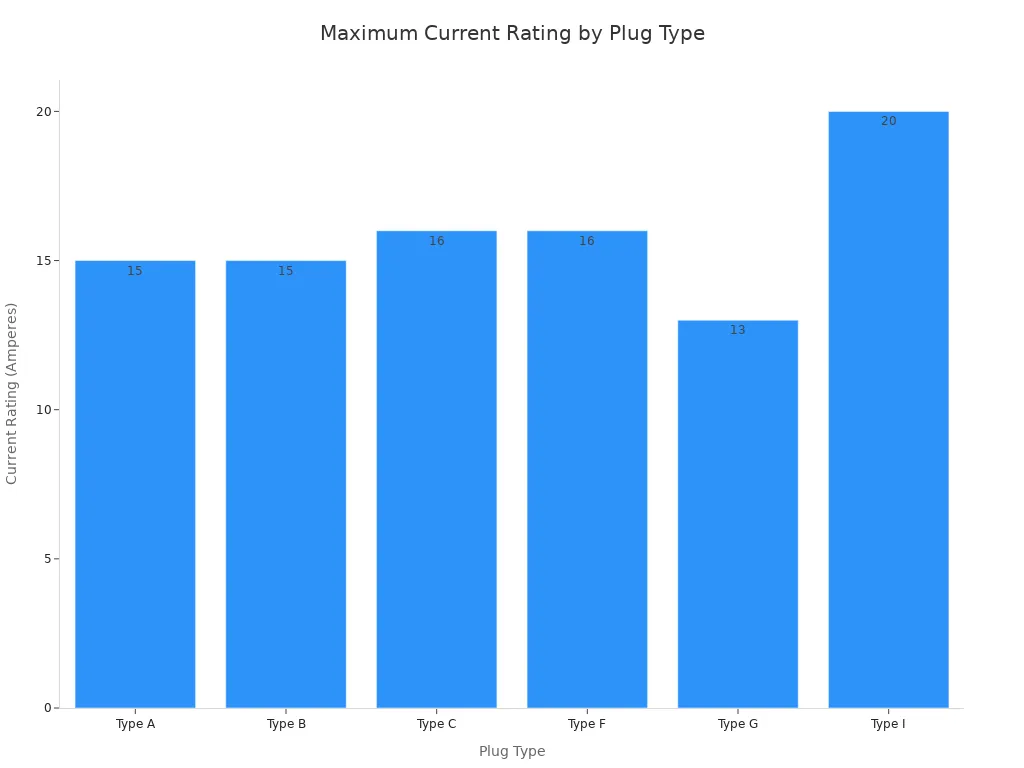
Tipo A y B para América del Norte y Japón
El tipo A tiene dos clavijas planas paralelas. El tipo B añade una clavija redonda de conexión a tierra para mayor seguridad. Estos son estándar para dispositivos electrónicos en América del Norte.
Tipo C y F para la mayor parte de Europa
El “Euroenchufe” tipo C es común para dispositivos de baja potencia en toda Europa. El tipo F, o “Schuko”, se utiliza para electrodomésticos más grandes e incluye clips de conexión a tierra.
Tipo G para el Reino Unido
El Reino Unido utiliza el robusto enchufe tipo G. Su diseño con fusible ofrece una capa adicional de protección para todos los dispositivos electrónicos.
Tipo I para Australia y China
Este enchufe presenta clavijas inclinadas. Es el estándar para Australia, Nueva Zelanda y China, por lo que es esencial para cualquier viaje a la región de Oceanía.
Cómo elegir tus herramientas capilares esenciales para viajes
Seleccionar el adecuado herramientas capilares para viajes es el paso más importante para usar dispositivos electrónicos de forma segura en el extranjero. Un viajero debe comprender los requisitos eléctricos de su aparato para evitar daños. Elegir el equipo adecuado garantiza una experiencia de viaje sin contratiempos.
Las ventajas de un secador de pelo de voltaje dual
La más conveniente y compacta de todas las herramientas capilares para viajes es el secador de pelo de voltaje dual. Este aparato está específicamente diseñado para viajes internacionales, ofreciendo flexibilidad y tranquilidad.
¿Qué es un secador de voltaje dual?
Un secador de voltaje dual es un aparato diseñado para funcionar de forma segura tanto en sistemas eléctricos de 110-120V como de 220-240V. Estos dispositivos poseen capacidades de voltaje universal, adaptándose a la red eléctrica local. El mecanismo de cambio puede ser manual o automático.
- Cambio manual: El usuario debe cambiar físicamente la configuración de voltaje. Esto suele hacerse con un pequeño dial empotrado que se puede girar con una moneda o llave antes de enchufar el secador.
- Cambio automático: Los modelos más avanzados contienen circuitos que detectan el voltaje de entrada y ajustan los componentes del secador automáticamente. Esto proporciona una experiencia fluida y fácil de usar.
Cómo identificarlo
Se puede identificar un aparato de voltaje dual revisando la letra pequeña en su cuerpo o mango. Las marcas indican claramente su rango de voltaje. Un secador compacto con estas marcas es una excelente opción para cualquier viaje.
| Tipo de voltaje dual | Marcas de entrada |
|---|---|
| Automático | Un rango como 100-240V o 110-220V |
| Manual | Una barra como 120V/240V |
Convertidores de voltaje vs. Adaptadores de enchufe
Un viajero con un aparato de voltaje único debe comprender la diferencia entre un convertidor de voltaje y un adaptador de enchufe. Estos dos dispositivos realizan funciones muy diferentes, y usar el incorrecto puede tener consecuencias desastrosas.
Qué hace un convertidor de voltaje
Un convertidor de voltaje es un dispositivo que cambia la presión eléctrica. Por ejemplo, “reduce” una corriente de 220V a 110V, permitiendo que un aparato norteamericano funcione en Europa. Un convertidor solo es necesario cuando un dispositivo electrónico no es de voltaje dual.
Qué hace un adaptador de enchufe
Un adaptador de enchufe simplemente permite que las clavijas de un cable de alimentación se conecten a un enchufe de pared de forma diferente. No cambia el voltaje eléctrico de ninguna manera. Un viajero necesita un adaptador cuando el enchufe de su dispositivo no coincide con los tomacorrientes de su destino.
Saber cuándo necesitas ambos
Determinar si se necesita un convertidor, un adaptador o ambos requiere una verificación simple de dos pasos del aparato y del destino.
Lista de verificación del viajero:
- Verificar el dispositivo: Primero, se debe revisar el aparato en busca de marcas de voltaje. Si indica
100-240V, es una de las herramientas de voltaje dual y no necesita un convertidor de voltaje.- Verificar el destino: A continuación, el viajero debe investigar el tipo de enchufe del destino. Si la forma del enchufe es diferente, se requiere un adaptador.
Un dispositivo de voltaje único (por ejemplo,
solo 110V) llevado a un país de 220V requerirá tanto un convertidor de voltaje como un adaptador de enchufe para funcionar de forma segura.
Guía paso a paso para usar tu secador de pelo para viajes
Usar correctamente un secador de pelo en el extranjero es una medida de seguridad crítica. Un viajero que comprende la secuencia correcta de operaciones puede proteger su aparato y prevenir riesgos eléctricos. El proceso difiere significativamente según si el dispositivo es de voltaje dual o único.
Cómo usar un secador de pelo de voltaje dual
A secador de pelo de voltaje dual es la herramienta más confiable y conveniente para viajes internacionales. Su diseño simplifica el proceso, pero el usuario aún debe seguir un procedimiento específico de tres pasos para garantizar un funcionamiento seguro.
Verificar el voltaje del destino
Antes de cualquier otra acción, el viajero debe confirmar el voltaje eléctrico del destino. Una búsqueda rápida en línea de “voltaje [Nombre del País]” proporciona esta información esencial. Saber si el estándar local es 110-120V o 220-240V es la base para cada paso posterior.
Configurar el interruptor de voltaje antes de enchufar
Muchos modelos compactos, manuales y de doble voltaje requieren un ajuste físico. Este paso es fundamental y debe realizarse antes de el electrodoméstico está enchufado a cualquier toma de corriente.
- Busca el interruptor de tensión en el cuerpo de la secadora; suele ser un pequeño dial empotrado.
- Utiliza una moneda, una llave o un destornillador pequeño para girar el interruptor hasta la posición correcta (por ejemplo,
240 V(para Europa). - Es recomendable que el viajero tome nota de la posición del interruptor, ya que los números impresos pueden borrarse con el paso del tiempo.
Nota: Algunos electrodomésticos modernos cuentan con un sistema de cambio automático de tensión. Estos dispositivos detectan la tensión de entrada y se ajustan automáticamente, sin necesidad de intervención manual por parte del usuario. Se recomienda consultar el manual del dispositivo para comprobar si dispone de esta función.
Conecta el adaptador de enchufe adecuado
Una vez ajustada correctamente la tensión, el último paso consiste en acoplar el adaptador de enchufe adecuado. El viajero debe elegir el adaptador que se ajuste a las tomas de corriente del país de destino. Una vez que el adaptador esté bien acoplado al enchufe de la secadora, el electrodoméstico estará listo para su uso seguro.
Cómo utilizar una secadora de voltaje único con un convertidor
Un viajero que lleve un aparato de voltaje único se enfrenta a una situación más compleja y arriesgada. Es posible utilizar un secador de pelo con un convertidor de voltaje, pero hay que actuar con extrema precaución y disponer del equipo adecuado. Este método suele ser No se recomienda para dispositivos de alta potencia.
La regla del convertidor de alta potencia
Los secadores de pelo son aparatos de calefacción de alta potencia, por lo que requieren un potente convertidor de tensión. Un convertidor de viaje estándar y compacto suele ser insuficiente y peligroso. Es necesario elegir un convertidor con una potencia nominal considerablemente superior a las necesidades del aparato.
Para encontrar el convertidor adecuado:
- Averigua la potencia de la secadora (W): Un usuario comprueba la etiqueta del Un secador de viaje para calcular su potencia. Si solo se indican el voltaje (V) y los amperios (A), se multiplican entre sí para hallar los vatios (
V × A = W). - Calcular la potencia necesaria del convertidor: En el caso de un aparato de calefacción, como una secadora, hay que multiplicar la potencia del aparato por al menos dos o tres. Una secadora de 600 W, por ejemplo, necesita un convertidor con una potencia nominal de entre 1200 W y 1800 W.
- Elige un modelo de alta potencia: El viajero debe adquirir un convertidor “reductor” que sea compatible expresamente con aparatos de alta potencia y que satisfaga los requisitos de potencia calculados.
Advertencia sobre posibles daños en los electrodomésticos
El uso de un convertidor de potencia insuficiente o incompatible suele provocar un fallo inmediato. El convertidor puede quemarse y dañar de forma permanente el electrodoméstico conectado a él. No se trata de un riesgo teórico, sino de un percance habitual cuando se viaja.
Una redactora de Wirecutter compartió una experiencia aleccionadora que vivió durante un viaje a Hong Kong. Un convertidor de voltaje, comprado expresamente para su secador de pelo de viaje, “se fundió” en el momento en que enchufó el secador. El incidente dejó el aparato “inservible para siempre”, lo que lo hizo inutilizable.
Esta experiencia pone de manifiesto el grave peligro que supone utilizar un convertidor inadecuado con un dispositivo de alta potencia.
Seguir todas las instrucciones del fabricante
Para minimizar el riesgo, es imprescindible leer y seguir al pie de la letra las instrucciones tanto del secador de pelo como del convertidor de voltaje. Los fabricantes proporcionan advertencias específicas y límites de funcionamiento. Ignorar estas directrices al utilizar un secador de pelo puede provocar averías en el aparato, cortocircuitos o incluso un incendio, por lo que el cumplimiento riguroso de todas las instrucciones es una norma de seguridad ineludible.
Normas de seguridad universales para el uso del secador de pelo en cualquier viaje
Hay ciertos protocolos de seguridad que son ineludibles, tanto si una persona está en casa como si está de viaje. El cumplimiento de estas normas universales protege al usuario y al aparato de cualquier daño durante cualquier aventura de viaje.
Manténlo alejado del agua
El agua y la electricidad son una combinación letal. El usuario debe mantener una separación estricta entre el secador de pelo y cualquier fuente de agua para evitar una electrocución.
Seguridad en la encimera del cuarto de baño
Siempre hay que colocar un secador de pelo enchufado sobre una superficie completamente seca, lejos de un fregadero lleno de agua. Incluso un pequeño charco en la encimera puede crear un circuito eléctrico peligroso. Secar bien la zona antes de utilizarlo es una precaución sencilla, pero fundamental.
No utilizar nunca con las manos mojadas
El usuario nunca debe utilizar un secador de pelo con las manos mojadas. El agua reduce la resistencia natural de la piel a la electricidad, lo que aumenta considerablemente el riesgo de sufrir una descarga eléctrica grave. Es necesario secarse bien las manos antes de enchufar o utilizar el aparato.
Prácticas generales de seguridad eléctrica
Además de los riesgos relacionados con el agua, el viajero debe adoptar varios hábitos generales de seguridad eléctrica. Estas prácticas garantizan el electrodoméstico‘los mecanismos de protección internos puedan funcionar según lo previsto.
Comprueba que los cables no estén deshilachados
Antes de cada uso, hay que pasar los dedos por el cable de alimentación para comprobar que no presente grietas, roturas ni hilos pelados. Un cable dañado supone un riesgo importante de incendio y de descarga eléctrica. Las secadoras modernas suelen tener conexiones de cable reforzadas, pero sigue siendo imprescindible realizar una inspección visual y táctil.
No lo dejes sin vigilancia
Nunca se debe dejar un secador de pelo encendido sin vigilancia. Si hay que alejarse, hay que apagarlo y desenchufarlo. Aunque la mayoría de los secadores cuentan con un sistema de apagado automático para evitar el sobrecalentamiento, dejarlos encendidos supone un riesgo innecesario de incendio.
Desenchúfalo cuando no lo utilices
El hábito más eficaz es desenchufar el aparato inmediatamente después de su uso. Los enchufes de los secadores de pelo modernos incorporan protecciones avanzadas. Un interruptor de corriente de fuga (ALCI) corta la alimentación si detecta un desequilibrio, mientras que un interruptor de detección de inmersión (IDCI) ofrece protección incluso cuando el secador está apagado pero sigue enchufado. El usuario puede comprobar el funcionamiento de estos sistemas mediante los botones “Test” y “Reset” del enchufe. No obstante, desenchufar el aparato elimina por completo cualquier riesgo eléctrico.
Medidas de protección integradas que conviene conocer 🛡️ Los secadores de pelo modernos incorporan varias características clave diseñadas para la protección del usuario.
Característica de Seguridad Función Nivel de activación Importancia Protección ALCI Detecta desequilibrios de corriente y corta el suministro eléctrico. 6 miliamperios Crítico Protección IDCI Detecta la inmersión accidental en agua. Inmediato Crítico Desconexión térmica Evita que el aparato se sobrecaliente. Umbral de temperatura Alto Doble Aislamiento Proporciona aislamiento eléctrico continuo. N/A – continuo Esencial
Un viajero garantiza la seguridad del electrodoméstico siguiendo un protocolo claro.
- Resumen del Empaque: Una persona debe enfriar el aparato por completo, enrollar el cable holgadamente, usar una funda protectora y empacarlo en el centro de su equipaje.
- Resumen del Uso: Siempre verifican el voltaje del destino, configuran el dispositivo o usan un convertidor adecuado, y luego conectan el adaptador de enchufe correcto.
Estos pocos minutos de preparación protegen el Un secador de viaje de daños. Esta diligencia garantiza una experiencia de viaje segura y sin preocupaciones con un cabello excelente.
Preguntas Frecuentes
¿Puede un viajero usar simplemente el secador de pelo del hotel?
Los secadores de pelo de hotel ofrecen conveniencia, pero a menudo carecen de potencia y accesorios. Un viajero con necesidades de peinado específicas o cabello grueso puede encontrar estos secadores inadecuados. Llevar un secador de viaje personal garantiza un rendimiento consistente y mejores resultados.
¿Cuáles son las reglas para los secadores de pelo inalámbricos?
Una persona puede empacar un secador de pelo inalámbrico en su equipaje de mano. Las aerolíneas regulan estrictamente las baterías de iones de litio. Un viajero debe verificar las reglas específicas de su aerolínea respecto al tamaño (Wh) y la cantidad de baterías antes de su viaje.
¿Qué sucede si una persona olvida su adaptador de enchufe?
Un viajero generalmente puede comprar un adaptador de enchufe universal en su destino. Los aeropuertos, tiendas de electrónica y hoteles grandes son lugares comunes para encontrarlos. Comprar uno al llegar es una solución simple a este problema común.
¿Es mejor un secador de doble voltaje que usar un convertidor?
Sí, un secador de doble voltaje es la opción más segura y confiable. Un convertidor de alto vataje necesario para un secador de pelo es voluminoso y conlleva un riesgo significativo de dañar el aparato. Un modelo de doble voltaje está diseñado para viajes.
¿Cómo debe una persona empacar una plancha para el cabello o una tenaza rizadora?
Una persona empaca otras herramientas de peinado con calor usando los mismos métodos de seguridad.
- Dejar que el aparato se enfríe por completo.
- Enrollar el cable en bucles holgados.
- Colocarlo dentro de una bolsa resistente al calor.
- Posicionarlo en el centro del equipaje.
¿Qué sucede realmente si un viajero usa el voltaje incorrecto?
Advertencia: Conectar un aparato de 110V a un enchufe de 220V lo destruirá. El dispositivo recibe demasiada energía, lo que hace que sus componentes internos se quemen al instante. Esto puede crear chispas y un riesgo de incendio. ⚡
¿Por qué un secador parece menos potente en un ajuste de 220V?
Algunos secadores de doble voltaje reducen su vataje en el ajuste de 220V como característica de seguridad. Esto evita que el motor se sobrecaliente con la mayor presión eléctrica. El aparato funciona de manera segura, aunque con un flujo de aire ligeramente menor.