
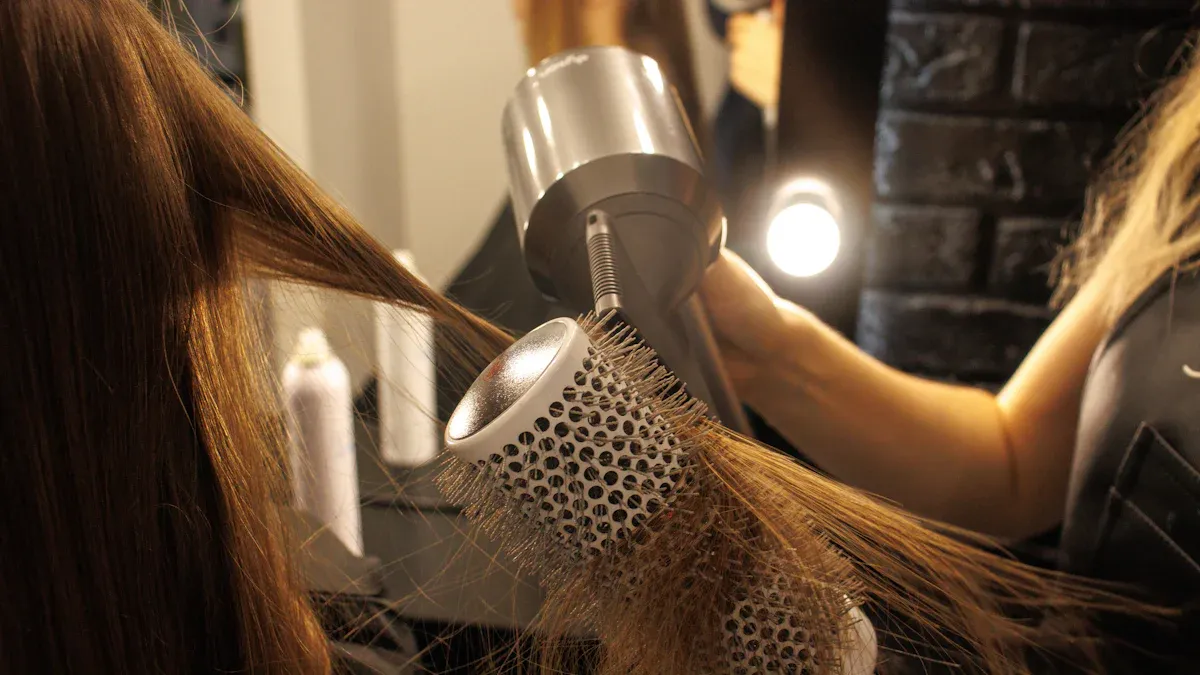
Choosing between a hair dryer brush and a traditional blow dryer depends on a user’s primary goal. The brush offers quick and convenient methods for an easy blowout. A traditional hair dryer provides superior control to achieve a specific desired style.
A quality de secadores de pelo in a modern de secadores de pelo might produce both a powerful Secador de pelo AC and an efficient Secador de pelo BLDC, each tool serving a different purpose in a styling routine.
The Hair Dryer Brush: Pros for an Effortless Blowout
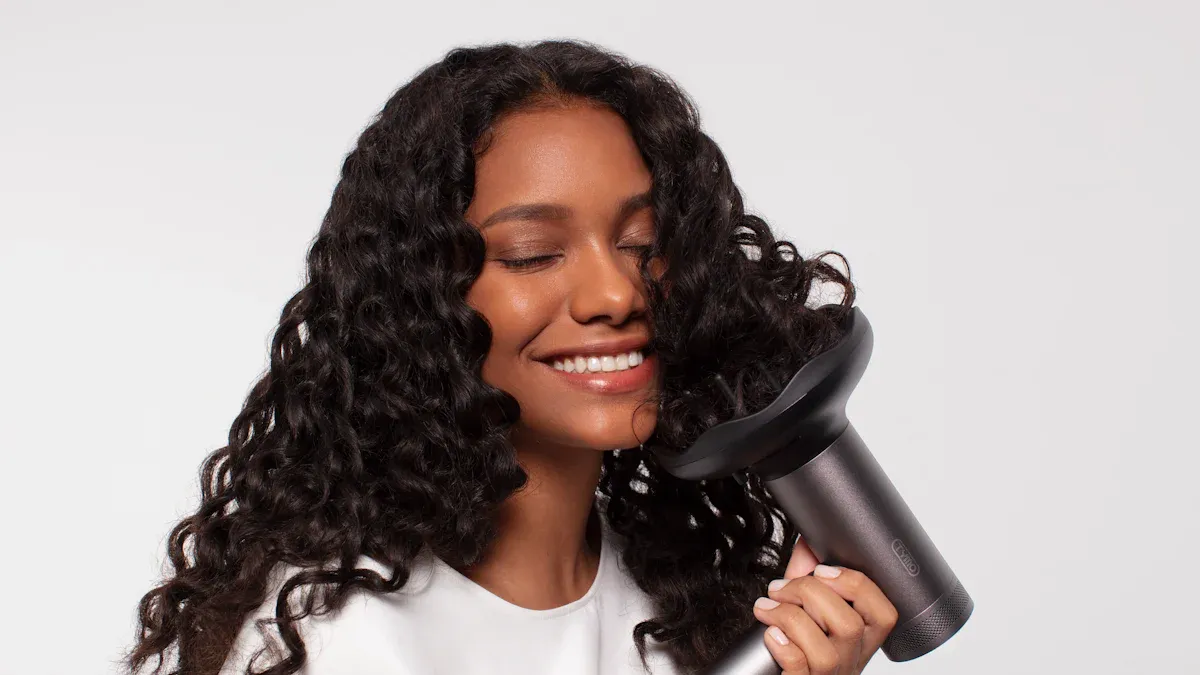
The primary pros of a heated brush stem from its clever design. It combines the functions of two separate tools into one, offering significant advantages in convenience and simplicity for users seeking a polished look with minimal fuss.
All-in-One Convenience
Dries and Styles Simultaneously
A volumizing airbrush streamlines the styling process. It pushes heated air through vents in the barrel, drying the hair as its bristles grip and shape each section. This dual-action capability transforms damp hair into a finished style in a single pass, eliminating the need for a two-step drying and styling routine.
Reduces Styling Time
This integrated approach dramatically cuts down on styling time. Users no longer need to rough dry their hair first and then go back through it with a round brush and dryer. The efficiency of this all-in-one tool makes it an ideal choice for busy mornings or quick touch-ups.
Unmatched Ease of Use
Perfect for Beginners
The learning curve for a heated airbrush is minimal. Individuals who struggle with the coordination required for a traditional blowout will find this tool much easier to use. Its intuitive design allows anyone to achieve salon-quality results without extensive practice.
No Juggling Tools
One of the biggest pros is the elimination of tool juggling. A user holds one lightweight device instead of managing a heavy dryer in one hand and a brush in the other. This single-handed operation provides greater control and significantly reduces arm fatigue.
Achieving a Smooth, Voluminous Finish
Tames Frizz and Adds Shine
Most modern airbrush models feature ceramic-coated barrels and ionic technology. These features ensure even heat distribution and neutralize static, which helps to seal the hair cuticle. The result is a smoother, shinier finish with noticeably less frizz. A quality volumizing airbrush provides a sleek, polished appearance.
Consistent Results with Less Skill
A hair dryer brush delivers consistent, beautiful results. The combination of tension from the bristles and direct airflow creates a smooth, volumizing blowout every time. This tool is excellent for achieving long-lasting volume at the roots and a soft bend at the ends. Many top-rated products demonstrate these benefits.
For example, a popular airbrush on the market showcases the key features that make this tool so effective for a volumizing style:
- Alisa el cabello de manera efectiva para que quede pegado a la cabeza. detangles, dries, and styles in one step.
- The oval barrel with vertical airflow vents provides fast, powerful performance.
- A ceramic-coated barrel and ionic generator work together to add shine and reduce frizz.
- It includes multiple heat settings to suit any hair type, plus a bonus pik for extra root lift.
The Hair Dryer Brush: Cons to Consider Before Buying
While the hair dryer brush excels at convenience, it is not without its drawbacks. Users should weigh these cons carefully, as the tool’s limitations in versatility, heat application, and power can be significant depending on hair type and styling goals.
Limited Styling Versatility
Difficulty with Complex Styles
The design that makes the brush easy to use also restricts its creative potential. The large, fixed barrel is excellent for creating a smooth, voluminous blowout. However, it is not suited for crafting diverse looks like tight curls, defined S-waves, or piecey, textured styles. Its singular function makes it less of a multi-purpose tool and more of a specialist for one specific look.
Less Precision for Roots and Ends
The bulky size of the barrel makes precision styling a challenge. Achieving significant lift directly at the root without affecting the mid-lengths is difficult. Similarly, trying to create a specific flick or bend on just the ends or styling short bangs requires a level of control that the large surface area does not easily permit.
Potential for Heat Damage
Direct and Prolonged Heat Contact
Unlike a traditional dryer that blows hot air from a distance, a dryer brush places a heated barrel in direct contact with the hair. As the user slowly pulls the brush through each section, the hair is exposed to prolonged, direct heat. This method increases the risk of potential damage, especially if the tool is held in one spot for too long.
Importance of Temperature Control
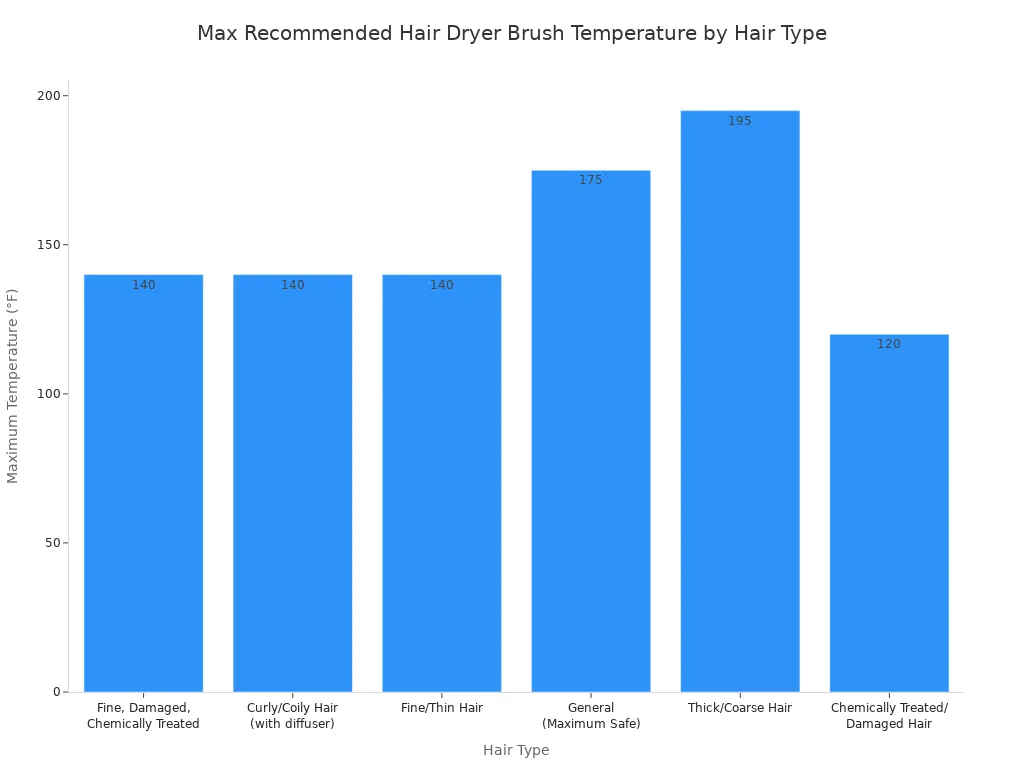
Managing heat is critical to mitigating damage. One of the major cons of cheaper models is a lack of adequate temperature settings. Using a temperature that is too high for your hair type can quickly lead to dryness, breakage, and split ends. It is essential to choose a model with multiple settings and always use the lowest temperature that effectively styles the hair.
Nota: Always select the appropriate heat setting for your hair. Fine or chemically treated hair requires much lower heat than thick, coarse hair to prevent damage.
Power and Drying Efficiency
Slower on Very Thick or Coarse Hair
Power is a key differentiator. A traditional hair dryer can have a motor of 1800 vatios o más, producing powerful airflow. In contrast, a hair dryer brush typically operates at a lower power, often around 1000 watts. This lower wattage means it can take significantly longer to dry very thick, coarse, or dense hair, reducing its time-saving benefit for those users.
Not Ideal for Rough Drying
The tool is designed to style damp hair, not dry soaking wet hair. For optimal results and to minimize heat exposure, users should first towel-dry or air-dry their hair until it is about 80% dry. This means it is not a true one-step solution from wet to styled, adding a preliminary drying phase to the process.
The Traditional Blow Dryer: Pros of a Classic Tool
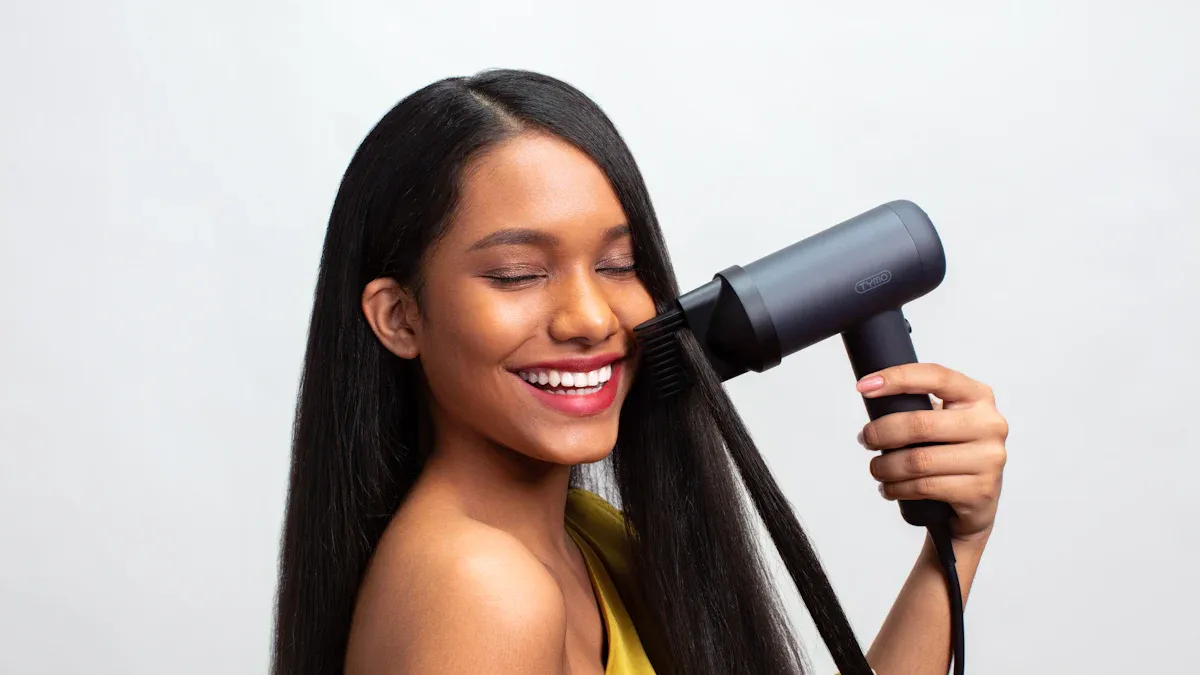
The traditional blow dryer remains a staple for both salon professionals and home users for good reason. Its primary pros are rooted in its raw power, precision, and unmatched styling flexibility, offering users complete authority over their final look.
Superior Drying Power
Faster Drying for All Hair Types
A classic dryer excels at removing moisture quickly and efficiently. Its powerful motor generates a strong, consistent stream of air. This capability makes it significantly faster for drying all hair types, especially for individuals with very thick, coarse, or long hair that holds a lot of water.
High Wattage and Airflow
The performance of a traditional blow dryer comes from its engineering. Most high-quality consumer models operate around 1875 vatios, providing substantial heat and power. When this is paired with an optimal airflow of 50 pies cúbicos por minuto (CFM) o más, la herramienta puede secar el cabello rápidamente sin depender únicamente de altas temperaturas.
Control y Precisión Máximos para el Peinado
Ideal para el Peinado por Secciones
Esta herramienta ofrece a los usuarios un mayor control para un peinado detallado. Trabajar con un cepillo redondo y pinzas de seccionado permite dar forma al cabello con exactitud. Este método es perfecto para crear estilos específicos como las flequillos cortina, donde cada sección requiere atención individual. Las herramientas adecuadas proporcionan el control necesario para un acabado profesional.
| Categoría de Herramienta | Artículo Específico | Beneficio Profesional |
|---|---|---|
| Secador de Pelo | Ajustes variables de calor/velocidad | Control preciso para diferentes tipos de cabello |
| Cepillo | Cepillo redondo de barril mediano | Crea la curva y volumen adecuados |
| Seccionado | Peine de púas anchas y pinzas | Particiones limpias y secciones controladas |
| Acabado | Función de aire frío | Fija el estilo para una mayor duración |
Creación de Looks Diversos
La capacidad de manipular el flujo de aire y usar diferentes cepillos ofrece al usuario una gran flexibilidad de peinado. Un secador tradicional no se limita a un solo look. Puede ayudar a crear desde un cabello liso y recto hasta rizos con volumen y movimiento u ondas suaves, convirtiéndolo en un instrumento verdaderamente versátil para la expresión creativa.
Versatilidad a través de Accesorios
Una de las mayores ventajas de esta herramienta es su adaptabilidad mediante accesorios. Diferentes boquillas transforman su función para adaptarse a tipos de cabello específicos y objetivos de peinado.
Uso de Boquillas para Estilos Lisos
Una boquilla concentradora es esencial para lograr un acabado liso y pulido. Reduce el flujo de aire a una corriente concentrada. Este aire focalizado ayuda a sellar la cutícula del cabello, lo que reduce el frizz y aumenta el brillo para un look liso.
Uso de Difusores para Rizos
Un accesorio difusor cambia las reglas del juego para quienes tienen textura natural. Dispersa el flujo de aire en un área más amplia, secando suavemente los rizos y ondas sin alterar su patrón. Este proceso realza la definición, minimiza el frizz y añade volumen.
Guía de Accesorios: Boquilla vs. Difusor
Tipo de Boquilla Función Mejor Para Beneficios Concentradora Dirige el flujo de aire a áreas específicas Cabello liso u ondulado Peinado de precisión, frizz reducido, brillo mejorado Difusor Dispersa el flujo de aire uniformemente Cabello rizado u ondulado Define los rizos, reduce el frizz, añade volumen
El Secador Tradicional: Contras y Curva de Aprendizaje
A pesar de su potencia y versatilidad, el traditional blow dryer tiene varias desventajas. Estos inconvenientes están relacionados con su dificultad operativa, el tiempo que requiere y el potencial de daño capilar si se usa incorrectamente.
Requiere Más Habilidad y Coordinación
El Desafío de Usar un Cepillo y Secador
Usar esta herramienta de manera efectiva exige una destreza significativa. El usuario debe operar simultáneamente el secador con una mano mientras maneja un cepillo redondo con la otra. Esta técnica con ambas manos puede causar fatiga en los brazos y presenta un desafío considerable para quienes carecen de coordinación.
Curva de Aprendizaje Más Pronunciada
Dominar un secador tradicional requiere práctica. A diferencia del diseño intuitivo de un cepillo secador, lograr un secado profesional requiere aprender técnicas específicas. Los usuarios deben entender cómo seccionar correctamente el cabello, crear tensión con un cepillo y dirigir el flujo de aire para un acabado liso. Esta curva de aprendizaje puede ser frustrante para los principiantes.
Potencialmente Más Lento
El Proceso de Dos Pasos
El proceso de peinado tiene múltiples fases, lo que puede aumentar el tiempo total invertido. Un usuario normalmente seca su cabello aproximadamente al 80% antes de comenzar el trabajo de peinado detallado. Esta separación entre secado y peinado hace que la rutina completa sea más larga.
Aunque un secador potente elimina la humedad rápidamente, el proceso de peinado completo suele ser más lento que con una herramienta todo en uno.
- Un cepillo secador puede lograr un estilo terminado en tan solo seis minutos.
- Un secador tradicional a menudo requiere quince minutos adicionales para un seccionado cuidadoso y trabajo con el cepillo para lograr un look detallado.
Requiere Más Equipo
Lograr un buen secado requiere más que solo el secador. El usuario necesita un conjunto de herramientas, que incluye un peine para seccionar, varias pinzas para sujetar el cabello y al menos un cepillo redondo. Esta necesidad de equipo adicional hace que el proceso sea más complejo y menos portátil.
Riesgo de Daño por Calor
Los Ajustes de Alta Temperatura Pueden Quemar el Cabello
Una de las mayores desventajas es el riesgo de daño por calor. Las altas temperaturas que hacen que un secador tradicional sea tan potente también pueden chamuscar las hebras del cabello. El calor excesivo elimina la humedad y debilita la estructura proteica del cabello, lo que conduce a problemas notorios.
Señales de Daño por Calor a Vigilar ⚠️
- Sequedad y Fragilidad: El cabello se siente áspero, se enreda con facilidad y pierde su brillo natural.
- Rotura y Puntas Abiertas: Las hebras se quiebran fácilmente y las puntas aparecen deshilachadas o partidas.
- Pérdida de Textura: El cabello rizado puede perder su elasticidad, mientras que el liso puede sentirse áspero.
- Desvanecimiento del Color: El calor elevado puede hacer que el cabello natural o con coloración se desvanezca o adquiera tonos cobrizos.
Aplicación Inconsistente del Calor
Una técnica inadecuada puede provocar una exposición desigual al calor. Mantener la boquilla demasiado cerca del cabello o concentrar el flujo de aire en una sección durante demasiado tiempo crea puntos calientes que pueden causar daños graves. Esta falta de control consistente puede ser más perjudicial que el calor regulado de un cepillo secador.
Comparación Directa: Cepillo Secador vs. Secador Tradicional
Analizar las diferencias clave entre estas herramientas revela ventajas y desventajas distintas para cada una. La mejor elección depende completamente de las prioridades del usuario, desde la cantidad de tiempo disponible hasta el estilo específico que desea lograr.
Velocidad y Eficiencia
Ganador para Estilizado Rápido
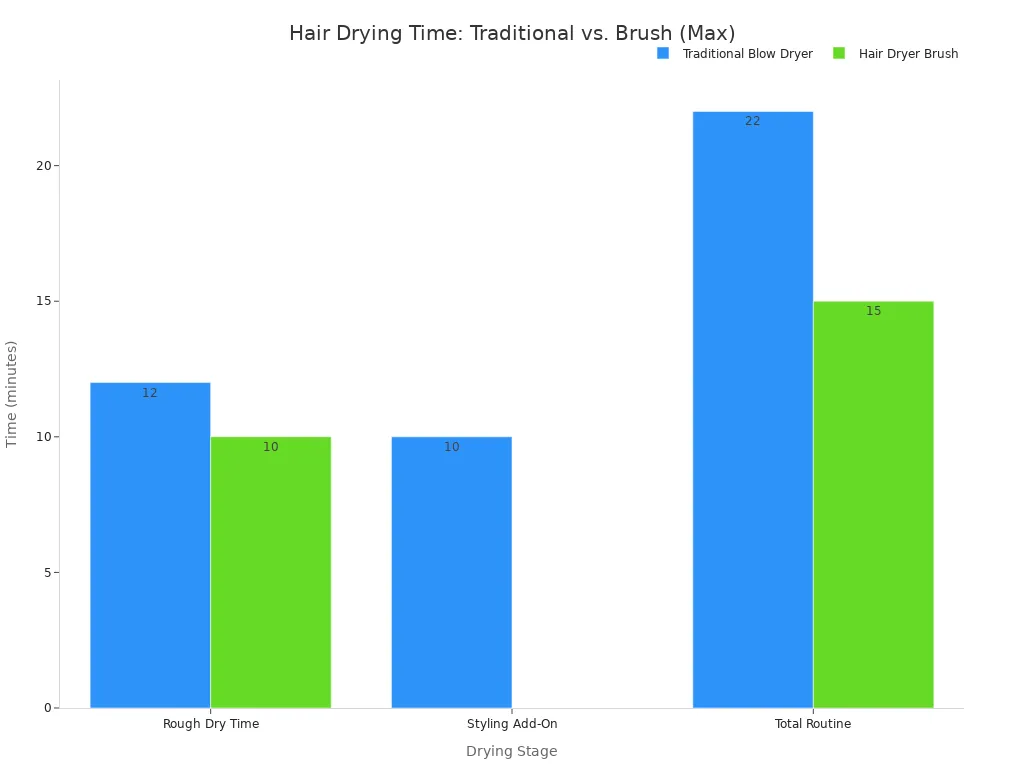
El cepillo secador es el campeón indiscutible para un estilo acabado y rápido. Su diseño todo en uno seca y da forma al cabello simultáneamente, reduciendo significativamente el tiempo total de la rutina. Un usuario con cabello hasta los hombros puede ahorrar de 5 a 10 minutos en su rutina matutina, transformando un proceso de 20 minutos en una sesión optimizada de 12 minutos.
| Aspecto | Secador Tradicional | Cepillo Secador |
|---|---|---|
| Tiempo de Secado Aproximado (cabello hasta los hombros) | 8-12 minutos | 7-10 minutos |
| Tiempo Adicional de Estilizado | 7-10 minutos (cepillo por separado) | Integrado (0 extra) |
| Rutina Total | 15-22 minutos | 7-15 minutos |
Ganador en Poder de Secado Puro
Un secador tradicional sobresale en capacidad de secado bruto. Equipado con un motor más potente, mueve un mayor volumen de aire para eliminar la humedad del cabello con una velocidad inigualable. Esto lo convierte en la opción superior para secar rápidamente cabello muy grueso, áspero o largo antes de comenzar el estilizado.
Facilidad de Uso
Mejor para Principiantes
El cepillo secador es excepcionalmente amigable para principiantes. Su diseño intuitivo elimina el desafío de coordinación que supone usar dos herramientas separadas. Esta simplicidad permite a cualquiera lograr un aspecto pulido con una práctica mínima.
- Operación con una Mano: Combina secado y estilizado, liberando una mano.
- Habilidad Mínima Requerida: Un usuario puede simplemente cepillar su cabello para secarlo y alisarlo.
- Funcionalidad Integrada: El diseño de la herramienta hace que lograr un resultado digno de salón sea casi infalible.
Mejor para Usuarios Experimentados
Los estilistas experimentados y los usuarios domésticos habilidosos a menudo prefieren un secador tradicional por su control superior. La capacidad de manipular el flujo de aire, la tensión, y diferentes cepillos proporciona la precisión necesaria para resultados de nivel profesional. Este control es esencial para personalizar estilos según el tipo y textura del cabello.
Los estilistas experimentados valoran la eficiencia y el control. Si bien a menudo se prefieren los secadores de alta velocidad para crear estilos lisos rápidamente, los ajustes de calor más suaves de un secador tradicional ofrecen una ventaja clave para clientes con cabello fino o sensible al calor.
Resultados Finales de Estilizado
Para un Alisado Suave y Cotidiano
El cepillo secador ofrece un acabado excelente, suave y con volumen, perfecto para el uso diario. Produce consistentemente un aspecto con más cuerpo al levantar el cabello en la raíz. Aunque puede carecer del acabado ultra-pulido de un alisado de salón, su conveniencia lo convierte en la herramienta ideal para un estilizado casero rápido, práctico y atractivo.
Para Precisión y Versatilidad
El secador tradicional ofrece una precisión inigualable y versatilidad de estilizado. Combinado con un arsenal de cepillos redondos de varios tamaños, permite al usuario crear una amplia gama de looks.
- Rizos y Ondas Definidos: Los cepillos de diámetro pequeño crean curvas más cerradas y movimiento.
- Cortes Bob y en Capas Definidos: Precise airflow and brush tension define sharp lines.
- Customized Volume: A stylist can control lift and shape section by section.
This tool combination allows for the tension and manipulation required to achieve complex, long-lasting, and highly polished styles that a single tool cannot replicate.
Hair Health: Which Tool is Safer for Your Hair?
When it comes to hair health, neither tool is inherently “safe” or “dangerous.” The potential for damage depends entirely on the heat application method and the user’s technique. Understanding these differences is key to protecting hair from harm.
Understanding Heat Damage
Heat styling tools can damage hair in two primary ways: through direct thermal exposure and through physical, mechanical stress. Both the hair dryer brush and the traditional dryer present unique risks in these areas.
Direct vs. Indirect Heat Exposure
A Un secador tradicional uses indirect heat, pushing hot air over the hair from a distance. A hair dryer brush, however, places a heated barrel in direct contact with the hair strands. This direct contact increases the risk of localized overheating if the tool is held in one spot for too long.
| Factor | Secador de Cabello Tradicional | Cepillo Secador |
|---|---|---|
| Distribución del Calor | Broad, indirect airflow | Direct, localized contact |
| Risk of Overheating | Moderate (with misuse) | Higher (due to contact) |
Mechanical Stress and Breakage
Both tools can cause physical damage. The bristles of a hair dryer brush create tension to smooth the hair, but this pulling action on wet, fragile strands can lead to breakage. Similarly, aggressive pulling with a round brush while using a traditional dryer can cause the same mechanical stress.
Best Practices for Hair Protection
Users can significantly mitigate heat damage by adopting a few simple, non-negotiable habits. Proper preparation and mindful operation are the best defense against dryness and breakage.
The Non-Negotiable Heat Protectant
A quality heat protectant is essential before any heat is applied. It creates a protective barrier on the hair shaft, reducing moisture loss. For best results, users should follow a consistent application method.
Pro Tip: Applying Heat Protectant 🛡️
- Start with towel-dried or damp hair, not soaking wet hair.
- Spray the product evenly from roots to ends, section by section.
- Focus on the mid-lengths and ends, which are older and more prone to damage.
- Comb the product through to ensure even distribution before drying.
Always follow the specific directions on the product bottle to determine the correct amount to use for your hair type.
Using the Correct Temperature Settings
Using the right temperature is crucial. High heat is not always necessary and is a primary cause of damage. A lower temperature setting is always gentler on hair. For thin or brittle hair, it is best to keep the temperature below 280°F. Thicker, coarser hair can handle more heat, typically between 375°F and 400°F, but exceeding this range can cause significant harm.
Matching the Tool to Your Hair Type
Selecting the right styling tool depends heavily on a person’s natural hair texture. Each hair type has unique needs that one tool may serve better than the other.
Para cabello fino y delgado
The Volumizing Airbrush Advantage
Fine hair is prone to heat damage and can fall flat easily. A volumizing airbrush is an excellent choice for this hair type. Its lower heat settings and direct contact provide gentle, even drying. The brush barrel lifts hair at the root, creating a lasting volumizing effect without the high-powered blast of a traditional dryer. This tool makes achieving a fuller look simple. A quality volumizing airbrush can add body and shine.
Using a Traditional Dryer for Volume
A Un secador tradicional can also create volume for fine hair with the right technique. A user should pair the dryer with a round brush and a root-lifting product. The key is to use a lower heat setting and a concentrator nozzle. This method offers more control for targeted volumizing but requires more skill than an airbrush.
Para cabello grueso y áspero
Why a Traditional Dryer Excels
Thick and coarse hair holds a lot of moisture. A traditional blow dryer with a powerful motor is the most efficient tool for this hair type. Its high airflow removes water quickly, significantly cutting down on overall drying time. The power of a traditional dryer makes managing dense hair much easier.
How to Use a Dryer Brush Effectively
A user with thick hair can still use a volumizing airbrush. The process requires some preparation. A person should first rough dry their hair to about 80% dry with a traditional dryer. Working in smaller, more manageable sections helps the airbrush dry the hair evenly and create a smooth finish.
Para Cabello Rizado y Ondulado
The Diffuser is Your Best Friend
A traditional dryer with a diffuser attachment is the gold standard for curly and wavy hair. This combination preserves and enhances natural texture. 👩🦱
How a Diffuser Protects Curls:
- Alisa el cabello de manera efectiva para que quede pegado a la cabeza. spreads the airflow over a large area, drying hair gently without disturbing the curl pattern.
- The gentle drying process minimizes frizz and enhances curl definition.
- For extra lift, a user can flip their hair upside down while diffusing to create more root volume.
Can a Dryer Brush Work for Curls?
A volumizing airbrush is generally not recommended for preserving natural curls. The brushing motion and tension are designed to straighten and smooth the hair. This action pulls out the natural curl pattern, resulting in a wavy blowout rather than defined curls. While a volumizing airbrush can create a different style, it does not enhance existing curls. An airbrush is better for a volumizing, straightened look.
Key Features to Look For When Shopping
Choosing the right hair styling tool requires careful consideration of its features. Whether you opt for an all-in-one device or a classic dryer, understanding the key specifications will help you select the best option for your hair type and styling goals.
Choosing the Right Hair Dryer Brush
A secador de pelo con cepillo is a fantastic tool for achieving a salon-quality blowout at home. To find the right one, pay close attention to its construction and settings.
Bristle Type and Barrel Material
The material of the barrel and the type of bristles directly impact the health and appearance of your hair. Many models feature a ceramic or tourmaline-coated barrel. These materials distribute heat evenly, which helps to minimize heat damage. They also release negative ions that seal the hair cuticle, reducing frizz and enhancing shine for a smoother finish.
The bristles determine how the tool grips and styles your hair.
- Cerdas de nailon: These are great for detangling and work well on thick or coarse hair.
- Boar Bristles: These are gentler, helping to distribute natural oils from the scalp for added shine and softness.
- Combination Bristles: A mix of nylon and boar bristles offers the best of both worlds, providing both detangling power and a smooth, polished result. A good volumizing airbrush often uses this combination for effective styling.
Ajustes de temperatura y velocidad
Controlling the heat is crucial for preventing damage. A quality airbrush should offer multiple heat and speed settings to accommodate different hair types and textures. Fine or damaged hair requires lower temperatures, while thicker, coarser hair may need more heat to style effectively. Having a cool shot button is also a valuable feature, as it helps to set your style for a longer-lasting, voluminizador hold. The design of the airbrush barrel, combined with the right settings, is key to achieving that perfect, bouncy look.
Choosing the Right Traditional Blow Dryer
A traditional blow dryer remains a staple for its power and versatility. When shopping for one, consider its technical specifications and the attachments it includes.
Wattage, Weight, and Technology
Wattage is a primary indicator of a dryer’s power. A higher wattage generally means a more powerful motor and faster drying time. For those with thick, coarse hair, a dryer with 1875 watts or more is ideal. Lighter, more manageable hair types can use a model in the 1200-1600 watt range to prevent over-drying. The weight of the dryer is also important, as a lighter model reduces arm fatigue during styling.
Modern hair dryers also incorporate advanced features for better hair health. Ionic technology releases negative ions that break down water molecules, leading to quicker drying with less heat exposure and reduced frizz. Infrared heat is another beneficial feature, as it penetrates the hair shaft to dry it gently from the inside out, resulting in a smoother, shinier finish.
Essential Attachments to Get
The true versatility of a traditional blow dryer comes from its attachments. A concentrator nozzle is a must-have for creating sleek, straight styles, as it focuses the airflow for precise styling. For those with curly or wavy hair, a diffuser is essential. It disperses the air gently to enhance natural curl patterns without causing frizz, adding beautiful, voluminizador definition. A good volumizing airbrush can create a similar effect, but a diffuser on a traditional dryer is specifically designed for this purpose. This makes the airbrush a great tool for achieving a smooth, voluminizador blowout.
A user prioritizing a quick, simple routine should choose the hair dryer brush. This tool saves time and delivers a consistently smooth blowout with minimal effort. In contrast, a traditional blow dryer is the superior option for those who need maximum power and precision to achieve a specific desired style. Ultimately, the right choice depends on a user’s hair type, skill level, and personal preference. The final decision should reflect a personal preference for either convenience or styling versatility.
Preguntas Frecuentes
Can a user use a hair dryer brush on wet hair?
A user should avoid using a hair dryer brush on soaking wet hair. For best results and to minimize damage, they should first towel-dry or air-dry hair until it is about 80% dry. This preparation ensures a smoother, faster styling process with the airbrush.
Which tool is better for creating volume?
Both tools can create volume. A volumizing airbrush offers an easy, all-in-one solution for lifting roots. A traditional dryer, paired with a round brush and a concentrator nozzle, provides more precise control for targeted lift, though it requires more skill to master.
Is a hair dryer brush good for travel? ✈️
A hair dryer brush is an excellent travel companion. Its all-in-one design combines a brush and dryer, saving space in luggage. A user no longer needs to pack multiple styling tools, making it a convenient option for trips. Many brands also offer compact or travel-sized models.
Can a user straighten hair with a traditional dryer?
Yes, a Un secador tradicional is very effective for straightening hair. A user can achieve a sleek, straight style by using a concentrator nozzle and a paddle or round brush. The focused airflow and brush tension work together to smooth the hair cuticle for a polished finish.
Which tool causes less damage?
Neither tool is inherently safer. Damage depends on usage. A hair dryer brush has direct heat contact, while a traditional dryer can have very high temperatures.
Consejo Profesional: Always use a heat protectant and the lowest effective temperature setting to protect hair health regardless of the tool.
Do professionals use hair dryer brushes?
Professionals primarily use traditional blow dryers for their power, precision, and versatility with attachments. However, some stylists may use a volumizing airbrush for quick touch-ups or to create a specific type of soft, voluminous blowout. The traditional dryer remains the salon standard for custom styling.