
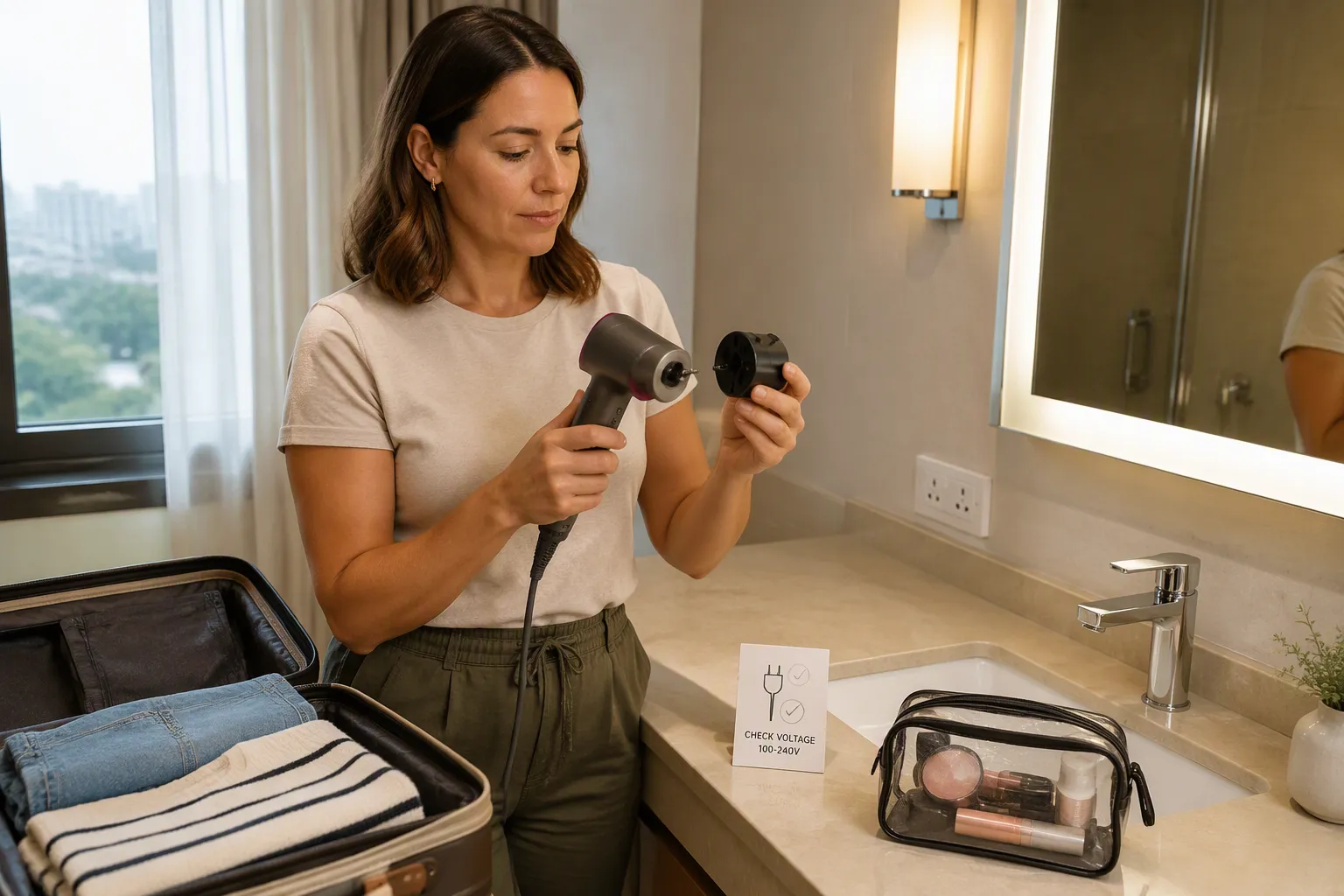
Travelers can safely use your Dyson hair dryer abroad with proper precautions. First, check the rating on the device. A de sèche-cheveux leader, ou usine de sèche-cheveux builds both Sèche-cheveux BLDC et Sèche-cheveux AC models with different electrical needs. Match that rating to the destination country’s power supply and outlet type. Europe often uses 220-240V. Use an adapter for the outlet shape. A voltage converter is necessary only when the voltage differs. This safety step protects the hair dryer.
Safely Use Your Dyson Hair Dryer Abroad: Know Your Voltage
Travelers need to understand their device’s voltage requirements before leaving home. This knowledge forms the foundation for safe operation overseas. The first step to safely use your dyson hair dryer abroad starts with reading the information printed on the device. A user must locate the voltage label and record every electrical detail on it. This information determines whether the dryer needs a simple plug adapter or a more complex converter.
Check Your Dyson Model’s Voltage Compatibility
Find the Voltage Label on the Dryer
Manufacturers place the voltage label near the base of the plug or along the handle. The label lists the input rating for the dryer. A North American Dyson hair dryer often prints 120v~ 60hz on this label. A European model typically prints 230v/50hz. The label also shows the wattage. Wattage becomes critical later when the user selects a converter. Travelers should photograph this label before packing. The picture provides a quick reference at the airport or hotel.
Understand Dual-Voltage vs. Single-Voltage Ratings
Many Dyson hair dryers carry a dual rating. These models display 100–240v 50/60hz on the label. This rating tells the user that the dryer can work with a wide voltage range. The internal power system adjusts automatically to the local supply. A dual-rated dryer works in europe with only a plug adapter. Alternatively, a single-rated dryer lists one fixed rating, such as 120v. If the dryer’s rating label shows only 120v~ 60hz, the device expects a North American outlet. Connecting that unit to a 230v supply causes serious damage. Users must know this distinction before departure.
Determine Your Destination Country’s Voltage
Voltage Standards by Region
Standards for voltage vary by region. Destination power determines whether a converter is necessary. A single-rated unit cannot tolerate a foreign voltage. Most countries standardize their residential power. Mainland destinations, such as France, Germany, Italy, and Spain, use a nominal supply of 230v/50hz. Their measured power often sits near 220/380 V. The United Kingdom typically has measured power near 240/415 V. North America relies on 120v residential outlets. Japan uses 100 V, but the frequency varies by region.
Verify Voltage and Outlet Type for Your Trip
Travelers must verify the correct voltage for their destination. They also need the exact outlet shape. An adapter solves the shape problem. A converter solves the electrical problem. A dual-rated Dyson with 100–240v 50/60hz works on any of these systems. Users should research plug types and voltages before booking a flight. This research creates a simple checklist. It also prevents costly mistakes. A voltage mismatch can destroy the motor. A traveler can safely use your dyson hair dryer abroad with this information.
Safely Use Your Hair Dryer in Europe: Adapter or Converter?
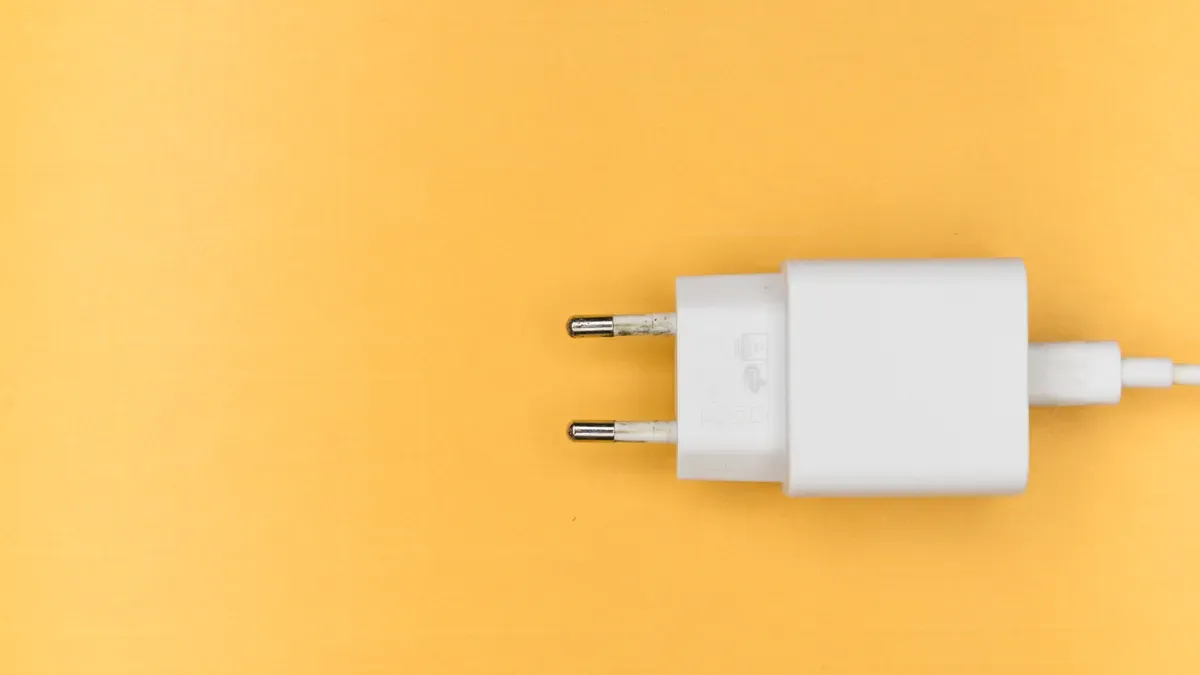
Travelers planning to use a hair dryer in Europe face a common question. Does the device need a simple adapter or a full voltage converter? The answer depends on the dryer’s voltage rating and the destination’s electrical system. Most of Europe operates on a 230v/50hz supply. This standard differs significantly from the 120v system found in North America. A traveler must understand these differences to safely use your hair dryer in europe without damaging the device or risking a fire.
Know When You Need a Voltage Converter
A voltage converter performs a different job than a plug adapter. Many travelers confuse the two devices. This confusion leads to damaged appliances and wasted money. The distinction matters most for high-wattage tools like hair dryers.
Plug Adapter vs. Voltage Converter
A plug adapter changes only the shape of the plug. It allows a device to fit into a foreign outlet. It does not alter the electrical current in any way. A voltage converter changes the electrical voltage level. It steps power up or down to match the device’s requirements. These two devices serve completely different purposes.
One experienced traveler shared a practical observation about this difference:
I’ve found it’s often more compact to find devices with built in voltage converters. Standalone voltage converters tend to be bulky.
High power devices like hair dryers and water kettles usually don’t auto detect, but I found some with a physical switch to select voltage. After a few disappointing kettle offerings (in Europe, of all places), I added one to my AeroPress kit. Fresh coffee is a must!
This traveler highlights an important point. Most people focus on having the right adapter. Voltage often becomes an afterthought. That oversight can fry an outlet or destroy a device. The table below summarizes the key differences between adapters vs. converters.
| Aspect | Adaptateur de prise | Convertisseur de tension |
|---|---|---|
| Primary function | Changes only the shape of the plug to fit a foreign outlet; does not alter voltage | Changes the electrical voltage level to match the device’s requirements |
| Effect on electricity | No conversion of voltage or current | Transforms power level (step-up or step-down) |
| Suitability for high-wattage hair dryers | Not suitable; meant for low-power devices only. Overloading with high-wattage appliances can cause overheating, damage, or fire | Required for high-wattage hair dryers that are not dual-voltage |
| Typical use case | Charging phones, tablets, and other dual-voltage low-wattage gadgets | Hair dryers, curling irons, electric kettles, and other high-power appliances lacking dual-voltage support |
| Key takeaway | Adapters change shape | Converters change power |
Do You Need a Converter for a Dual-Voltage Dyson?
A dual-voltage Dyson hair dryer does not need a voltage converter in Europe. The device already handles the 230v supply on its own. A traveler can confirm dual-voltage capability with a few simple checks.
- Verify that the hair dryer is dual voltage by checking the label for an input range such as AC 120V–240V, or by looking for a switch that can be set to 125V or 250V. If this is present, the device is compatible with European 230V outlets.
- If the hair dryer is rated only for 120V or 125V, it will not work in Europe with just a plug adapter; a voltage converter would be required instead.
- Once dual-voltage compatibility is confirmed, select the appropriate plug adapter for the destination country, since European outlets differ from the typical two-prong US plug format.
A single-voltage Dyson model presents a different situation. These dryers carry a fixed rating of 120v. They cannot accept the 230v European supply. A step-down converter would be needed in 230V countries, but this approach is not advised. The table below explains why.
| Condition | Importance | Dyson Outcome |
|---|---|---|
| Voltage match | US Dyson tools are built for 110–120V only | A step-down converter would be needed in 230V countries, but is not advised |
| Wattage capacity | Supersonic/Airwrap/Airstrait draw high wattage | Small travel converters cannot handle the load and fail |
| Waveform & control | Digital motors and sensors are sensitive | High wattage alone does not guarantee compatibility |
| Manufacturer guidance | Wrong-voltage use risks costly damage | Converter experiments are discouraged |
A plug adapter only changes pin shape. It does not convert 230V to 120V. If the label does not state 100–240V, the device should be treated as single-voltage. A 220–240V Dyson used in a 120V country would require step-up conversion, with the same practical concerns in reverse. Even a 2000W converter or pure sine wave converter does not resolve waveform, motor-control, heat-control, and warranty risks. The safest option is to use a destination-voltage Dyson, hotel dryer, dual-voltage travel dryer, or low-watt compatible styling tool.
Understand European Outlet Types
European outlets come in several shapes. Each country may use a different standard. A traveler must match the adapter to the specific outlet type at the destination. This step ensures a secure connection and safe operation.
Common European Plug Types (C, E, and F)
Europe uses several plug types. Type C features two round pins and no ground connection. Type E includes two round pins and a grounding pin that protrudes from the outlet. Type F, common in Germany and Spain, uses two round pins and two grounding clips. The table below shows the standard outlet types for several European countries.
| Pays | Standard Outlet Type(s) |
|---|---|
| France | Type E |
| Allemagne | Type F |
| Italie | Type L / Type C |
| Espagne | Type F |
| Switzerland | Type J |
A Type C plug (two round 4.0mm pins, no ground) physically fits into Type E, F, J, K, and L outlets. This means a simple Type C adapter covers France, Germany, Switzerland, Denmark, Italy, Spain, Portugal, Greece, and most other continental European countries. Travelers who understand europe plug and voltage standards can pack the right adapter with confidence.
Match the Adapter to Your Destination’s Outlet
A universal adapter offers flexibility for multi-country trips. These adapters include multiple plug configurations in one unit. A traveler simply selects the correct setting for each country. Dedicated adapters for a single plug type provide a more secure fit. They also tend to be smaller and lighter. Either option works well for a dual-voltage Dyson hair dryer.
The key is to match the adapter to the outlet. A Type C adapter will not fit a UK Type G outlet. A Type G adapter will not fit a European Type F outlet. Travelers should verify the outlet type for every country on their itinerary. This simple check prevents frustration at the hotel. It also ensures the dryer connects properly to the power supply.
A traveler who plans to use a hair dryer in europe should carry the correct adapter for each destination. A dual-voltage Dyson needs only this adapter. A single-voltage model needs a converter and an adapter. The converter connects first. The adapter connects second. This order ensures proper voltage conversion before the plug enters the wall.
Choose a Converter That Can Handle the Wattage
A voltage converter must match the power demands of the appliance it serves. A Dyson hair dryer draws significant power during operation. A traveler who selects an undersized converter risks equipment failure and safety hazards. The wattage rating on the device determines the minimum capacity the converter must provide.
Dyson Hair Dryers Are High-Wattage Appliances
Check the Wattage Rating on Your Dryer
The wattage label sits next to the voltage information on the dryer. A Dyson Supersonic typically draws 1600 watts at its highest setting. This number represents the maximum load the device places on the electrical system. A traveler must record this figure before purchasing any converter. The wattage rating directly determines the converter capacity needed for safe operation.
Why Small Travel Converters Are Risky
Small travel converters cannot handle the demands of high-wattage appliances. These devices typically support only a few minutes of continuous use. A hair dryer requires sustained power for ten to twenty minutes. The following limitations apply to small travel converters:
- Hair dryers require more than 1600W, so a converter used with a high-wattage hair dryer must be rated above this level.
- Travel voltage converters are not recommended for high-power hair dryers and are designed only for a few minutes of use; a dual-voltage hair dryer is advised instead.
A 2000VA transformer model (SHJY-2000VA) is specifically designed for high-power appliances like Dyson hair dryers. This transformer provides enough power headroom to run the dryer at its highest setting without tripping breakers or overheating.
Pick a Converter That Matches or Exceeds the Wattage
Look for the Continuous Power Rating
The continuous power rating matters more than the peak rating. A generator compatibility check of a hair dryer shows that the heating element is a resistive load: it draws constant power with no startup spike. Therefore, the 1600 W Dyson hair dryer requires continuous converter capacity, and with the 20% safety margin the minimum is 1920 W.
| Facteur | Valeurs | Requirement |
|---|---|---|
| Hair-dryer wattage | 1600 W | Rated load of the Dyson Supersonic |
| Safety margin | 20% | Add 20% to the device wattage |
| Minimum continuous capacity | 1920 W | 1600 W × 1.20 = 1920 W |
| Rating to select | Continuous | Use the continuous wattage rating, not peak |
A traveler should select a converter rated at 1920 watts or higher. This capacity ensures the converter operates within safe limits. Converters that list only peak wattage may fail during extended use.
Choose a Converter with Built-In Thermal Protection
Thermal protection prevents overheating during operation. A quality converter includes this feature as a safety measure. The device automatically shuts down when internal temperatures rise too high. This protection extends the life of both the converter and the dryer. Travelers should verify this specification before making a purchase.
Use the Correct Plug Adapter for the Outlet
A plug adapter changes the shape of the plug. It does not change the voltage. Travelers need the right plug adapter for each destination. The outlet type determines which adapter works.
Common Outlet Types Around the World
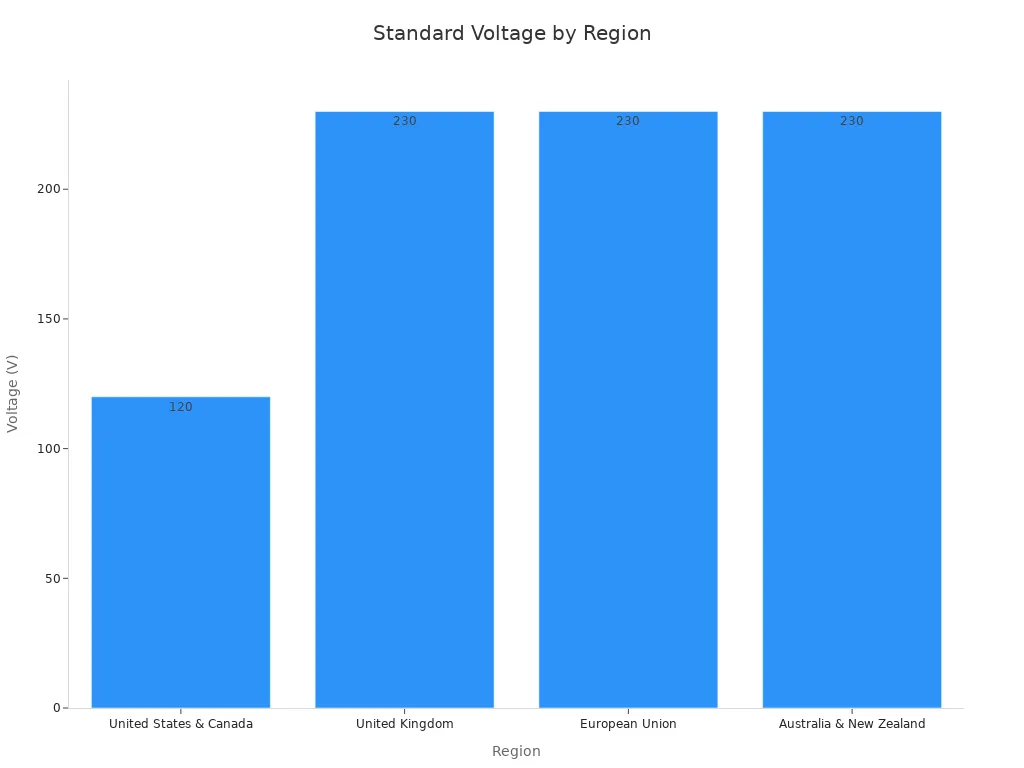
Outlet standards differ by region. The table below shows the standard outlet types for major travel destinations.
| Région | Standard Voltage | Socket Type | Caractéristiques Clés |
|---|---|---|---|
| United States & Canada | 120V (60Hz) | Type A/B | Type A has two flat pins; Type B adds a grounding pin. |
| Royaume-Uni | 230V (50Hz) | Type G | Three rectangular pins, with a fuse in the plug. |
| European Union | 230V (50Hz) | Type C/F | Type C has two round pins; Type F adds grounding clips. |
| Australia & New Zealand | 230V (50Hz) | Type I | Three flat pins arranged in a triangular shape. |
North American Outlets (Type A and B)
North American outlets use 120v. Type A features two flat parallel pins. Type B adds a round grounding pin. Devices from the United States and Canada use these outlets.
European Outlets (Type C, E, and F)
Europe uses 230v outlets. Type C has two round pins. Type E adds a grounding pin. Type F uses grounding clips. A Type C adapter fits most European outlets.
UK and Irish Outlets (Type G)
The United Kingdom and Ireland use Type G outlets. These outlets have three rectangular pins. A fuse sits inside the plug. Travelers to these countries need a dedicated Type G adapter.
Australian and New Zealand Outlets (Type I)
Australia and New Zealand use Type I outlets. Three flat pins form a triangular shape. This outlet type differs from European and North American designs.
In the UK and Australia, standard outlets are 230V (50Hz). The UK commonly uses Type G outlets with three rectangular pins, while Australia uses Type I outlets with three flat contacts positioned in a triangular pattern.
Use the Adapter After the Converter
Connect the Converter First, Then the Adapter
A single-voltage device needs a converter and an adapter. The converter connects to the wall outlet first. The adapter connects to the converter. The dryer plugs into the adapter. This order ensures proper voltage conversion.
Verify Polarity and Grounding
Polarity matters for safe operation. The adapter must maintain correct polarity. Grounding provides an additional safety path. Travelers should verify these features before use. A grounded adapter reduces shock risk.
Travelers who pack travel plug adapters for multiple countries simplify their trip. Universal adapters work in many regions. Dedicated adapters offer a more secure fit. Either option supports safe dryer operation abroad.
Avoid High-Wattage Converter Mistakes
Travelers who use a voltage converter with a Dyson hair dryer must avoid common errors. These mistakes can destroy the device or create fire hazards. A careful approach protects both the equipment and the user.
Never Overload a Converter with Your Dyson
Signs That the Converter Is Too Small
An undersized converter shows clear warning signs. The device may hum loudly during operation. The casing might feel unusually warm within minutes. Lights on the converter may flicker or dim. These signals indicate the converter cannot handle the load. A Dyson hair dryer draws up to 1600 watts. Small travel converters often max out at 200 watts or less. This gap creates immediate stress on the unit.
What Happens When the Converter Overloads
An overloaded converter fails in predictable ways. The internal fuse may blow first. Some units emit smoke or a burning smell. Others simply shut down without warning. In severe cases, the converter can melt or catch fire. The connected dryer may also suffer damage. A voltage spike can fry the motor or heating element. Repair costs often exceed the price of a proper converter.
Don’t Use a Converter Just Because You Packed One
Check the Converter’s Continuous Power Rating
Packing a converter does not mean it suits the task. Travelers must check the continuous power rating. This number appears on the label or in the manual. The rating must meet or exceed the dryer’s wattage. A 1600-watt dryer needs a converter rated for at least 1920 watts. This 20 percent margin provides a safety buffer. Converters rated only for peak power may fail during extended use.
Stop If the Converter or Dryer Gets Hot
Heat signals a serious problem. A warm converter casing is normal. A hot casing is not. Users should touch the converter after five minutes of operation. If the surface feels too hot to hold, unplug everything immediately. The same rule applies to the dryer. Excessive heat near the plug or cord indicates trouble. Continued use risks melting, fire, or electric shock.
Consider Alternative Solutions for International Travel
Travelers who want to avoid converter complications have practical alternatives. Buying a local dryer or using a hotel-provided unit eliminates voltage concerns entirely. These options often provide the safest path for international travel.
Buy a Local Dyson Hair Dryer
Pros and Cons of a Second Dryer
Purchasing a Dyson hair dryer at the destination offers clear advantages. The device arrives with the correct plug type and the proper voltage rating for that region. Travelers avoid the need for adapters or converters. The dryer operates at full performance without electrical risks.
This approach carries some drawbacks. A second Dyson represents a significant expense. The traveler must also carry or ship the device home. Storage becomes a consideration for frequent travelers. Despite these costs, many users find the safety and convenience worth the investment.
Where to Buy a Voltage-Compatible Dyson Abroad
Travelers can find voltage-compatible Dyson models at several locations. Official Dyson retailers and authorized dealers stock region-specific units. Major electronics stores in Europe, Asia, and Australia carry these products. Airport duty-free shops often stock hair dryers with local plug configurations.
Online marketplaces provide another option. Local Amazon sites or regional e-commerce platforms list Dyson products with the correct specifications. Buyers should verify the seller’s authenticity before purchase. Counterfeit products pose safety risks and lack warranty coverage.
Use a Hotel-Provided Hair Dryer
Check the Hotel Dryer’s Voltage Rating
Hotel hair dryers come pre-configured for the local power supply. Guests do not need adapters or converters. A quick check of the label confirms the rating. Most hotel units operate on the standard voltage for that country.
Travelers should inspect the dryer before use. Look for frayed cords or damaged plugs. Report any issues to the front desk immediately. A well-maintained hotel dryer provides a safe alternative to a personal device.
When a Hotel Dryer Is the Safer Choice
Hotel dryers make sense in several situations. Travelers on short trips avoid packing bulky equipment. Those with single-voltage devices eliminate all conversion risks. Guests who arrive late at night appreciate the immediate availability.
A hotel dryer also works well for travelers who prioritize luggage space. Unlike us standard hair dryers, which require 120v power, hotel units match the local supply. This compatibility removes all electrical hazards. The front desk can address any concerns about the device’s condition.
Follow Essential Safety Precautions
Safety rules protect both the traveler and the device. A few simple habits prevent most accidents. These habits also extend the life of a sèche-cheveux Dyson.
Never Plug into an Outlet Without Proper Voltage Conversion
What Happens with the Wrong Voltage
A mismatch between the device rating and the outlet supply causes immediate problems. According to Ceptics, a hair dryer rated for 120V or 125V only will not function properly in a 230v outlet when using only a plug adapter. The device requires a voltage converter. Standard travel converters are not designed for high-power appliances like hair dryers, which typically draw more than 1600W. Plugging a 120V dryer directly into a 230v outlet without a proper converter is unsafe. The device will likely malfunction or suffer permanent damage. The motor may burn out. The heating element may melt. In severe cases, the unit can spark or catch fire.
Double-Check Before Plugging In
Travelers should verify the voltage rating one final time before connecting the dryer. Check the label on the device. Confirm the outlet supply matches that rating. A quick review prevents costly mistakes. This step takes only a few seconds. It also provides peace of mind.
Unplug the Dryer When Not in Use
Avoid Overheating and Power Surges
An idle dryer still draws a small amount of current. This draw keeps the internal components warm. Power surges can also damage an idle device. Unplugging the dryer removes these risks. The safest way to use a hair dryer abroad includes this simple habit. Travelers should pull the plug after every use.
Store the Dryer Safely After Use
Proper storage protects the device from damage. Wait for the dryer to cool completely. Coil the cord loosely. Place the unit in a protective case or bag. Avoid wrapping the cord around the handle. This practice can damage the internal wiring over time.
Watch for Overheating During Use
Monitor Heat and Airflow Settings
Users should pay attention to the dryer during operation. High heat settings draw more power. Restricted airflow increases internal temperatures. Travelers should keep the air intake clear. They should also switch to a lower heat setting when possible. These habits reduce stress on the motor and heating element.
Stop Immediately if You Smell Burning
A burning smell signals a serious problem. Users should unplug the dryer at once. Do not attempt to finish the styling session. The smell may indicate melting insulation or an overheated motor. Continued use risks fire or electric shock. Electrical safety depends on quick action. A damaged dryer needs professional inspection before any further use.
Understand Warranty Limitations for International Use
Dyson’s warranty protects the original owner against manufacturing defects. The coverage does not extend to electrical damage caused by the user. Travelers who ignore power ratings may face significant repair bills. The warranty terms clearly explain these limits.
Travelers who use a single-voltage device in a country with different power standards often discover that a voltage mismatch can void their warranty. This realization comes too late for many travelers. The owner then bears the full cost of a destroyed motor or heating element. Prevention remains far cheaper than replacement.
Does a Voltage Mismatch Void Your Warranty?
Dyson Warranty Terms and Conditions
Dyson evaluates each warranty claim according to the conditions of use. Damage from incorrect power connections falls outside the scope of standard coverage. The manufacturer also excludes failures caused by unapproved accessories. This policy places responsibility on the traveler to match the device to the local power supply.
Note that Dyson’s warranty excludes damage from unapproved attachments or improper voltage usage.
A warranty claim fails when the damage traces back to a voltage mismatch. The owner will receive a repair estimate instead of a free replacement. This outcome applies to both motors and heating elements.
What Counts as Improper Use
Improper use includes any connection that exceeds the rating printed on the dryer handle. A 120v-rated dryer connected to a 230v supply is a clear violation. The same applies when a traveler uses only a plug adapter for a single-voltage device. The adapter changes the plug shape, not the electrical characteristics.
- Q: Can I use my US-purchased Dyson in Europe with just a plug adapter?
- A: Absolutely not. Voltage mismatch will destroy the motor. Purchase region-specific models to comply with electrical safety regulations.
Dyson support representatives classify these failures as accident damage. The company does not honor warranty replacement for such cases. Travelers who operate a dual-voltage model within its stated range remain protected. Those who ignore the rating lose that protection.
Get Help with a Dyson Hair Dryer Abroad
Contact Dyson Support for Guidance
Dyson support offers assistance to international travelers. A representative can verify the warranty status of a specific unit. The representative can also identify authorized service centers in the destination country. Travelers should have the serial number ready before making the call. The serial number appears on the base of the handle. Dyson support can then confirm the best repair path.
When You Need a Local Repair Shop
A local repair shop becomes necessary when official support is unavailable. This scenario occurs for older models or in countries without a Dyson service center. Independent technicians often have experience with digital motors. They can inspect the extent of the damage and provide a cost estimate. Travelers should ask about the technician’s qualifications before authorizing any work. A professional shop will also ask about the type of outlet and converter used during the failure. Their diagnosis will likely confirm the cause of the damage. This information helps the owner understand why the warranty did not apply.
Travelers who respect the electrical rating printed on the device avoid these complications. The cost of a proper converter or a local dryer is small compared with the price of a new motor. A few minutes of pre-trip research protects both the device and the warranty.
Travelers should always confirm the voltage rating on their Dyson model before any trip. They must know the destination country’s voltage and outlet type. A plug adapter handles the outlet shape. A voltage converter is necessary only when the voltage differs. Any converter must match the dryer’s wattage, not just small electronics. Travelers should never overload a converter and must stop if the converter or dryer gets hot. If unsure, they can use a hotel-provided dryer or buy a local voltage-compatible Dyson model. They should follow safety precautions such as unplugging the dryer when not in use. Voltage damage or improper converter use may not be covered by the warranty. With these steps, anyone can safely use your Dyson hair dryer abroad. People who plan to safely use your Dyson hair dryer abroad should also remember that hair dryers abroad in Europe need proper adapters and converters. Travelers who pack adapters and converters for the wrong voltage risk damage.
FAQ
Can a traveler use a US-purchased Dyson hair dryer in Europe with only a plug adapter?
No. A US Dyson rated for . S'il ne liste qu'une seule tension (par ex., cannot handle Europe’s 230V. A plug adapter changes only the plug shape, not the voltage. Dyson does not recommend voltage converters for high-wattage dryers. Use a dual-voltage model or local dryer.
How can a traveler check if a Dyson hair dryer supports dual voltage?
A traveler checks the label near the plug or handle. The label displays the input rating. A dual-voltage Dyson lists 100-240 V, 50/60 Hz. A single-voltage model lists only one value, such as 120V 60Hz. The label also shows the wattage.
Does a dual-voltage Dyson hair dryer need a voltage converter?
No. A dual-voltage Dyson automatically adjusts to the local voltage. A traveler only needs a plug adapter for the destination outlet. A voltage converter performs no useful function in this case and adds unnecessary bulk and risk.
What happens when a traveler connects a . S'il ne liste qu'une seule tension (par ex., Dyson to a 230V outlet?
The dryer receives nearly double its rated voltage. This overload can burn out the motor, melt the heating element, or trigger a short circuit. The device may also catch fire. Proper voltage conversion or a compatible model prevents this destructive outcome.
What wattage converter does a Dyson Supersonic require?
The Dyson Supersonic draws 1600 watts. A converter must supply at least 1920 watts continuous. This 20% safety margin prevents overloading. Small travel converters rarely reach this capacity and fail quickly. Select a high-wattage transformer rated for continuous use.
Can a small travel voltage converter handle a Dyson hair dryer?
No. Small travel converters support low-power electronics for a few minutes. A Dyson hair dryer draws 1600 watts for extended styling sessions. The converter overheats, trips, or burns out. Travelers should avoid this combination entirely.
Will voltage damage void a Dyson warranty?
Yes. Dyson warranties exclude damage from improper voltage usage. Connecting a single-voltage dryer to an incompatible outlet counts as improper use. If the dryer fails, Dyson will not provide a free repair. The owner pays the full cost.
Is a hotel hair dryer safer than bringing a personal Dyson?
A hotel dryer is often safer. It arrives ready for the local voltage and outlet type. Travelers avoid converter mistakes and heavy packing. Short trips gain a simple, risk-free option. A traveler can inspect the unit before use.