

Safe travel preparation involves specific packing steps. A traveler first ensures their travel hair dryer is completely cool. They then place the folded dryer in a protective pouch. Using the appliance abroad requires careful attention to electrical standards. One must always verify the destination’s voltage. A modern BLDC hair dryer from a top hair dryer manufacturer often supports dual voltage. An older AC hair dryer from a different hair dryer factory may not. This makes checking the dryer’s voltage capability before any travel essential.
Pre-Travel Prep for Your Hair Dryer
Proper preparation before a trip ensures a hair dryer functions safely and effectively upon arrival. A traveler protects both the appliance and their belongings with a few simple pre-packing steps. These actions are crucial for a smooth travel experience.
Let It Cool Down Completely
The Fire and Melt Risk
A traveler must never pack a warm or hot hair dryer. The residual heat from the appliance’s nozzle and heating element poses a significant risk. It can easily melt plastic items, damage delicate fabrics, or even create a fire hazard inside a tightly packed suitcase. This simple precaution is a fundamental rule of travel safety.
How Long to Wait Before Packing
After its final use, a person should leave the dryer unplugged on a heat-proof surface, like a tile counter. A waiting period of 15 to 30 minutes is generally sufficient for the appliance to cool to a safe temperature. A quick touch test on the nozzle confirms it is completely cool before packing begins.
Clean Your Dryer for Peak Performance
Clearing the Air Intake Vent
A clean dryer is an efficient dryer. Over time, the rear air intake vent collects dust, lint, and hair. This blockage restricts airflow and forces the motor to work harder. The consequences of a clogged vent include:
- Overheating: The appliance can get dangerously hot and may trigger its automatic safety shut-off.
- Reduced Airflow: The dryer produces a weaker stream of air, diminishing its effectiveness.
- Longer Drying Times: A user will need more time to dry their hair, causing frustration.
- Increased Component Stress: The motor and internal parts wear out faster due to strain and excess heat.
A traveler can use a small brush or a dry cloth to wipe the vent clean, ensuring optimal performance.
Wiping Down the Exterior
One should also wipe down the body of the travel hair dryer with a dry or slightly damp cloth. This removes any residue from hair products, which can become sticky and attract dirt. A clean exterior makes the appliance more pleasant to handle.
Fold and Secure the Appliance
Folding the Handle
Most modern travel dryers feature a folding handle designed for compactness. This mechanism significantly improves travel efficiency, reducing the appliance’s overall length by 25-47% compared to fixed-handle models. A traveler should gently fold the handle until it clicks securely into its compact position. This action minimizes the space the dryer occupies in luggage.
Securing Nozzles and Diffusers
Attachments like concentrator nozzles and diffusers are small and easily lost. A person should detach these accessories from the dryer before packing. Placing them inside a small, sealed bag and then packing them alongside the main unit prevents them from getting lost or crushed during transit.
How to Pack Your Travel Hair Dryer
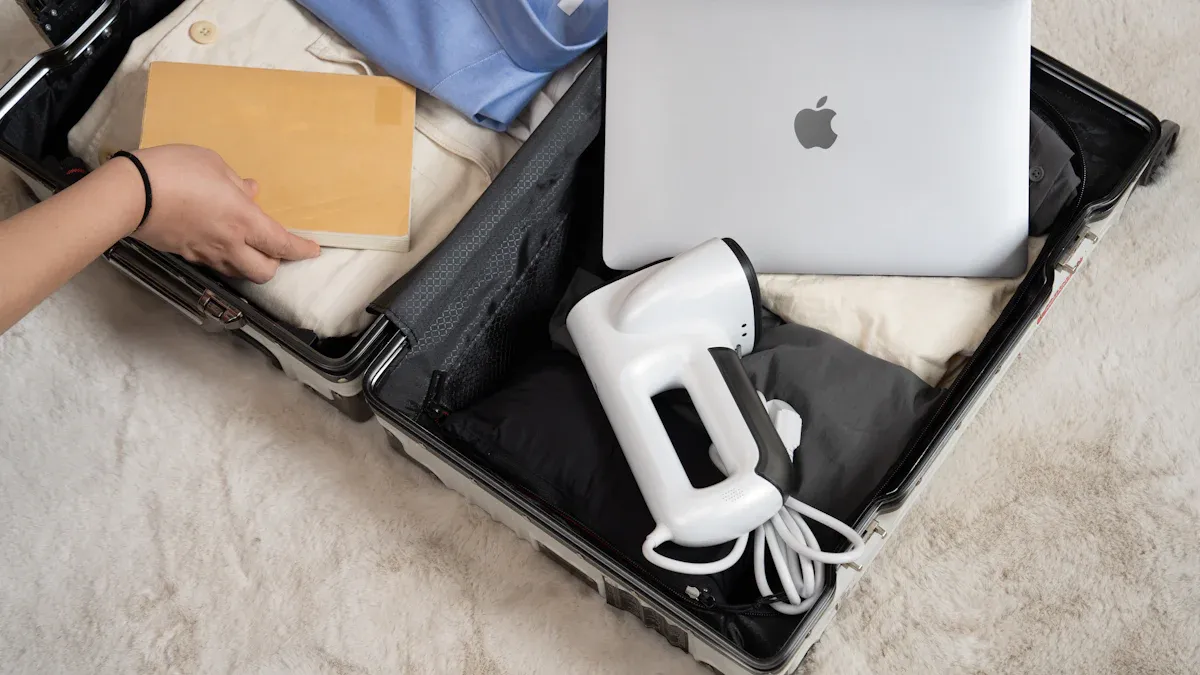
After preparing the appliance, a traveler must pack it correctly to prevent damage during transit. The packing process involves three key stages: securing the cord, choosing a protective case, and placing the dryer strategically within the luggage. Proper execution of these steps ensures the appliance arrives ready for use.
The Right Way to Wrap the Cord
The power cord is often the first component to fail on a hair appliance due to improper storage. A person can significantly extend the life of their dryer by adopting a safe wrapping technique.
The Loose Loop Method
A traveler should gather the cord into several large, loose loops, similar to how one might coil a garden hose. This method, sometimes called the “over-under” technique, prevents kinking and strain on the internal wiring. Once coiled, a person can secure the bundle with a simple Velcro tie or by tucking the plug through the center of the loops. This keeps the cord tidy without causing damage.
Why Tight Wrapping Is Dangerous
Many people instinctively wrap the cord tightly around the body of the dryer. This common habit is extremely harmful to the appliance. Wrapping a hair dryer cord tightly around the dryer body creates stress points, especially where the cord meets the handle. These stress points are the technical reason that leads to internal wire damage over time. This repeated strain can cause the wires to fray, leading to intermittent power, short circuits, or complete appliance failure.
Choose Your Protective Casing
A protective case shields the dryer from impacts, scratches, and pressure from other items in a suitcase. A traveler has several options, ranging from specialized pouches to simple DIY solutions.
Using a Heat-Resistant Pouch
For maximum safety and convenience, a heat-resistant pouch is an excellent investment. These accessories allow a person to pack the dryer even when it is still slightly warm, which is ideal for rushed departures.
- High-quality bags for hair appliances must maintain structural stability when exposed to temperatures above 250°C.
- They should be tested for thermal resistance up to 300°C for reliable performance.
- Many modern pouches feature advanced silicone-coated linings, which offer improved thermal protection and durability.
The Original Box or Bag
The packaging a dryer comes in is often a perfect storage solution. Some premium models include a purpose-built case that offers superior protection. For example, a high-end case might be constructed from sleek, vegan leather and described as ‘nice & sturdy’ by users. Such a case is specifically designed for storing a dryer and its attachments, sometimes featuring six protective pockets, including clear and mesh compartments for excellent organization. This makes it a compact and effective option for travel.
DIY Protection with Clothing or Shoes
A traveler can create effective padding without any special equipment. One simple method is to wrap the dryer in a soft, thick garment like a sweater or a pair of jeans. Another clever technique is to place the folded, compact dryer inside a clean shoe, which provides a surprisingly rigid and protective shell.
Strategic Placement in Your Luggage
Where a person places the dryer inside their luggage is just as important as how they wrap it. Central placement creates a crucial buffer against external forces.
The “Buffer Zone” Method
Creating a “buffer zone” is a professional packing technique that isolates fragile items from impact. A traveler can implement this method with a few simple steps. Sophie, a designer, perfected this strategy by wrapping each delicate item, placing it in a foam-lined box, and nesting it in the center of her suitcase between layers of denim.
To create your own buffer zone:
- Line the bottom of the suitcase with soft clothing like sweaters.
- Wrap the dryer individually in a cloth or place it in its pouch.
- Position the wrapped dryer in the center of the suitcase.
- Fill all surrounding gaps with rolled socks, underwear, or T-shirts to prevent shifting.
- Add a final top layer of soft garments to absorb pressure.
Using a Hard-Shell Case Advantage
A hard-shell suitcase provides a rigid exterior, but proper internal packing remains critical. The goal is to create a stable, balanced load that minimizes movement.
“Passengers fixate on the dryer’s weight, but the real variable is how it interacts with the rest of the bag’s contents. A poorly distributed 500-gram item can make a 9.2 kg bag read as ‘heavy’ to an agent’s hand—while a well-integrated 750-gram unit feels neutral. We train our staff to recognize balanced loads, not just numbers on a scale.” — Javier Mendez, Senior Operations Advisor, IATA Passenger Standards Division
To achieve this balance with a travel hair dryer, a person should position it horizontally in the bottom third of the bag, centered over the wheels. This placement anchors the weight and stabilizes the entire load. An editorial stylist, Maria R., found success by placing her dryer at the base of her bag on over 11 flights. Her conclusion highlights the strategy: “It’s not about carrying less… It’s about carrying smarter.” This smart travel approach protects the appliance from damage.
Carry-On vs. Checked Luggage for Your Hair Dryer
A traveler must decide whether to pack their hair dryer in a carry-on or a checked bag. This choice depends on airline regulations, personal preference, and the type of travel planned. Understanding the rules and the pros and cons of each option helps protect the appliance.
Airline and TSA Rules
Airlines and security agencies like the TSA have clear guidelines for electronic devices. A standard corded hair dryer is generally permissible in both carry-on and checked luggage.
Packing in Your Carry-On
A traveler can pack a corded hair dryer in their carry-on bag without issue. However, cordless models fall under different regulations. Cordless dryers are considered portable electronic devices with lithium-ion batteries. The rules permit a traveler to bring up to two spare lithium-ion batteries, each under 160 Wh, in their carry-on only. Each spare battery must be individually protected to prevent short circuits.
Packing in Your Checked Bag
Placing a hair dryer in a checked bag is also allowed. This option frees up valuable space in a carry-on. A person should ensure the dryer is well-protected using the “buffer zone” method, as checked luggage often endures rougher handling during transit.
Pros and Cons for Each Option
Each packing method offers distinct advantages and disadvantages. A traveler should weigh these factors to determine the best choice for their specific trip.
| Aspect | Carry-On Baggage | Checked Luggage |
|---|---|---|
| Advantages | Reduces risk of loss or damage; immediate access upon arrival. | Frees up cabin space; avoids extra security screening; better for bulky accessories. |
| Disadvantages | Occupies valuable space; may require removal for security screening. | Higher risk of damage, loss, or theft; inaccessible during layovers. |
Why Carry-On Is Often Safer
Pro Tip: Keeping valuable electronics in your carry-on is the safest travel strategy. ✈️
Placing a dryer in a carry-on bag gives a traveler complete control over its handling. This method eliminates the risk of the appliance being lost, stolen, or damaged by baggage handlers. For an expensive or essential styling tool, the peace of mind offered by keeping it in the cabin is significant.
When to Use Checked Luggage
A traveler might choose to pack their dryer in checked luggage to conserve space in their carry-on for other essentials. This is also a practical choice if the person is traveling with a heavy, high-wattage voltage converter, which is often better suited for a checked bag. It also means one less item to remove from a bag during the security screening process.
Understanding Global Electricity: Voltage and Plugs
A traveler must understand the basics of global electricity to use hair tools abroad safely. Countries use different electrical systems. This means the voltage from the wall outlet and the shape of the plug can vary significantly. Ignoring these differences can destroy an appliance and create a safety hazard.
Voltage 101: 110V vs. 220V
Voltage is the measure of electrical pressure. Most countries operate on one of two primary voltage standards. A mismatch between an appliance’s required voltage and the outlet’s supplied voltage is dangerous.
The 110-120V Standard in North America
North America, Japan, and some other countries use a voltage standard of approximately 110-120 volts (V). Appliances from these regions are designed specifically for this lower electrical pressure. A traveler from the US will find their single-voltage devices are built for this system.
The 220-240V Standard in Europe & Asia
Most of Europe, Asia, Africa, and Australia use a higher voltage standard of 220-240V. This system delivers roughly double the electrical pressure of the North American standard.
Critical Safety Warning: Plugging a 110V appliance directly into a 220V outlet is a recipe for disaster. The device will draw too much current, causing it to burn out within seconds. Users report seeing smoke, sparks, and complete failure when this mistake is made. This action can turn an appliance’s internal wiring into a fuse, permanently damaging it.
A Visual Guide to Common Plug Types
A plug adapter allows a device’s plug to fit into a foreign wall socket. It does not change the electrical voltage. A person must identify the correct plug type for their travel destination.
| Plug Type | Features | Common Usage/Regions |
|---|---|---|
| Type A & B | Two flat prongs (A) or two flat prongs with a round ground pin (B). | North America, Mexico, Japan |
| Type C & F | Two round pins. Type C is ungrounded; Type F has grounding clips. | Most of Europe, Russia, South Korea |
| Type G | Three rectangular pins in a triangular pattern with an internal fuse. | United Kingdom, Ireland, Singapore |
| Type I | Two flat pins in a “V” shape, often with a vertical grounding pin. | Australia, New Zealand, China |

Type A & B for North America and Japan
Type A has two flat parallel prongs. Type B adds a round grounding pin for safety. These are standard for electronics in North America.
Type C & F for Most of Europe
The Type C “Europlug” is common for low-power devices across Europe. Type F, or “Schuko,” is used for larger appliances and includes grounding clips.
Type G for the United Kingdom
The UK uses the robust Type G plug. Its fused design offers an extra layer of protection for all electronics.
Type I for Australia and China
This plug features angled pins. It is the standard for Australia, New Zealand, and China, making it essential for any travel to the Oceania region.
Choosing Your Essential Travel-Friendly Hair Tools
Selecting the right travel-friendly hair tools is the most important step for using electronics safely abroad. A traveler must understand their appliance’s electrical requirements to prevent damage. Smart choices in equipment make for a seamless travel experience.
The Benefits of a Dual Voltage Hair Dryer
The most convenient and compact of all travel-friendly hair tools is the dual voltage hair dryer. This appliance is specifically engineered for global travel, offering flexibility and peace of mind.
What Is a Dual Voltage Dryer?
A dual voltage dryer is an appliance designed to operate safely on both 110-120V and 220-240V electrical systems. These devices possess universal voltage capabilities, adapting to the local power grid. The switching mechanism can be either manual or automatic.
- Manual Switching: The user must physically change the voltage setting. This is often done with a small, recessed dial that a person can turn with a coin or key before plugging the dryer in.
- Automatic Switching: More advanced models contain circuits that sense the input voltage and adjust the dryer’s components automatically. This provides a seamless, user-friendly experience.
How to Identify One
A person can identify a dual voltage appliance by inspecting the fine print on its body or handle. The markings clearly indicate its voltage range. A compact dryer with these markings is an excellent choice for any trip.
| Type of Dual Voltage | Input Markings |
|---|---|
| Automatic | A range like 100-240V or 110-220V |
| Manual | A slash like 120V/240V |
Voltage Converters vs. Plug Adapters
A traveler with a single-voltage appliance must understand the difference between a voltage converter and a plug adapter. These two devices perform very different functions, and using the wrong one can have disastrous consequences.
What a Voltage Converter Does
A voltage converter is a device that changes the electrical pressure. For example, it “steps down” a 220V current to 110V, allowing a North American appliance to work in Europe. A converter is necessary only when an electronic device is not dual voltage.
What a Plug Adapter Does
A plug adapter simply allows the prongs on a power cord to fit into a differently shaped wall socket. It does not change the electrical voltage in any way. A traveler needs an adapter whenever their device’s plug does not match the outlets at their destination.
Knowing When You Need Both
Determining whether one needs a converter, an adapter, or both requires a simple two-step check of the appliance and the destination.
Traveler’s Checklist:
- Check the Device: A person first looks at their appliance for voltage markings. If it says
100-240V, it is one of the dual-voltage tools and does not need a voltage converter.- Check the Destination: Next, a traveler researches the destination’s plug type. If the plug shape is different, an adapter is required.
A single-voltage device (e.g.,
110Vonly) taken to a 220V country will require both a voltage converter and a plug adapter to function safely.
A Step-by-Step Guide to Using Your Hair Dryer for Travel
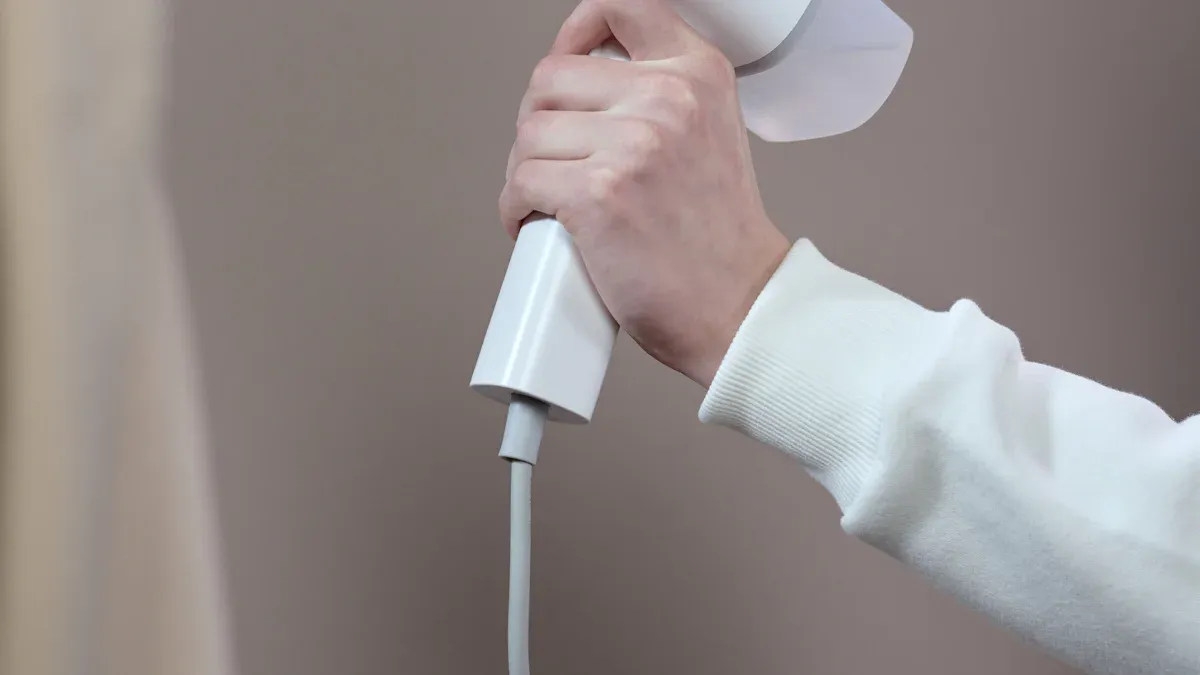
Properly using a hair dryer abroad is a critical safety measure. A traveler who understands the correct sequence of operations can protect their appliance and prevent electrical hazards. The process differs significantly depending on whether the device is dual voltage or single voltage.
How to Use a Dual Voltage Hair Dryer
A dual voltage hair dryer is the most reliable and convenient tool for international travel. Its design simplifies the process, but a user must still follow a specific three-step procedure to ensure safe operation.
Check Destination Voltage
Before any other action, a traveler must confirm the destination’s electrical voltage. A quick online search for “[Country Name] voltage” provides this essential information. Knowing whether the local standard is 110-120V or 220-240V is the foundation for every subsequent step.
Set the Voltage Switch Before Plugging In
Many compact, manual dual-voltage models require a physical adjustment. This step is crucial and must be completed before the appliance is plugged into any power source.
- Locate the voltage switch on the dryer’s body, often a small, recessed dial.
- Use a coin, key, or small screwdriver to turn the switch to the correct setting (e.g.,
240Vfor Europe). - A traveler may want to note the switch position, as the printed numbers can wear off over time.
Note: Some modern appliances feature automatic voltage switching. These devices detect the input voltage and adjust themselves, requiring no manual intervention from the user. A person should check their device’s manual to confirm its capability.
Attach the Correct Plug Adapter
With the voltage correctly set, the final step is to attach the appropriate plug adapter. The traveler selects the adapter that matches the wall sockets of their destination country. Once the adapter is securely fitted onto the dryer’s plug, the appliance is ready for safe use.
Using a Single-Voltage Dryer with a Converter
A traveler with a single-voltage appliance faces a more complex and riskier situation. Using a hair dryer with a voltage converter is possible but requires extreme caution and the right equipment. This method is generally not recommended for a high-power device.
The High-Wattage Converter Rule
Hair dryers are high-wattage heating devices, demanding a powerful voltage converter. A standard, compact travel converter is almost always insufficient and dangerous. A person must select a converter rated significantly higher than the appliance’s needs.
To find the right converter:
- Find the Dryer’s Wattage (W): A user checks the label on the travel hair dryer for its wattage. If only voltage (V) and amps (A) are listed, they multiply them to find the watts (
V x A = W). - Calculate Required Converter Wattage: For a heating appliance like a dryer, a person must multiply the device’s wattage by at least two or three. A 600W dryer, for example, needs a converter rated for 1200W to 1800W.
- Select a High-Wattage Model: The traveler must purchase a “step-down” converter that explicitly supports high-wattage appliances and meets the calculated power requirement.
A Warning on Potential Appliance Damage
Using an underrated or incompatible converter often leads to immediate failure. The converter can burn out, and it may permanently damage the appliance connected to it. This is not a theoretical risk; it is a common travel mishap.
One editor for Wirecutter shared a cautionary tale from a trip to Hong Kong. A voltage converter, purchased specifically for her hair dryer for travel, “blew out” the moment she plugged the dryer in. The event left the appliance “enfeebled for good,” rendering it useless.
This experience highlights the significant danger of pairing the wrong converter with a high-power device.
Following All Manufacturer Instructions
To minimize risk, a person must read and meticulously follow the instructions for both the hair dryer and the voltage converter. Manufacturers provide specific warnings and operating limits. Ignoring these guidelines while using a hair dryer can lead to appliance failure, electrical shorts, or even a fire, making careful adherence to all instructions a non-negotiable safety rule.
Universal Hair Dryer Safety Rules for Any Trip
Certain safety protocols are non-negotiable, whether a person is at home or on the road. Adhering to these universal rules protects the user and the appliance from harm during any travel adventure.
Keep It Away From Water
Water and electricity are a lethal combination. A user must maintain a strict separation between their hair dryer and any water source to prevent electrocution.
Bathroom Counter Safety
A person should always place a plugged-in hair dryer on a completely dry surface, far from a sink filled with water. Even a small puddle on the counter can create a dangerous electrical path. Wiping the area dry before use is a simple yet critical precaution.
Never Use with Wet Hands
A user must never operate a hair dryer with wet hands. Water reduces the skin’s natural resistance to electricity, dramatically increasing the risk of a severe electric shock. A person should always dry their hands thoroughly before plugging in or using the appliance.
General Electrical Safety Practices
Beyond water-related hazards, a traveler must adopt several general electrical safety habits. These practices ensure the appliance‘s internal protective mechanisms can function as intended.
Inspect Cords for Fraying
Before each use, a person should run their fingers along the power cord to check for any cracks, breaks, or exposed wires. A damaged cord is a significant fire and shock hazard. Modern dryers often have reinforced cord connections, but a visual and tactile inspection remains essential.
Don’t Leave It Unattended
A user must never leave a hair dryer running unattended. If they need to step away, they should turn it off and unplug it. While most dryers have a thermal shutoff to prevent overheating, leaving one on poses an unnecessary fire risk.
Unplug When Not in Use
The most effective habit is to unplug the appliance immediately after use. Modern hair dryer plugs incorporate advanced protection. An Appliance Leakage Current Interrupter (ALCI) cuts power if it detects an imbalance, while an Immersion Detection Circuit Interrupter (IDCI) offers protection even when the dryer is off but still plugged in. A user can verify these systems with the “Test” and “Reset” buttons on the plug. However, unplugging the device entirely removes all electrical risk.
Built-in Protections to Know 🛡️ Modern hair dryers include several key features designed for user protection.
Safety Feature Function Trigger Level Importance ALCI Protection Detects current imbalances and cuts power. 6 milliamps Critical IDCI Protection Detects accidental water immersion. Immediate Critical Thermal Shutoff Prevents the unit from overheating. Temperature threshold High Double Insulation Provides continuous electrical isolation. N/A – continuous Essential
A traveler guarantees appliance safety by following a clear protocol.
- Packing Recap: A person must cool the unit completely, wrap the cord loosely, use a protective case, and pack it in the center of their luggage.
- Usage Recap: They always check the destination’s voltage, set the device or use a proper converter, and then attach the correct plug adapter.
These few minutes of preparation protect a travel hair dryer from damage. This diligence ensures a safe and worry-free travel experience with great hair.
FAQ
Can a traveler just use the hotel’s hair dryer?
Hotel hair dryers offer convenience but often lack power and attachments. A traveler with specific styling needs or thick hair may find these dryers inadequate. Bringing a personal travel dryer ensures consistent performance and better results.
What are the rules for cordless hair dryers?
A person can pack a cordless hair dryer in their carry-on luggage. Airlines regulate lithium-ion batteries strictly. A traveler must check their airline’s specific rules regarding battery size (Wh) and quantity before their trip.
What happens if a person forgets their plug adapter?
A traveler can usually buy a universal plug adapter at their destination. Airports, electronics stores, and larger hotels are common places to find them. Purchasing one upon arrival is a simple solution to this common problem.
Is a dual-voltage dryer better than using a converter?
Yes, a dual-voltage dryer is the safer and more reliable option. A high-wattage converter needed for a hair dryer is bulky and carries a significant risk of damaging the appliance. A dual-voltage model is designed for travel.
How should a person pack a hair straightener or curling iron?
A person packs other heat styling tools using the same safety methods.
- Let the appliance cool completely.
- Wrap the cord in loose loops.
- Place it inside a heat-resistant pouch.
- Position it in the center of the luggage.
What really happens if a traveler uses the wrong voltage?
Warning: Plugging a 110V appliance into a 220V outlet will destroy it. The device receives too much power, causing its internal components to burn out instantly. This can create sparks and a fire hazard. ⚡
Why does a dryer seem less powerful on a 220V setting?
Some dual-voltage dryers reduce their wattage on the 220V setting as a safety feature. This prevents the motor from overheating with the higher electrical pressure. The appliance operates safely, though with slightly less airflow.